The mammals that work at night
Most of the predatory work in a garden happens after dark and out of sight, and a good deal of it is done by small mammals.
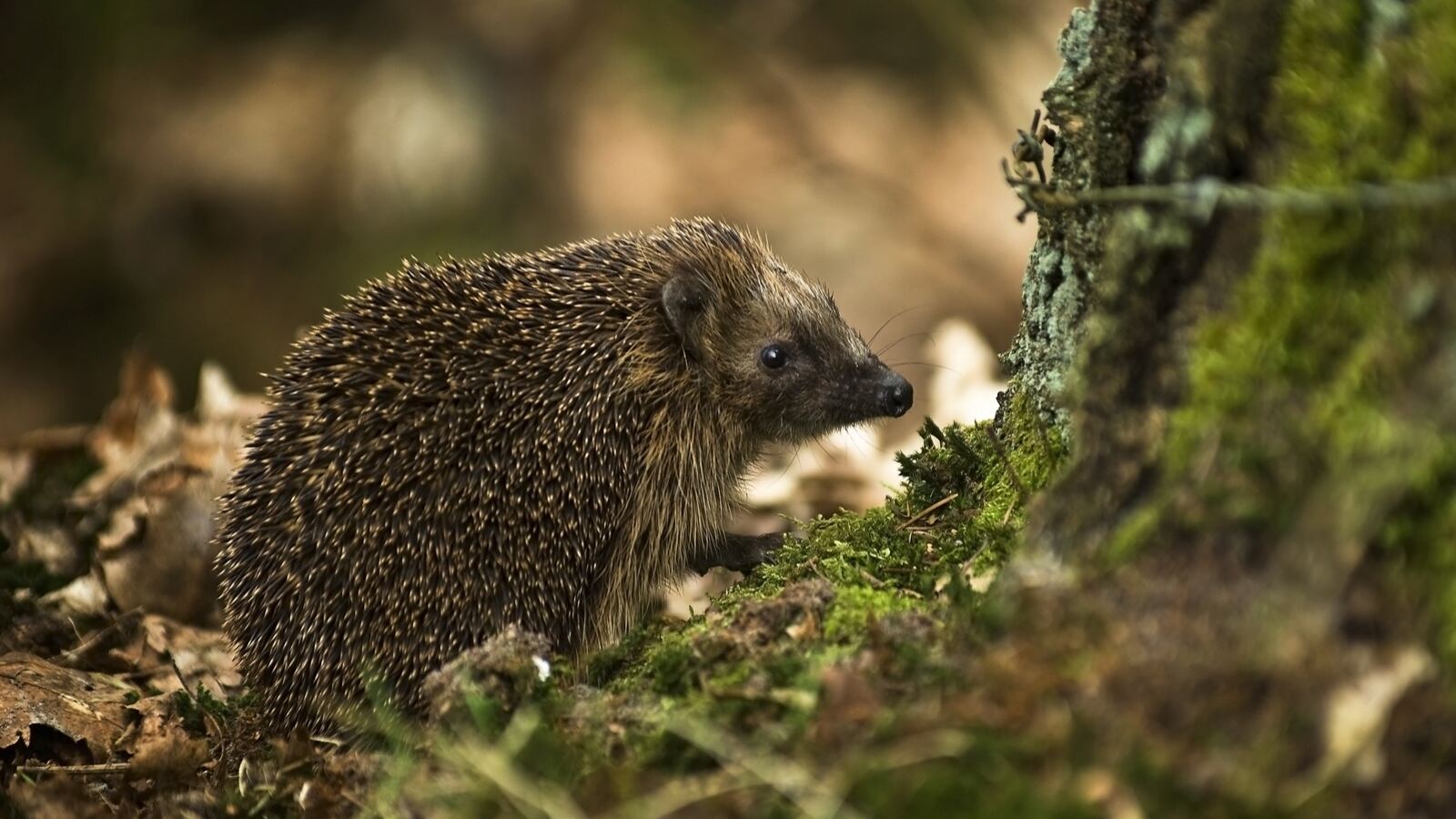
Hedgehogs eat beetles, caterpillars, earwigs, millipedes, earthworms, and slugs and snails. Slugs are a smaller share of the diet than folklore suggests — beetles and caterpillars dominate — but hedgehogs are still substantial invertebrate predators, taking on the order of 100 to 200 invertebrates a night.
Shrews are not rodents but insectivores, with extremely high metabolic rates that force them to eat roughly their own body weight daily. They take insects, larvae, spiders, woodlice, and small slugs continuously, day and night, and they are among the most intensive invertebrate predators present.
Wood mice and bank voles are omnivores, taking seeds, fruit, and a considerable quantity of insects and larvae. They are also significant seed predators, which cuts both ways — see below.
Moles eat earthworms and soil larvae including leatherjackets and chafer grubs, which is the case for tolerating them.
The hedgehog decline
British hedgehog populations have fallen dramatically — estimates commonly cite a decline from tens of millions in the 1950s to under a million now, with rural populations falling faster than urban ones.
The drivers are worth listing because most of them are addressable at garden scale:
Habitat fragmentation. Hedgehogs range 1 to 2 km a night, and modern fenced gardens are a grid of walled compartments they cannot cross. A garden is not habitat; a connected network of gardens is.
Loss of hedgerows and field margins, removing both food and corridors. See hedgerow care and wildlife corridors.
Roads.
Slug pellets, below.
Tidiness — no leaf piles, no log piles, no rough corners, no nesting material.
Strimmers and mowers, a major cause of injury, since a hedgehog curls rather than fleeing.
Ponds and pools with vertical sides, which drown them.
Hedgehog highways
The single most effective intervention, and it costs nothing.
Cut a 13 by 13 cm hole at the base of a fence or wall, at ground level. That is large enough for any hedgehog and too small for most pets.
One hole is nearly useless. The value is in a network — several neighbours doing it turns a row of isolated gardens into a functioning territory. Organised schemes coordinating this across streets have measurable results.
The principle is exactly the connectivity argument in wildlife corridors, at the smallest possible scale.
Slug pellets kill twice
Metaldehyde pellets kill slugs, and hedgehogs, birds, and other predators then eat the poisoned slugs. Metaldehyde was banned for outdoor use in Great Britain from 2022 for exactly these reasons, along with its persistence in drinking water.
Ferric phosphate pellets are the common replacement and are considerably safer for vertebrates, though not entirely without effects on soil invertebrates.
The deeper point is the one made in slugs and snails and predator-prey balance: killing slugs removes food from the animals that would have controlled them, and the slugs — which breed far faster — recover first.
What they need
Access, as above.
Cover and nesting sites. Log piles, leaf piles, brush piles, dense hedge bottoms, long grass, compost heaps. Hedgehogs need somewhere to nest by day, to raise young, and to hibernate, and the three may be different sites. See rock and log piles and rewilding edges.
Leaf litter left in place, which is both nesting material and invertebrate habitat.
Water in a shallow dish, especially in dry weather.
Safe ponds with at least one gently sloping side or a ramp. See self-sufficient ponds and amphibians and reptiles.
No netting at ground level, which entangles them fatally. Keep it taut and raised.
Check long grass before cutting, and check bonfires before lighting — a bonfire heap is exactly what a hedgehog looks for.
Do not feed bread or milk. Hedgehogs are lactose intolerant. Meaty cat or dog food, or specialist hedgehog food, is appropriate if feeding at all.
Small mammals and seeds
Wood mice and voles are a genuine complication in tree and crop establishment, and it is worth being clear about it rather than romanticising.
They take sown seed — pea, bean, maize, and tree seed including acorns and nuts — often comprehensively. Direct seeding of large-seeded trees frequently fails for this reason. See direct seeding and peas and beans.
Voles also ring-bark young trees under snow and in long grass through winter, which kills them outright and is a common and under-diagnosed cause of establishment failure. Guards and a clear mulched circle are the defence. See voles and gophers and tree planting.
Against that, they are also dispersers. Scatter-hoarding mice cache nuts and acorns and fail to retrieve many of them, which is a significant route by which oaks and hickories regenerate — the same service birds provide in seed-dispersing birds.
And they are the prey base for owls, kestrels, weasels, and foxes. A garden with no small mammals supports no small mammal predators.
Owls and the vole cycle
Small mammal populations in northern systems fluctuate on multi-year cycles, and predator numbers follow with a lag — the classic predator-prey oscillation.
Barn owls, tawny owls, and kestrels breed in proportion to vole abundance, and a good vole year produces a good owl year. Providing rough tussocky grassland is therefore providing owl habitat, indirectly.
Boxes help where natural cavities are scarce, and rough grass margins matter more. See insectivorous birds and grassland restoration.
See also
- Slugs and Snails the prey, and why pellets backfire
- Voles and Gophers the ring-barking problem
- Rock and Log Piles nesting and hibernation habitat
- Wildlife Corridors connectivity at garden scale
- Beneficial Predators the invertebrate half of the workforce
- Direct Seeding seed predation in tree establishment
- Birds of Prey