What it is
Nyssa, a small genus of eastern North America and East Asia. Black tupelo or black gum, N. sylvatica, of the eastern uplands and swamps; water tupelo, N. aquatica, of southern swamps; and the Ogeechee tupelo, N. ogeche, the honey tree below.
The name comes from the Muscogee (Creek) ʼeto opelwv, swamp tree, and it is pronounced accordingly. The genus is named for Nyssa, a water nymph — appropriately, for trees so tied to wet ground.
The most reliable red in the forest
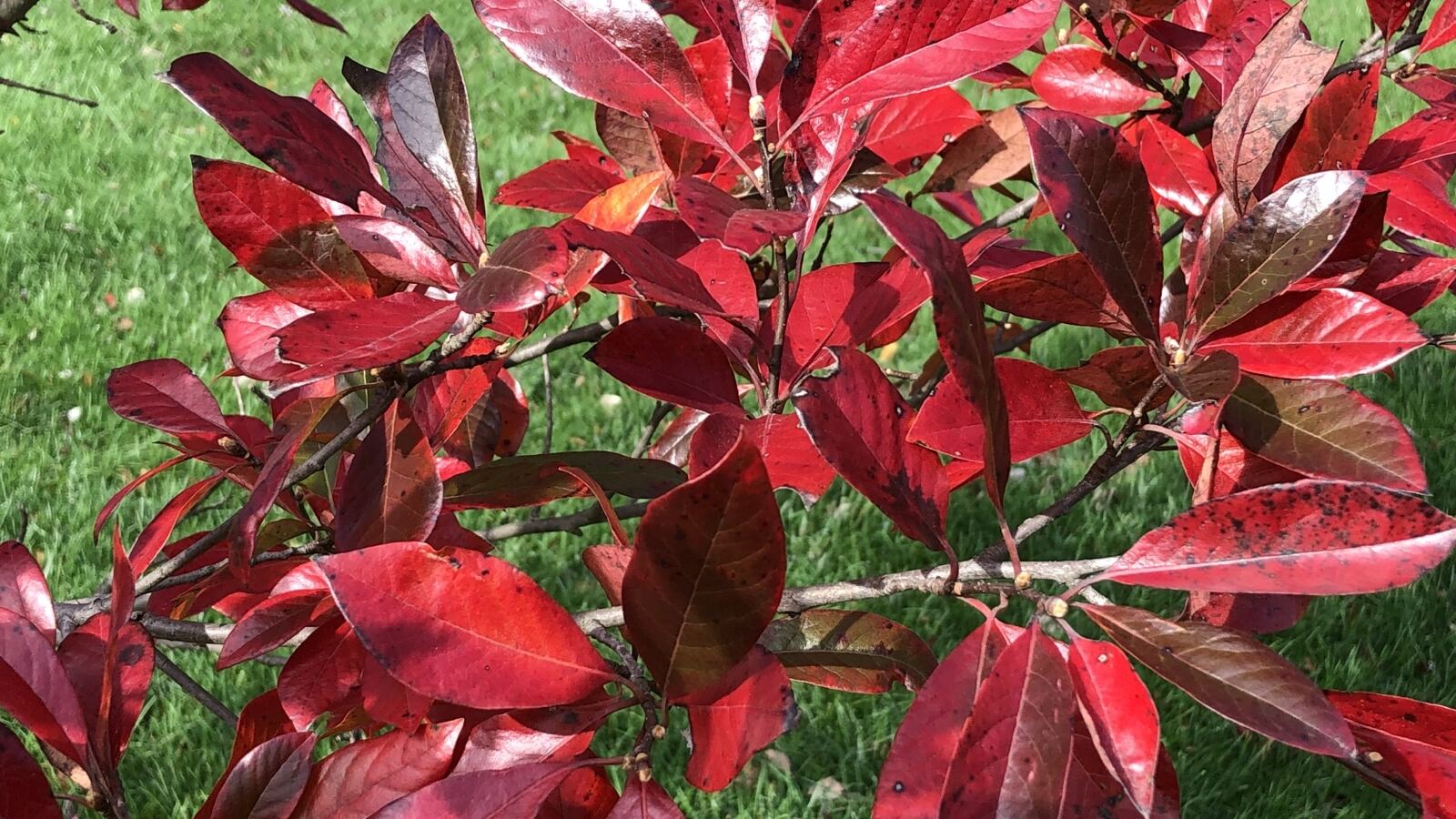
Black tupelo turns among the earliest and the purest scarlet of any temperate tree, often beginning in late summer while everything around it is still green.
Where maples and sweetgum give a mix of colours, tupelo tends toward a clean, intense, glossy red — described by many as the finest single red in the eastern autumn — and it holds it well. The horizontal branching and neat form add to the display.
That, plus its toughness, has made it an increasingly planted ornamental and street tree, valued as a native alternative to the over-planted maples. See urban forestry.
Tupelo honey
The Ogeechee tupelo of the river swamps of the Florida panhandle and Georgia produces one of the most celebrated and valuable honeys in the world.
Tupelo honey does not crystallise — its ratio of fructose to glucose is high enough that it stays liquid almost indefinitely, unlike most honeys, which granulate. It is pale, mild, and distinctive, and it commands premium prices.
Producing it is a specialised, precarious craft. The trees flower briefly, over a couple of weeks in spring, in swamps reached by boat, and beekeepers raise hives on platforms above the flood water to catch the flow. The purity of the honey depends on removing other nectar sources at exactly the right time, and a single flood or a badly timed frost can wipe out a season. It is a genuine example of a wild-swamp product tied to a specific tree and place, in the mould of the Brazil nut.
The spring bloom is a significant nectar source generally, and tupelos are good bee trees wherever they grow. See native bees and pollinator habitat.
Swamp specialist
Water tupelo and Ogeechee tupelo are true swamp trees, growing in standing water, and they show the classic adaptations: a swollen, buttressed, flared base that anchors them in soft saturated ground, and tolerance of prolonged flooding.
They grow alongside bald cypress in the great southern river swamps — see cypresses and thujas — and form part of a wetland forest that is both a distinctive habitat and a natural flood management and water-filtering system. See wetland restoration and riparian buffers.
Black tupelo is more adaptable, growing on drier upland sites as well as wet ones, which is why it is the one usually planted as an ornamental.
The fruit — small blue-black drupes — is eaten heavily by birds, bears, and many mammals in autumn, and old hollow tupelos are important den and cavity trees. See seed-dispersing birds and dead wood habitat.
Growing it
Black tupelo: moist, fertile, acid soil, tolerant of wet ground and reasonable drought once established, but intolerant of lime and shallow chalk. Full sun for best colour. Slow to moderate, reaching 10 to 20 m, long-lived, and some individuals are among the oldest hardwoods in eastern North America, exceeding 600 years.
It has a deep taproot and transplants badly, so plant small container stock, as with hickory and sassafras. See tree planting.
Water and Ogeechee tupelo need genuinely wet ground and are swamp specialists rather than garden trees.
Largely trouble-free, and its combination of autumn colour, wildlife value, honey, and swamp toughness makes it one of the more underrated American trees.
See also
- Sweetgum the companion American autumn tree of wet ground
- Cypresses and Thujas bald cypress, its swamp companion
- Wetland Restoration the swamp forests it belongs to
- Native Bees and the famous tupelo honey
- Maples the other trees of the eastern autumn
- Hickory and Pecan the taproot transplanting problem
- Persian Ironwood