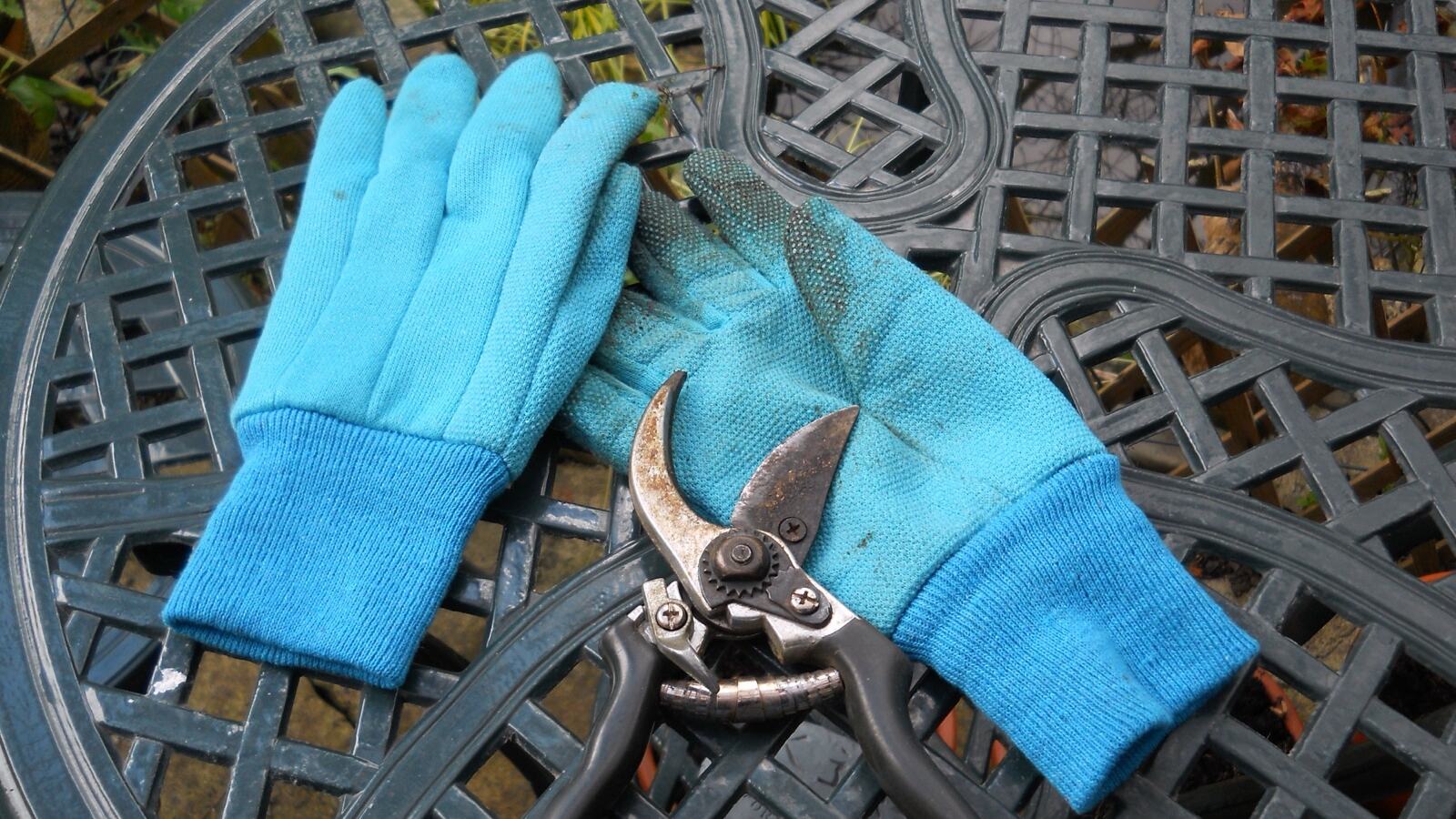
A blunt tool is the dangerous one
The counterintuitive rule that experienced people repeat constantly.
A sharp blade cuts where you place it, with the force you intended. A blunt one skids off the surface, needs more force, and travels somewhere unplanned with your body weight behind it. Most cuts from hand tools happen because someone pushed harder to compensate for a dull edge.
The same applies to the plant. A sharp cut severs cleanly and the wound closes. A blunt one crushes and tears, leaving ragged tissue that dies back and admits pathogens. See pruning basics and tree diseases.
So sharpening is simultaneously a safety practice, a plant health practice, and the thing that makes work less tiring.
Keeping an edge
Secateurs. Bypass type, which cut like scissors, for living wood. Anvil type crush against a flat plate and are for dead wood only. Sharpen the outer bevel of the cutting blade only, with a small diamond file, following the existing angle. Never file the flat inner face. Strip and clean them a few times a season, and replace the spring and blade rather than the tool.
Loppers and shears the same way.
Saws. Modern hardpoint pruning saws are induction-hardened and cannot practically be resharpened; use them until blunt and replace the blade. Traditional saws can be filed and set. Pruning saws cut on the pull stroke, which gives better control and less binding.
Spades and hoes. Genuinely worth sharpening, and almost nobody does. A sharpened spade edge cuts roots and turf with a fraction of the effort. A sharp hoe slices weed seedlings at the surface instead of dragging them. Use a mill file, keep the original bevel, and touch it up every few sessions. This single habit removes more physical effort from gardening than any other.
Axes and billhooks. A convex edge for splitting, keener for cutting. Do not overheat on a grinder, since it draws the temper and the steel will never hold an edge again.
Hygiene between cuts
Tools move pathogens between plants directly. Bacterial canker, fireblight, and numerous fungal diseases are spread by secateurs.
Clean and disinfect between plants when working on anything showing disease symptoms, and always between trees when pruning stone fruit or anything with visible canker. Alcohol wipes are quick and effective. Household bleach works and corrodes steel, so rinse and oil afterwards.
Clean soil off tools before moving between sites. Soil carries Phytophthora and other root pathogens, and boots and blades are how they travel. See tree diseases and invasive species, since seed and fragments travel the same way.
Storage
Clean, dry, oiled, hung up.
Wipe soil off after use. Rust pits the surface, and a pitted blade will not take a good edge. A wipe with an oily rag takes seconds. A bucket of sand with a little oil in it works well for spades and forks: plunge the tool in a few times and it is cleaned and oiled at once.
Wooden handles want linseed oil once or twice a year, which keeps them from drying, cracking, and splintering.
Hang tools rather than standing them on their working edges. Store off concrete floors, which draw moisture.
Check handles for cracks before use. A shovel handle that fails under load causes real injuries.
Working safely by hand
Cut away from your body, and know where the blade goes if it slips.
Mind the other hand. The commonest secateur injury is to the hand holding the branch.
Keep people out of the arc of anything swung. Twice the length of the tool, minimum.
Eye protection for anything that flings material: strimming, chipping, chopping, and grinding. Eye injuries are the ones people most regret not preventing.
Gloves for thorns and rough handling, and not for anything with a rotating blade, where a glove can be caught and drag your hand in.
Watch your back. Bend at the knees, keep loads close, and use a wheelbarrow. Chronic back damage is by far the commonest long-term injury in this work, and it accumulates invisibly.
Tetanus. Keep vaccination current. Soil is where tetanus lives, and this is the single most important precaution in the article.
Ladders
More people are injured falling from ladders in orchards and gardens than by any cutting tool.
Never stand on the top rungs. Never reach sideways beyond your centre of balance, which is the classic orchard accident. Have someone foot the ladder, or tie it off. Use a tripod orchard ladder on soft ground rather than a domestic A-frame, because the third leg is what stops it toppling on uneven surfaces.
The best answer is designing the need away. Trees on dwarfing rootstock and trained forms are picked and pruned from the ground. See grafting and rootstocks.
Chainsaws: an honest account
Chainsaws cause severe injuries, and the honest version is that they are not a tool to pick up and learn from a video.
Get trained. Accredited chainsaw training is widely available, usually a few days, and it covers maintenance, cross-cutting, and felling as separate units. In most countries it is a legal requirement for any professional use, and it is the correct choice for private use too.
Personal protective equipment is not optional: a helmet with visor and ear defenders, cut-resistant trousers or chaps, gloves, and steel-toed boots with cut protection. Chainsaw trousers contain fibres that pull out and jam the sprocket on contact. They work, and they only work if worn.
Never work alone. A chainsaw injury is frequently one you cannot self-treat, and phone signal is not a plan.
Understand kickback, the upward rotation that occurs when the upper tip of the bar contacts wood. It is fast and it travels toward your face. Keep the tip clear, use the chain brake, and stand slightly to the side of the cutting line.
Keep the chain sharp and correctly tensioned. A blunt chain produces dust rather than chips and forces you to push, which is the condition in which control is lost.
Felling
Felling is a separate skill from cross-cutting, and the risk is an order of magnitude higher.
Anything large, leaning awkwardly, near a structure, under tension, or containing dead wood should go to a qualified arborist. The cost of that is trivial against the alternative, and a surprising proportion of serious accidents involve competent people who misjudged one tree.
Even on small trees, know the principles: assess lean and crown weight, clear two escape routes at 45 degrees behind, check for dead limbs overhead, and never work under a hung-up tree. A tree caught in another is among the most dangerous situations in this work, and the correct response is to stop and get the right equipment.
Storm-damaged timber deserves particular caution because it is under tension in ways that are difficult to read, and it releases unpredictably when cut. See storm damage recovery.
Before felling anything, check for nesting birds and roosting bats, which are legally protected in many countries, and consider whether the tree is worth more standing. See dead wood habitat and woodland management.
See also
- Pruning Basics where most tool use happens
- Tree Diseases hygiene between cuts
- Storm Damage Recovery timber under tension
- Woodland Management planning the work before cutting
- Espalier and Training designing out the ladder
- Dead Wood Habitat reasons not to fell
- Onions
- Blackthorn
- Spruces
- Plane Trees
- Tung and Candlenut