What a mole actually eats
The mole is one of the most misunderstood animals in the garden. Its molehills and ridges provoke fury, and it is blamed for eating roots and bulbs — but the mole is an insectivore, not a herbivore: it eats almost no plant material at all. Its diet is earthworms above all, along with insect larvae, soil-dwelling pest grubs (leatherjackets, chafer grubs, wireworms), and other soil invertebrates.
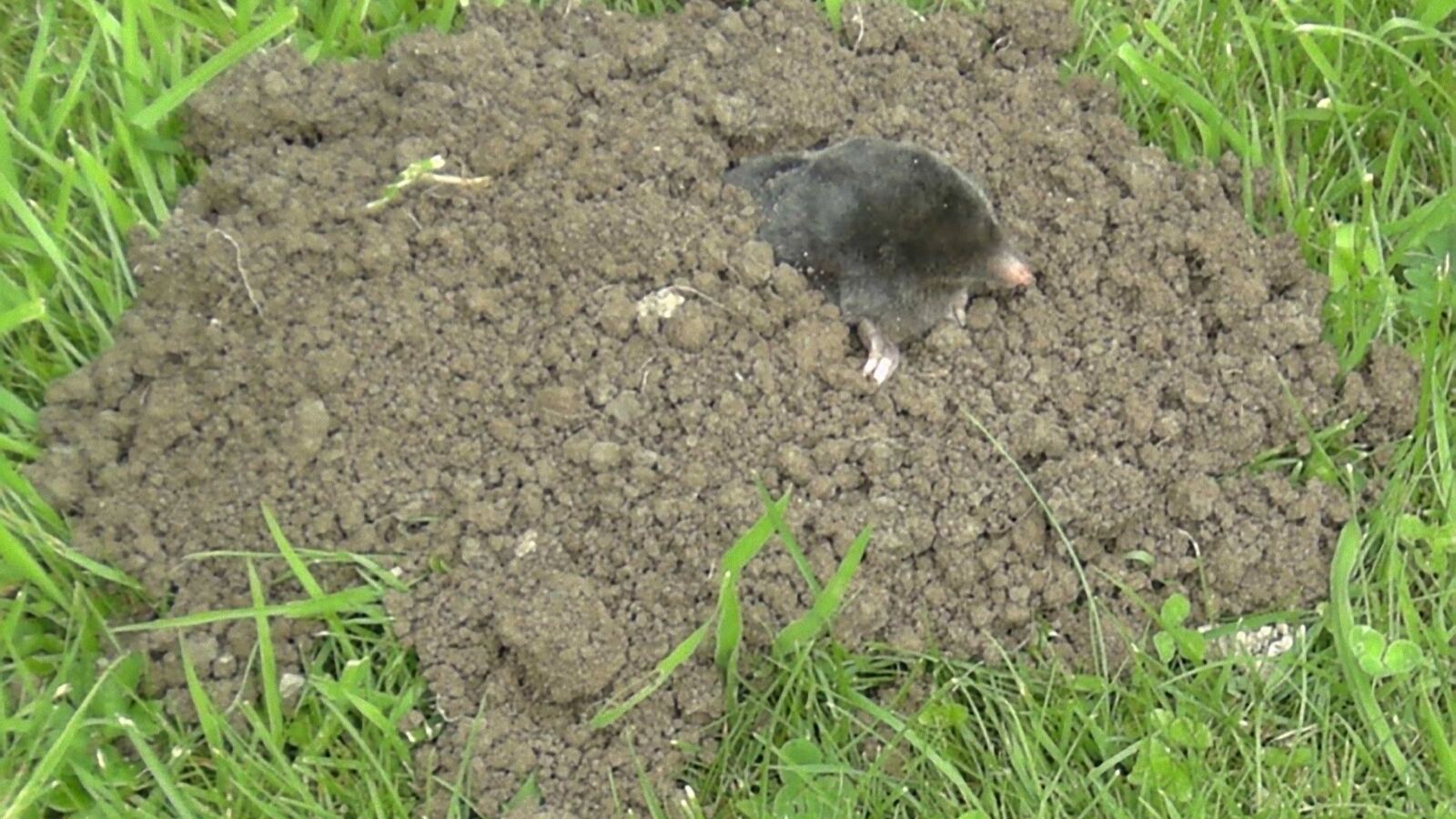
A mole is a superbly adapted underground hunter — a velvety cylinder with vast spade-like front paws, tiny eyes, and an acute sense of touch and smell — that patrols a network of permanent tunnels, eating the worms and grubs that fall into them. It is astonishingly hungry, needing to eat something close to its own body weight each day, and it even caches surplus worms (bitten to immobilise them) in underground larders.
The molehills are the "damage"
Because the mole eats no plants, its "damage" is almost entirely cosmetic and mechanical: the molehills (spoil pushed up from tunnelling) and the ridges of raised turf. On a formal lawn, a bowling green, or a hayfield (where soil in the hills can contaminate the crop) this is a genuine nuisance; in most gardens and pastures it is a matter of appearance and a little inconvenience, not real harm to plants. Damage to plants is usually indirect — roots disturbed by tunnelling, or the tunnels used by other animals (see below).
In fact the mole does real good underground: its tunnelling aerates and drains the soil, mixing and improving it, and by eating grubs it removes some genuine pests. And its presence is a reliable indicator of healthy soil — a mole means a rich population of earthworms, which means living, fertile, well-structured ground. A garden full of molehills is, in soil terms, a compliment. See soil food web.
The mistaken-identity problem
Much of the mole's bad reputation comes from a case of mistaken identity. Voles — which do eat roots, bark, and bulbs, and which do real damage — readily use the mole's abandoned tunnels to travel unseen and reach plants from below. So a plant killed "by the mole" has very often been eaten by a vole using the mole's tunnels, and the innocent tunnel-digger takes the blame for the vegetarian's crime. (In North America, the plant-eating pocket gophers are likewise confused with moles.)
Living with them
Given that the mole eats pests, improves the soil, and harms no plants, the case for tolerance is strong, and in most gardens the best approach is to rake down the molehills (the fine, stone-free spoil is excellent potting or seed soil) and let the mole get on with its work. Where control is genuinely needed (formal turf, hay meadows), humane options include live-trapping and moving, and various deterrents; poisons and gassing are cruel, often illegal, and pointless given the animal's benefits. Understanding that the mole is a hungry insectivore, not a root-eater, changes the whole question from "how do I kill it" to "can I live with it" — and usually the answer is yes. See beneficial predators.
See also
- Earthworms the mole's main food, and the sign of the healthy soil it indicates
- Voles and Gophers the actual root-eaters the mole is blamed for
- Soil-Dwelling Pests the grubs the mole also eats
- Soil Food Web the living soil a mole population signals
- Hedgehogs and Small Mammals other small garden mammals
- Beneficial Predators the case for tolerance over control