What it is
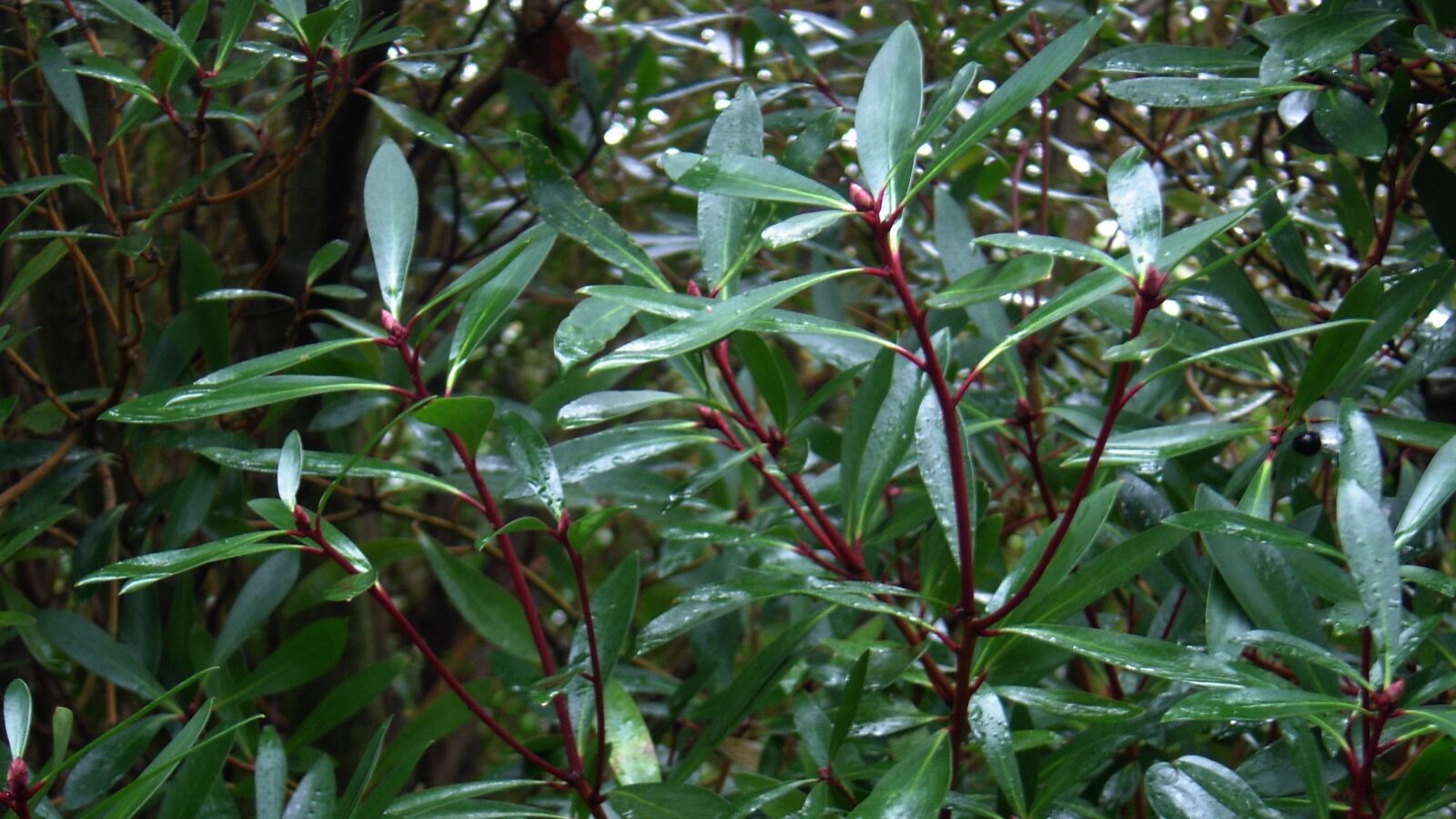
Tasmannia lanceolata, the mountain pepper or Tasmanian pepperberry — an evergreen shrub or small tree of the cool, wet highlands of Tasmania and southeastern Australia, grown for its peppery leaves and berries, one of the finest of Australian native spices.
It belongs to the winter's-bark family, Winteraceae — and this is more interesting than it sounds, because the Winteraceae are one of the most ancient and primitive lineages of flowering plants alive, close to the very base of the flowering-plant family tree, near the magnolias and star anise. Their wood even lacks the water-conducting vessels of most flowering plants, a "primitive" feature marking their antiquity. So this modern bush spice comes from a living relic of the dawn of the flowering plants.
A slow, numbing heat
Mountain pepper delivers its heat in a distinctive way. Both the leaves (dried and ground as "pepperleaf") and the glossy purple-black berries (dried as "pepperberry") are used as a spice, and both are pungent — but the heat is not the immediate bite of true pepper or the burn of chilli. Instead it builds slowly, arriving a few seconds after tasting and then blooming into a strong, warming heat with a numbing, tingling quality on the tongue and lips — closer in character to the buzzing numbness of Sichuan pepper than to ordinary pepper (the active compound, polygodial, is different again from both).
This complex, slow-building, aromatic, numbing heat, together with the berry's rich purple colour (which bleeds a deep magenta into food), has made mountain pepper a prized native spice in modern Australian cooking — used to season meat, sauces, cheeses, and preserves, and as a distinctive bush-food flavouring — and it is grown and wild-harvested commercially for the spice trade. It is also extremely high in antioxidants, among the highest of any spice, adding to its "superfood" appeal. It was used by Aboriginal peoples as both food and medicine. See restoration economics.
Growing it
Cool-temperate and, unusually for the Australian trees in this encyclopedia, wanting cool, moist, humid conditions — the mountain pepper comes from the wet highland forests and does best in a cool, sheltered, moist spot with part shade and rich, moist, well-drained, acidic soil; it dislikes heat, drought, and dry exposure, which is the reverse of the dry-country bush foods. It is hardy to cold and frost.
It is a dense, bushy, evergreen shrub or small tree with attractive red stems and glossy leaves, dioecious (so a male and female are needed for berries), and grown from seed and cuttings. It makes a good, hardy, ornamental foliage-and-berry shrub for a cool, moist garden, as well as a source of home-grown native spice. As a fiery, numbing, antioxidant-rich bush spice from one of the most ancient of all flowering-plant lineages, mountain pepper is a fascinating and rewarding plant. See propagation and food forest design.
See also
- Star Anise and Magnolias its relatives among the ancient flowering-plant lineages
- Sichuan Pepper another spice with a slow, numbing heat
- Peppers and Chillies the unrelated "heat" of the chilli
- Finger Lime, Quandong, and Kakadu Plum other Australian bush foods
- Food Forest Design mountain pepper as a cool-climate spice shrub
- Restoration Economics a bush spice as a commercial crop