What it is
Sclerocarya birrea, the marula, a medium-sized deciduous tree of the savannas and woodlands of sub-Saharan Africa (and Madagascar), and one of the most useful and culturally revered trees of the African bush.
It belongs to the cashew family, Anacardiaceae — kin to the mango, cashew, and pistachio — and, like the mango, it bears a stone fruit with tangy, aromatic flesh around a hard nut. The tree has a broad, rounded crown and grey mottled bark, and it is often left standing when land is cleared, because it is too valuable to fell.
A fruit for everyone
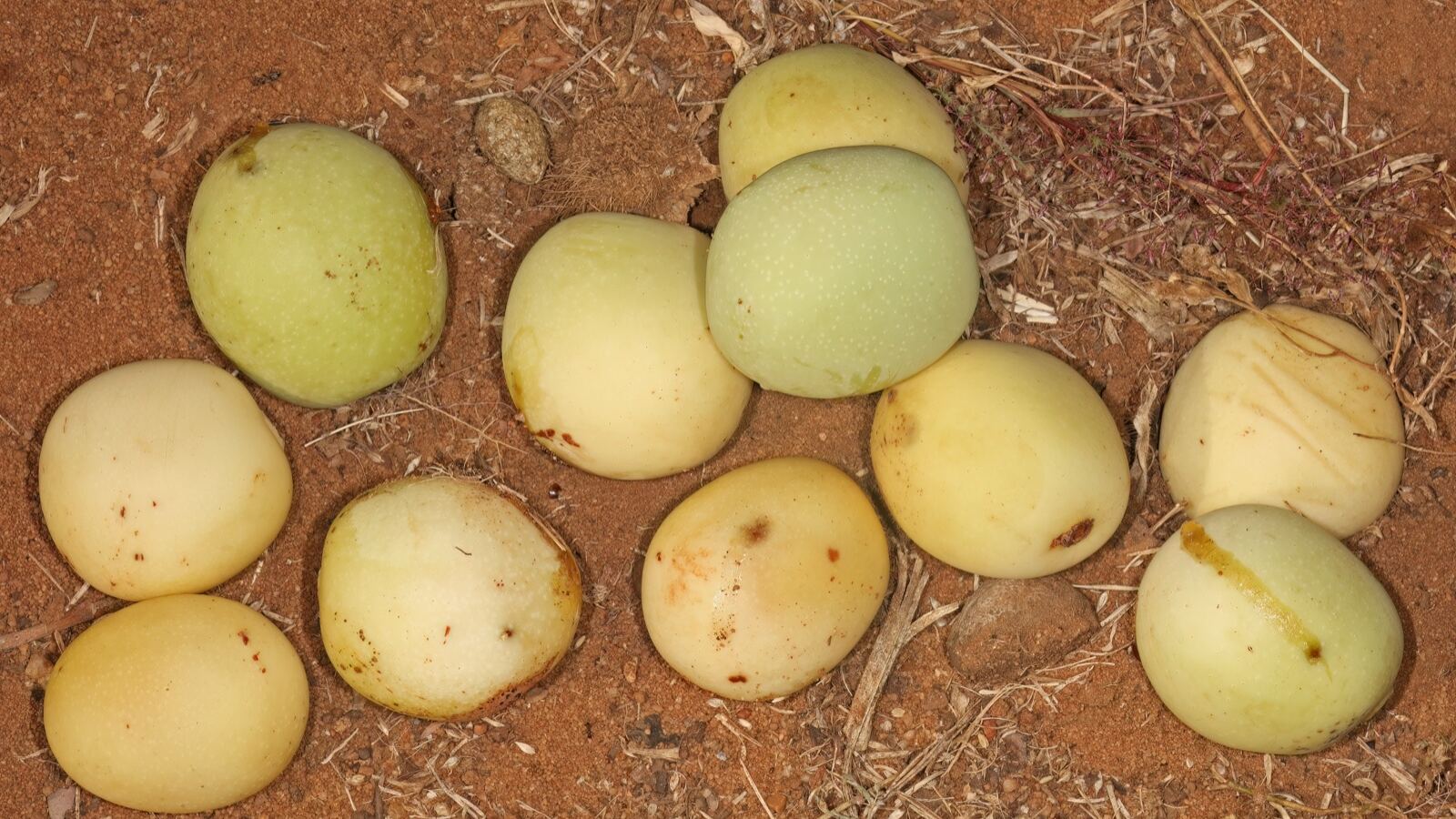
The marula fruit ripens in the wet season, falling green and yellowing on the ground, with a tart, refreshing, aromatic flesh that is exceptionally high in vitamin C — several times that of an orange — and a hard nut inside containing oil-rich, edible kernels.
It has been a staple wild food across southern Africa for millennia (marula stones are found at very ancient human sites), eaten fresh, juiced, and brewed into a traditional beer, while the kernels are eaten and pressed for a fine, stable oil used in food and, increasingly, in cosmetics. The tree is so important that among many peoples it is protected by custom, features in ritual and folklore, and marks the marula harvest with festivals. It is a classic example of a wild tree woven into the food, economy, and culture of a whole region.
Amarula and the women's economy
The marula reached the wider world through a bottle. Its fruit is the basis of Amarula, a popular South African cream liqueur, and the commercial demand for marula fruit has become the foundation of a significant rural, largely women-led economy: across southern Africa, women harvest the wild fruit, and the income from selling it to liqueur makers and cosmetics companies is an important, and relatively equitable, source of household earnings in areas with few others. The marula is thus a modern example of a wild tree's fruit generating sustainable income from standing trees — the same "the forest is worth more alive" logic as the brazil nut — and of a tree crop with real social significance. See restoration economics.
The truth about drunk elephants
Marula's most famous story is that its fallen, fermenting fruit makes elephants drunk — a tale spread by wildlife films showing elephants apparently intoxicated after gorging on marula. Elephants certainly love marula fruit and travel to feast on it (the tree is sometimes called the "elephant tree"), and they help disperse its seeds.
But the drunk-elephant story is, on the evidence, a myth. Studies have pointed out that an elephant would need to eat an impossible quantity of exactly-right, over-ripe fermenting fruit, on an empty stomach, to get drunk — and elephants prefer the fresh ripe fruit, which has little alcohol, and eat the leaves and bark too. The amount of fermentation and the elephant's huge body size make genuine intoxication from marula extremely unlikely. It is a charming legend with almost no basis, and a good example of an appealing wildlife "fact" that does not survive scrutiny — worth knowing precisely because it is so often repeated. See seed-dispersing birds for the real, sober business of animals dispersing fruit.
Growing it
Tropical and subtropical African savanna tree: marula wants heat, full sun, and a distinct wet-and-dry seasonal climate, and it is notably drought-hardy once established, dropping its leaves in the dry season and thriving on poor, sandy, and rocky soils where many trees fail. It is frost-tender.
It is dioecious — separate male and female trees — so a female (and a nearby male) is needed for fruit, and since seedlings' sex is unknown until they flower, selected fruiting females are propagated by cuttings and grafting (marula grows readily from large truncheon cuttings, like the coral tree). Fast-growing, tough, and long-lived, it is planted for fruit, shade, and as a living fence, and is a natural component of African agroforestry and dryland tree systems. See drought-tolerant species and propagation.
See also
- Mango the close cashew-family relative with a similar fruit
- Cashew another Anacardiaceae with an edible nut and fruit
- Baobab the other great useful tree of the African savanna
- Brazil Nut the same "standing forest worth more" wild-harvest economy
- Drought-Tolerant Species marula's dryland toughness
- Restoration Economics the marula fruit economy
- Mahua
- Mombin and Ambarella
- Monkey Orange