What it is
Xanthoceras sorbifolium, the yellowhorn or shinyleaf — a hardy, deciduous small tree or large shrub of northern China and Mongolia, grown both as a lovely spring-flowering ornamental and, increasingly, as a promising oilseed and biofuel crop for cold, dry, marginal land.
It belongs to the soapberry family, Sapindaceae — a relative of the maples, the lychee and longan, the golden rain tree, and the soap nut — a family of great range, and the yellowhorn is one of its hardiest and most useful members.
Flowers and nuts
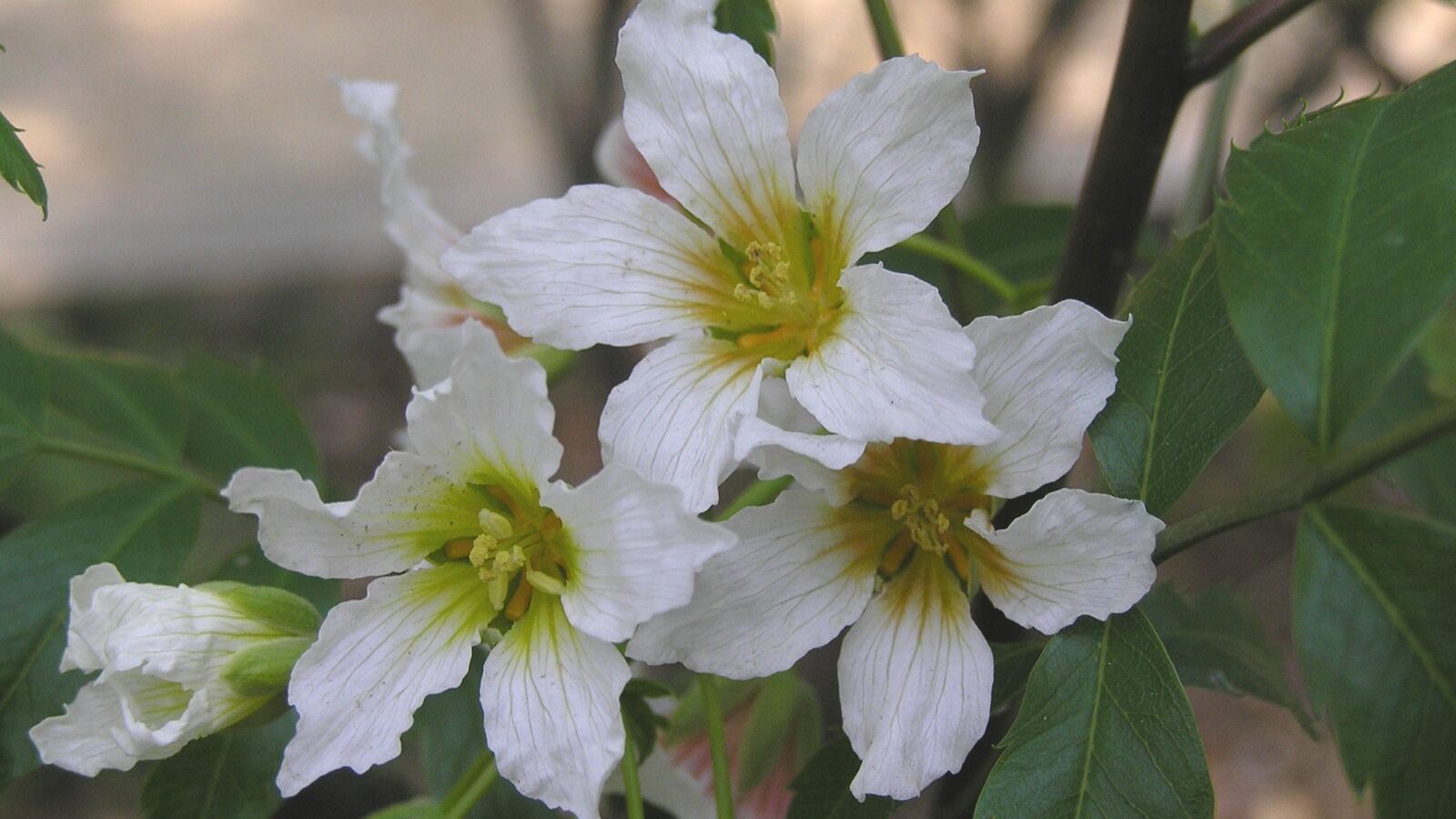
In spring, the yellowhorn covers itself in upright spikes of showy white flowers, each with a distinctive red-and-yellow centre that ages through the season (the yellow "horn"-like glands at the base of the petals give the tree its name), making it a genuinely beautiful ornamental — one of the finer small flowering trees for cold climates — and a good nectar and pollen source for bees.
The flowers give way to thick-walled green capsules holding large, dark, edible nuts the size of a small hazelnut. The nuts are eaten (roasted, like a chestnut) and are notably rich in oil — a high-quality, unsaturated edible oil — and it is this oil that has driven a surge of modern interest in the tree.
A hardy oil crop for hard land
The yellowhorn's great promise is that it produces an oil-rich nut on cold, dry, poor, marginal land where few oil crops will grow. It is remarkably cold-hardy (surviving deep continental winters), drought-hardy, and tolerant of poor, sandy, and alkaline soils, and it crops within a few years of planting.
This has made it a serious candidate — especially in northern China — for large-scale planting as a source of edible oil and biodiesel, and as a tree for reforesting and stabilising dry, degraded, eroded land while producing a valuable crop, so that greening marginal land and producing oil go together. It is, in effect, being developed to do for the cold, dry north what other oil trees do for the tropics — and, having the hardiness and the yield that the ill-fated jatropha lacked, it may better keep the promise of "fuel and oil from marginal land." See restoration economics, dryland restoration, and erosion control.
Growing it
Very hardy and tough, the yellowhorn wants full sun and, above all, sharp drainage — it tolerates cold, heat, drought, wind, and poor, sandy, or alkaline soil, but it will not tolerate wet, heavy, or waterlogged ground, which is the main way it is killed. It resents root disturbance and is best planted young in a well-drained, sunny spot.
It is slow-to-moderate growing, small (3 to 8 m), long-lived, and grown from seed (sown fresh) and root cuttings; it flowers and fruits young. As a hardy, beautiful, spring-flowering small tree that also yields edible, oil-rich nuts on land too cold and dry for most crops, the yellowhorn is one of the most promising and underused of temperate nut and oil trees. See propagation and macadamia and tropical nuts for the wider nut-tree context.
See also
- Maples, Lychee and Longan, Golden Rain Tree, and Soap Nut its soapberry-family relatives
- Jatropha the biofuel tree whose "oil from marginal land" hopes yellowhorn may better keep
- Dryland Restoration yellowhorn for greening cold, dry land
- Pollinator Habitat its spring bee-flowers
- Macadamia and Tropical Nuts the wider nut-tree family
- Restoration Economics an oil crop for marginal land