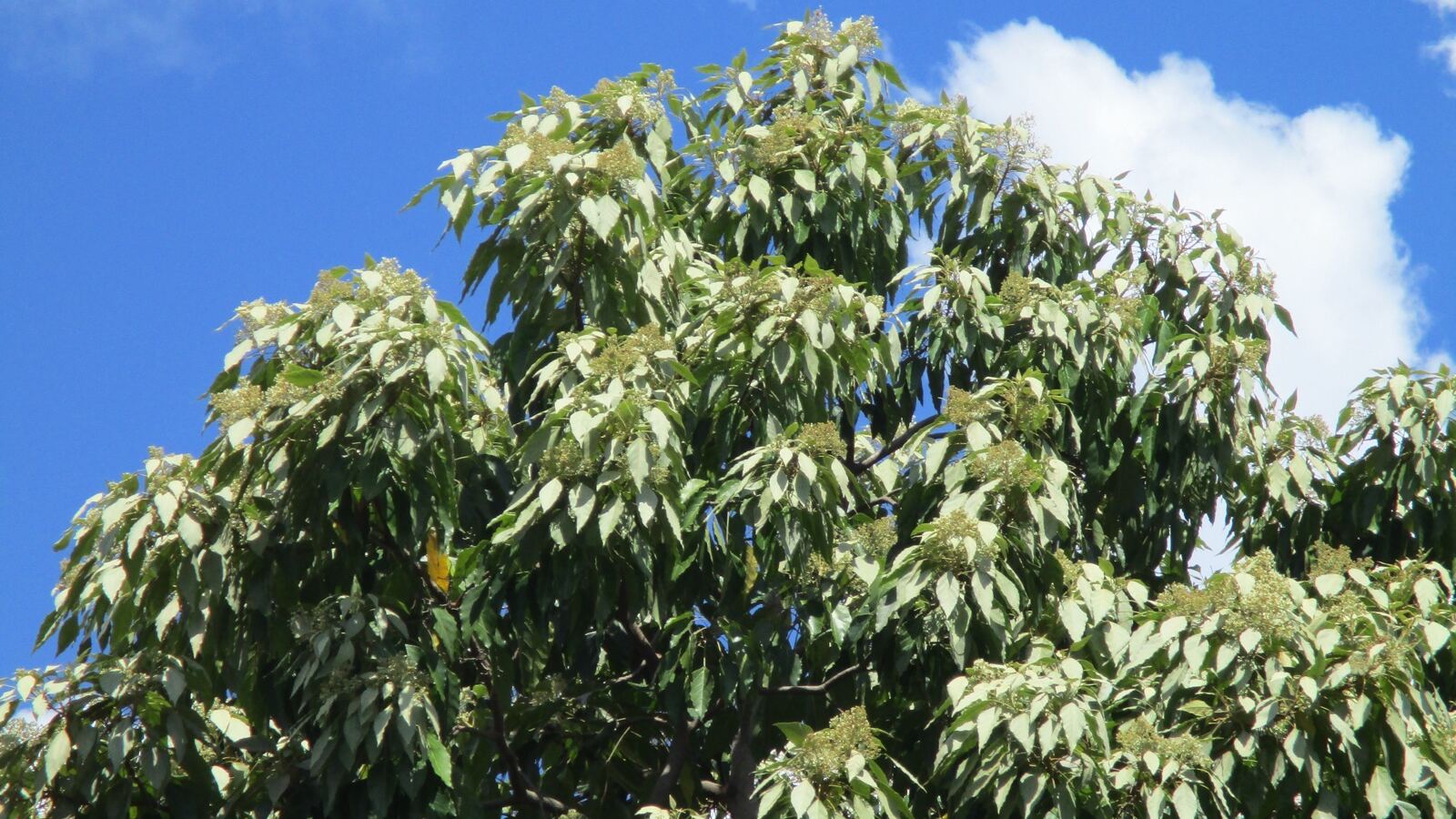
What they are
Two related trees of the spurge family, Euphorbiaceae — the same family as the rubber tree and cassava — grown for the oil pressed from their seeds:
Tung tree, Vernicia fordii (and relatives), of China, source of tung oil;
Candlenut, Aleurites moluccanus, of the Indo-Pacific, whose oily nuts were literally burned for light — and which is the state tree of Hawaii, where it is the kukui.
Both produce seeds so rich in oil that the oil, rather than any fruit or timber, is the reason they are grown, and both oils are "drying oils" — oils that harden on exposure to air into a tough, water-resistant film, which is what makes them so useful.
Tung oil: the finish that hardens
Tung oil is one of the great wood finishes, prized for centuries and still valued today.
Pressed from the seeds of the tung tree, it is a superb drying oil: brushed or rubbed onto wood, it penetrates and then polymerises into a hard, flexible, water-resistant, satiny finish that protects and beautifies the timber — the classic finish for fine furniture, gunstocks, wooden boats, and floors, and the traditional waterproofing for the wooden junks and buildings of China, where it was used for millennia (its Chinese origins give it the alternative name China wood oil). Because it is a natural, food-safe-when-cured, beautiful finish, tung oil remains popular with woodworkers who prefer it to synthetic varnishes. The same hardening property made tung oil an important industrial raw material for paints, varnishes, inks, and linoleum, and it was a strategic commodity — the southern United States established a tung-oil industry in the twentieth century to secure a domestic supply.
The catch, as with its relatives, is toxicity: tung seeds and raw oil are poisonous, and the tree's sap can irritate skin, so it is grown strictly for oil, not food. The trees are also a mild invasive in parts of the southern United States.
Candlenut: the nut that was a candle
The candlenut earns its name literally. Its nuts are so rich in oil that, in the Pacific islands and Southeast Asia, they were traditionally strung on the midrib of a palm leaf and burned one after another as a candle or torch — each nut burning for a few minutes, a whole string giving hours of light, and serving as a rough clock by the number of nuts consumed. It was a primary source of artificial light across the region before lamps and electricity, and the Hawaiian name kukui is bound up with light, guidance, and enlightenment.
Beyond light, the candlenut is deeply useful: the oil was used for finishes, varnish, soap, and preserving; the roasted, processed nut is a key thickener and flavouring in Southeast Asian cooking (ground into curries and the Indonesian and Malaysian kemiri dishes — though it must be cooked, as the raw nut is mildly toxic and purgative); the tree gave dyes, medicine, and canoe caulking; and in Hawaii the kukui — with its distinctive pale, silvery-green foliage that marks it out on the hillsides — is woven through culture, its nuts polished into the glossy black kukui-nut leis. It is a model of a single tree serving a whole society's needs for light, food, medicine, and material.
Growing them
Both are subtropical to tropical and frost-sensitive (tung takes a little more cold than candlenut), wanting warmth, good moisture, and well-drained soil, and both are fast-growing.
Tung is grown in orchards for its oil-seed, cropping within a few years, and wants a warm climate with some winter chill to fruit well. Candlenut is a fast, tough, adaptable pioneer tree that thrives in the wet tropics, tolerates poor soil, and naturalises readily (it is an early-succession tree, quick to colonise cleared ground). Both are grown from seed. Handle both as oil and utility trees, remembering the toxicity of the raw seeds. See propagation and pioneer species.
See also
- Rubber the family's most famous latex-and-industrial tree
- Oil Palm another tree grown overwhelmingly for its oil
- Invasive Species tung and candlenut spreading outside cultivation
- Pioneer Species the candlenut as a fast coloniser
- Tool Care and Safety tung oil as a traditional wood finish
- Neem another tree grown for the useful chemistry of its seeds
- Jatropha
- Sandbox Tree