What it is
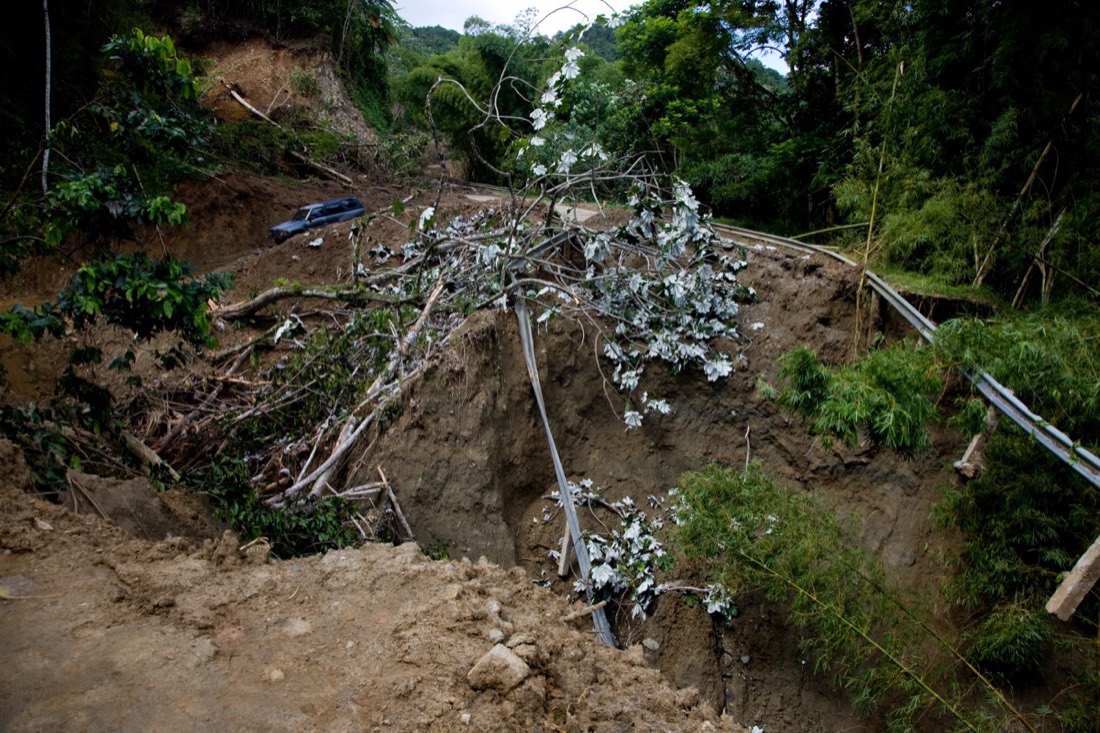
A wind event, a flood, or a long drought has gone through your land. Things are broken. The instinct is to start clearing.
Don't.
Storm recovery is a five-year arc, and the first month decides most of how it ends. Keep people safe, leave the right things alone, resist the urge to tidy.
The first 48 hours
Address acute safety hazards. Nothing else.
Trees down across roads. Hanging limbs over paths, houses, or paddocks. Trees leaning on power lines. Snapped trunks that could finish falling onto a building.
Everything else waits. A broken birch at the back of the woodlot is not a hazard. It is habitat in progress.
The day after a storm produces more chainsaw fatalities than the storm itself. Hire a certified arborist for any cut above shoulder height or under tension. Tensioned wood snaps sideways with the force of a small car.
Photograph everything before you cut.
Week 1: assess the survivors
Walk the site slowly. Look up. Estimate canopy loss against the pre-storm crown.
Under 20 percent loss with the leader intact. The tree will recover on its own. Leave it.
20 to 30 percent loss. Marginal. If the species is wind-firm (oak, beech, hornbeam) and the leader is sound, give it a season. If the species is brittle (silver maple, poplar, willow, eucalyptus), expect further failure and plan around it.
Over 30 percent loss, or leader gone, or trunk split below the crown. Finished as a standing tree. That does not mean it has to leave.
A tree with a snapped leader is not a dead tree. It is a different tree. Many broadleaves will resprout from the base or along the trunk.
Take down anything whose failure would threaten people, livestock, or buildings. Everything else can stay where it fell, or stand where it broke.
Standing deadwood is the prize
A snag, a broken-topped trunk, a hollow stem with the crown gone: these are the most valuable habitat structures in any temperate woodland.
A single standing dead oak supports more than 1,000 invertebrate species in Europe. Woodpeckers, owls, bats, and forty percent of forest bird species depend on cavities only dead and dying wood provides. Fungal succession on standing deadwood takes 60 to 100 years to play out.
Leave every snag that does not threaten people or structures. Mark a 1.5 tree-length radius around each as a no-go zone in high winds. Logs and tops on the ground earn the same treatment. See dead wood habitat and rock and log piles.
Do not bring in machinery
The worst mistake after a storm is hiring an excavator to clean up.
Heavy machinery compacts soil to depths root systems take a decade to recover from. It tears the mycorrhizal network and crushes seedlings pushing through the duff. The visual mess is a thin layer over an intact below-ground system. Drive a 20 tonne machine through it and you damage what the storm could not reach.
Work by hand or with a small tractor on existing tracks. See decompaction.
Coppice the broken broadleaves
Most broken broadleaves want to coppice.
Oak, ash, hazel, sweet chestnut, hornbeam, lime, sycamore, willow, alder, eucalyptus: all throw vigorous regrowth from the stump if cut cleanly at 15 to 30 cm above ground while the root system is still alive.
Cut at a slight angle so water sheds off the face. Do it during dormancy. By the next growing season you will see 5 to 15 shoots per stump. Thin to 3 to 5 the following winter. Within 5 to 7 years you have a thicket of straight poles where a broken tree used to be.
Conifers (pine, fir, spruce, cedar) do not coppice. A conifer that has lost its leader is finished. See coppice rotation.
The replanting trap
Do not rush to replant.
Give the site one full growing season before you plant a single tree. The gap dynamics will tell you what wants to be there. Pioneers (birch, willow, alder, hawthorn, elder) appear from the seed bank within months. Suckers rise from oak and lime roots. Wind-blown seed lands and germinates.
What appears for free is better adapted than what you would order from a nursery. Watch first, plant later. See observation first and assisted regeneration.
In year two or three, fill the genuine gaps. Cluster plantings of 5 to 15 trees beat single specimens. See cluster planting and nurse trees.
Plant for the climate ahead
The forest you lost grew under the climate of the last hundred years. The forest you are planting will live under the climate of the next hundred.
Shift species composition south by 200 to 500 km of latitude, or 200 to 400 m down in elevation. In Britain that means more sessile oak, sweet chestnut, hornbeam, service tree. In the eastern US it means oak-hickory pushing north into former maple-beech ranges. In the Mediterranean it means holm oak and stone pine where Aleppo pine used to dominate.
This is not abandoning natives. It is reading the next century honestly. See native plant selection and drought tolerant species.
The five-year curve
Year 1: looks worse. Brambles, nettles, and weedy regrowth dominate the gaps. Normal succession. Resist mowing.
Year 2: pioneer woody seedlings visible. Birch, willow, hawthorn, elder at knee height. Coppice stumps throwing strong shoots.
Year 3: gaps start to close from below. Pioneers reach 2 to 3 metres. Surviving trees push new growth into the available light.
Year 4: structural diversity returns. Three or four height layers visible.
Year 5: the forest reads as recovering rather than damaged. Bird species count returns to pre-storm levels or higher.
Full structural recovery takes 30 to 80 years. Full ecological recovery, including soil and dead-wood communities, takes 150 plus. You are starting something you will not see finished. Plant accordingly.
See also
- Dead Wood Habitat
- Coppice Rotation
- Assisted Regeneration
- Observation First
- Cluster Planting
- Woodland Management
- Tool Care and Safety
- Spruces