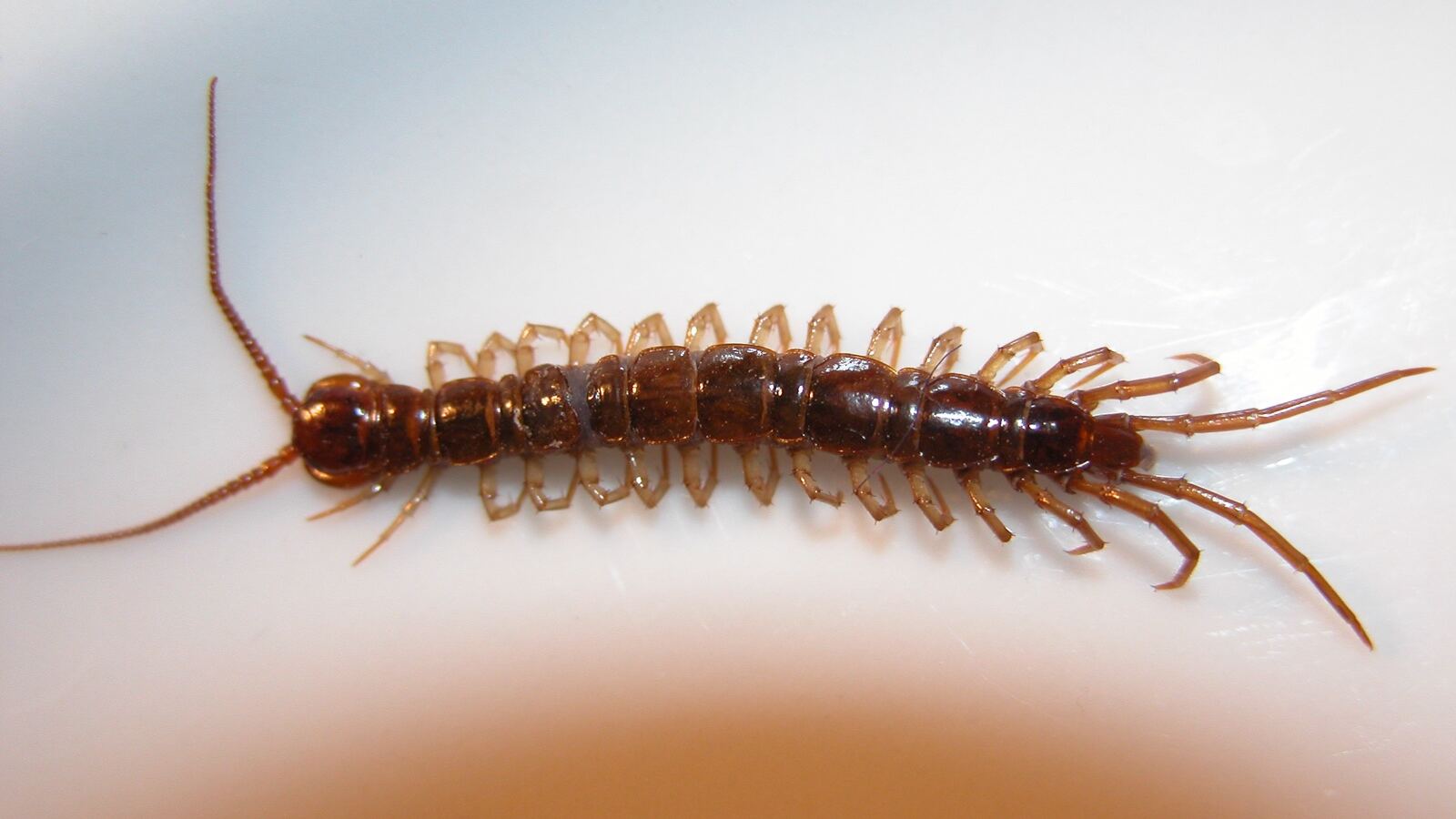
Two animals, often confused
Centipedes and millipedes are both myriapods — long, segmented, many-legged animals of the soil, leaf litter, and dark damp places — and they are constantly muddled. But they do opposite jobs in the soil food web, and telling them apart is worth learning, because one is a predator and one is a recycler.
The simplest tests:
- Legs per segment. A centipede has one pair of legs per body segment; a millipede has two pairs per segment (the name means "thousand feet," though none has that many). Look closely and this is unmistakable.
- Shape and speed. Centipedes are flat, fast, and fierce, built to run down prey; millipedes are round (cylindrical), slow, and mild, built to trundle through litter.
- Behaviour when disturbed. A centipede darts away and may bite; a millipede curls into a tight coil or spiral and sits still, relying on its armour and defensive chemistry.
Centipedes: the hunters
Centipedes are predators, and useful ones. Fast and flat, with a pair of venomous, pincer-like claws just behind the head, they hunt through the soil and litter after dark, catching and killing small invertebrates — including soil-dwelling pests such as insect larvae, small slugs and snails, springtails, and worms — so they are part of the beneficial-predator workforce that keeps pest numbers down at ground level, alongside the ground beetles and spiders.
Their venom is for subduing prey; the common garden centipedes are harmless to people (a large tropical centipede can give a painful bite, but the small pale ones under a flowerpot cannot hurt you). A garden full of centipedes is a garden with a healthy population of soil predators.
Millipedes: the recyclers
Millipedes are detritivores — recyclers, not hunters. Slow and round, they trundle through leaf litter and dead wood eating decaying plant matter, and in doing so they are important members of the decomposer community: they shred dead leaves into smaller pieces, speeding the work of the fungi and bacteria that finish the job, and their droppings feed the soil — a real contribution to nutrient cycling and the building of leaf-mould and humus. They defend themselves not by biting but by coiling up and, in many species, secreting a mildly toxic or foul-smelling fluid.
Millipedes are almost always benign, but occasionally, in large numbers, they will nibble soft seedlings, strawberries, or fruit lying on damp ground — usually starting on already-damaged or rotting tissue. This is minor, and a millipede seen at a damaged fruit is more often a recycler cleaning up than the original culprit.
Keeping the team
Both centipedes and millipedes want the same thing — cool, damp, undisturbed conditions with plenty of dead organic matter — so both are supported by the same practices that support all soil life:
- Mulch, leaf litter, and leaf mould for the millipedes to eat and both to shelter in;
- Dead wood, log and rock piles for damp daytime refuge;
- No-dig and minimal disturbance, which protect the whole soil community.
Feed the soil and leave it undisturbed, and both the many-legged hunters and the many-legged recyclers thrive — a small, hidden, two-sided team quietly doing pest control and decomposition beneath your feet. See soil microarthropods and earthworms, their fellow soil workers.
See also
- Soil Food Web the community centipedes and millipedes belong to
- Decomposers and Earthworms the millipede's fellow recyclers
- Ground Beetles and Spiders the centipede's fellow soil predators
- Nutrient Cycling the recycling millipedes speed along
- Leaf Mould the leaf-litter habitat both need
- No-Dig protecting the soil community