What it is
Oxydendrum arboreum, sourwood or the sorrel tree — a small-to-medium deciduous tree of the Appalachian Mountains and southeastern United States, and the sole species in its genus, with no close relatives (a "monotypic" tree standing alone on its own branch of the family tree).
It belongs to the heath family, Ericaceae, which makes it a relative of the blueberry, rhododendron, and heather — and, like them, it wants acid soil. The name comes from the pleasantly sour, acidic taste of its leaves, which were once chewed to quench thirst and used in folk medicine.
Three seasons of beauty
Sourwood is grown as an ornamental for a combination of virtues rare in one small tree.
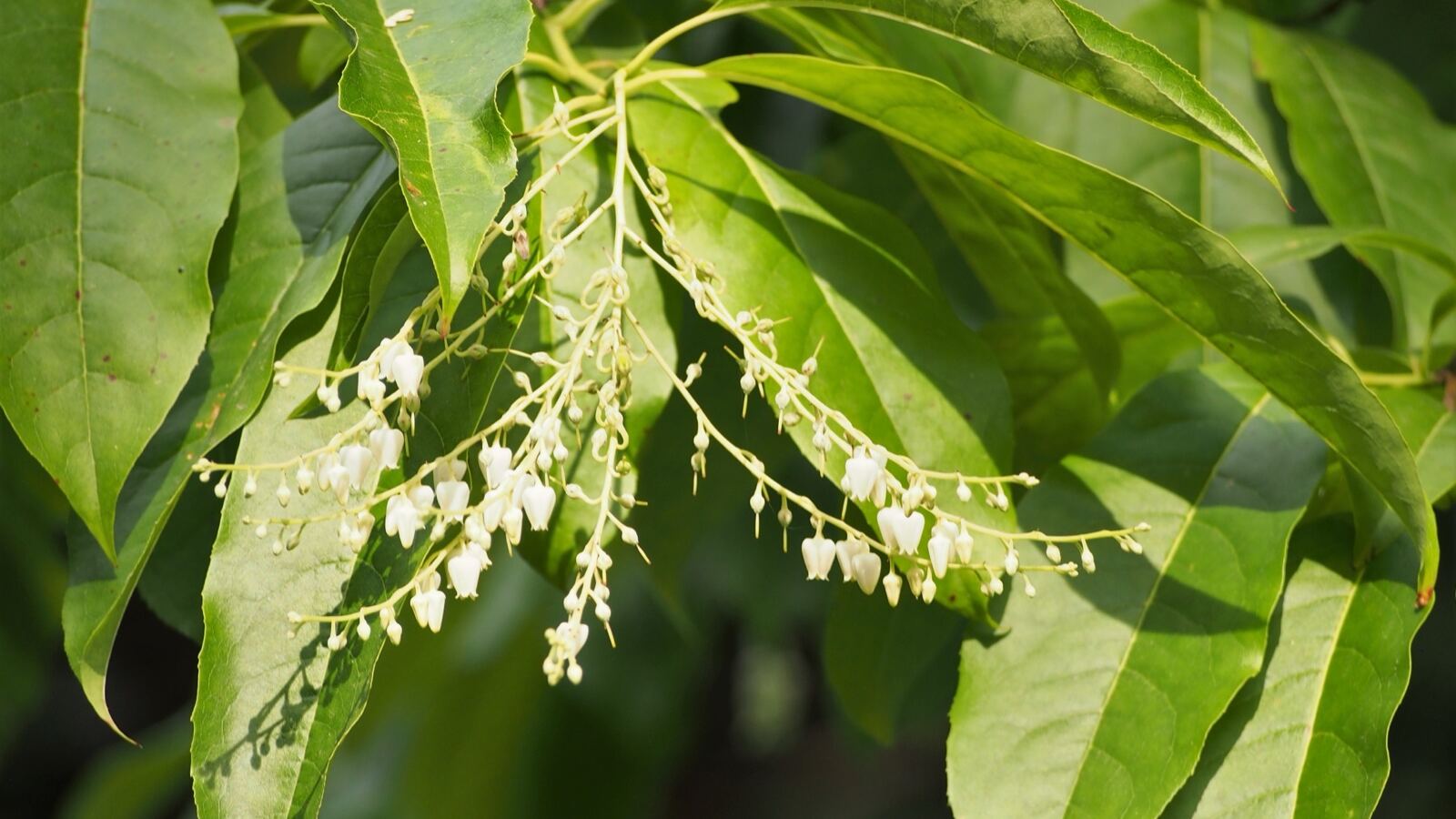
Summer flowers. In mid- to late summer, when most trees have long finished flowering, sourwood hangs out drooping sprays of small, white, urn-shaped flowers that look exactly like lily-of-the-valley — fragrant, delicate, and covering the tree in a lacy display at a season when tree blossom is scarce.
Autumn colour. It is one of the earliest and most brilliant trees to colour in autumn, turning deep crimson, scarlet, and purple — a display that rivals the maples, sweetgum, and sumac it grows among, and often held while the creamy seed-capsule sprays still hang from the branches, a striking two-tone effect.
Its modest size, slow growth, neat form, and this long season of interest make it a choice small specimen tree, though it is fussy about its conditions and resents transplanting and urban stress.
Sourwood honey
Sourwood's real fame, though, is liquid. The summer flowers, blooming when little else does, are a superb nectar source, and the honey the bees make from them — sourwood honey — is one of the most prized and sought-after honeys in the United States.
It is a light, amber, slow-to-crystallise honey with a distinctive, complex flavour — variously described as buttery, spicy, and anise-like, with a lingering finish — and it commands premium prices. It is a signature product of the southern Appalachians, where beekeepers move hives up into the sourwood-rich mountains for the midsummer bloom, and genuine single-source sourwood honey has won international honey competitions and is guarded against imitation. The tree is thus a keystone of a whole regional beekeeping tradition, one of the clearest cases of a single tree's flowering underpinning a distinctive local honey, in the way manuka does in New Zealand. It is a fine pollinator tree in general, its long midsummer bloom feeding bees when the nectar flow from spring trees has ended. See native bees.
Growing it
Hardy, temperate, and particular. Sourwood wants moist, acidic, well-drained soil rich in organic matter — the same acid conditions as its blueberry and rhododendron relatives — and full sun to light shade; it flowers and colours best in sun but tolerates woodland-edge shade. See soil pH.
It dislikes alkaline soil, drought, pollution, root disturbance, and competition, which makes it a poor urban tree and a slow, sometimes tricky one to establish — plant it small, in the right acid soil, and leave it undisturbed. It is slow-growing and long-lived once settled, and largely free of serious pests and diseases. Grown from seed (fine, and needing light and moisture to germinate) and with difficulty from cuttings. See propagation and native plant selection.
For an acid-soil garden with room for a refined small native tree, sourwood offers lily-of-the-valley flowers in summer, flaming colour in autumn, and — if there are bees — a share in one of the great honeys.
See also
- Blueberry and Acid Shrubs its heath-family relatives and shared acid-soil need
- Pollinator Habitat sourwood's valuable midsummer nectar
- Native Bees the bees that make sourwood honey
- Sweetgum a companion in brilliant Appalachian autumn colour
- Sumac and Smoke Tree more of the autumn-fire trees
- Soil pH the acid soil sourwood requires