What it is
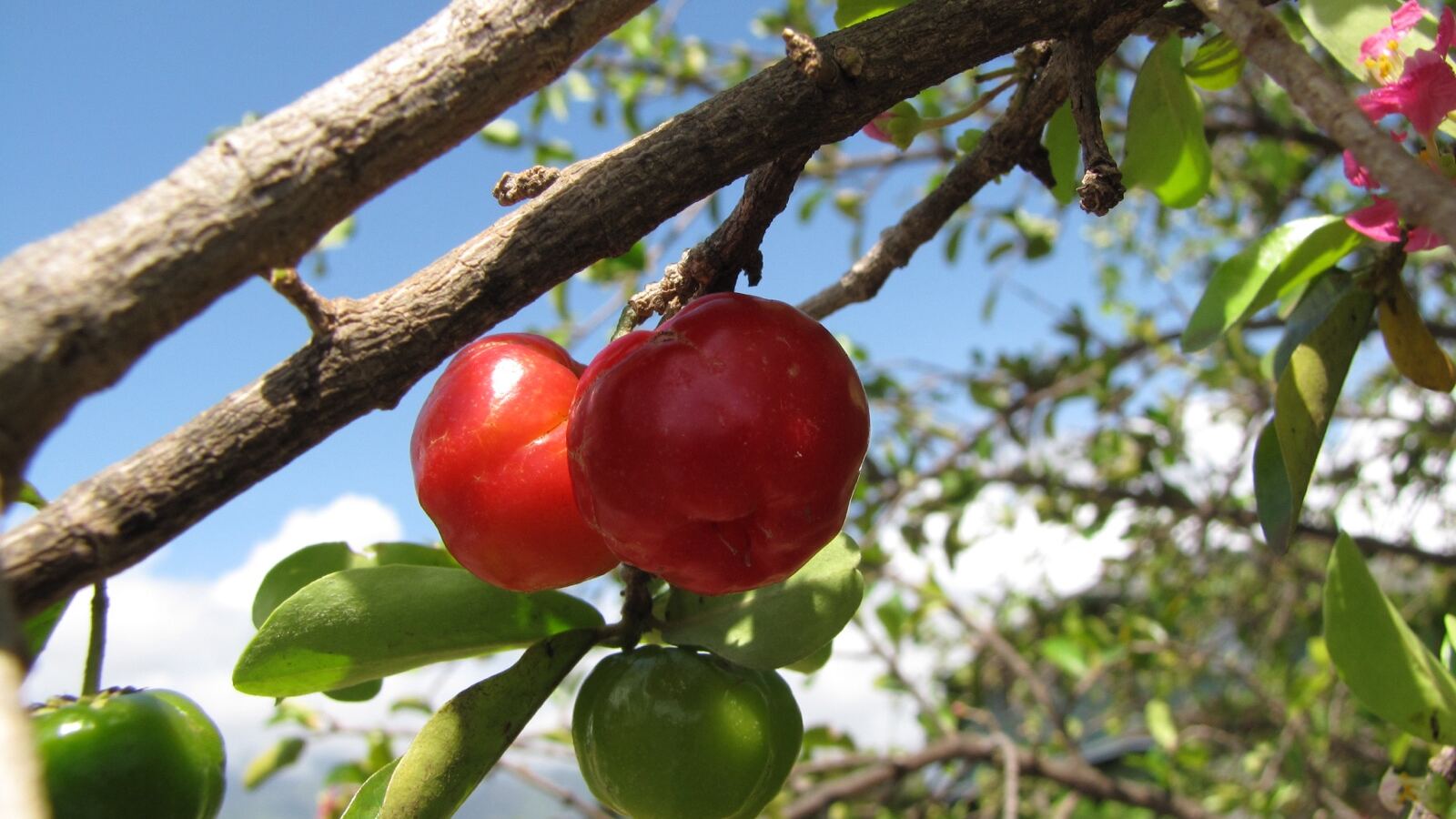
Malpighia emarginata (also M. glabra), the acerola, Barbados cherry, or West Indian cherry — a small evergreen shrub or tree of the Caribbean, Central America, and northern South America, bearing bright-red, cherry-like fruit.
The fruit looks like a small cherry — round, red, and glossy, with a tart-sweet, juicy flesh — but it is unrelated to the true cherry, and it has one extraordinary quality that makes it a crop grown far beyond its home: an almost unmatched concentration of vitamin C.
A vitamin-C powerhouse
The acerola is one of the richest known natural sources of vitamin C in the world — its fruit can contain vitamin C at levels dozens of times higher than an orange, rivalling or exceeding even the amla and the Amazonian camu-camu among the vitamin-C champions of the plant world. A single small acerola can supply a person's daily requirement several times over.
This is the whole basis of the acerola industry. Because the fruit is so intensely rich in vitamin C (along with vitamin A, antioxidants, and other nutrients), it is grown commercially — especially in Brazil — not so much to be eaten fresh as to be processed into natural vitamin-C powder, juice concentrate, and dietary supplements, sold worldwide as a "whole-food" source of vitamin C for people who prefer it to synthetic ascorbic acid. Acerola extract turns up in juices, health foods, and cosmetics across the globe, so a small Caribbean cherry tree has become a modest international commodity on the strength of its chemistry.
The perishability problem
The reason acerola is a supplement rather than a fresh-fruit crop is that it is extremely perishable. The ripe fruit is soft, bruises at a touch, and begins to lose its vitamin C and spoil within a day or two of picking, so it cannot travel or keep, and — like the jaboticaba and lychee before cold chains — fresh acerola is essentially a treat of the garden and the local market only.
The flip side is that a home-grown acerola is a wonderful thing: eaten straight off the tree (tart and refreshing), or turned quickly into juice, jelly, or a vitamin-rich purée. In the tropics and warm subtropics it is a popular dooryard fruit tree for exactly this reason, cropping heavily and often several times a year. Its pretty pink flowers are good for bees, and it makes an attractive, dense, small evergreen tree or hedge.
Growing it
Tropical to warm-subtropical and frost-tender (it tolerates only very light frost, which sets its cool limit), the acerola wants full sun, warmth, and well-drained soil, and it is otherwise fairly easy and tough — moderately drought-tolerant once established, tolerant of a range of soils including poor and calcareous ground, and undemanding.
It is a small, fast-growing, evergreen shrub or tree, cropping young and heavily, and grown from seed (variable), cuttings, and grafting or air-layering for named high-yielding varieties. It fruits repeatedly through the warm season, and a couple of trees keep a household in vitamin C. It is a fine, productive, low-care component of a subtropical or tropical food forest. See propagation and tropical fruit trees.
See also
- Amla the other great vitamin-C fruit tree, of India
- Guavas another vitamin-rich small tropical fruit
- Jaboticaba and Lychee and Longan other intensely perishable fruits
- Citrus the fruit acerola so vastly outdoes in vitamin C
- Food Forest Design the acerola as a productive small fruit tree
- Miracle Fruit another small tropical fruit grown for its chemistry
- Canistel and Abiu
- Kakadu Plum