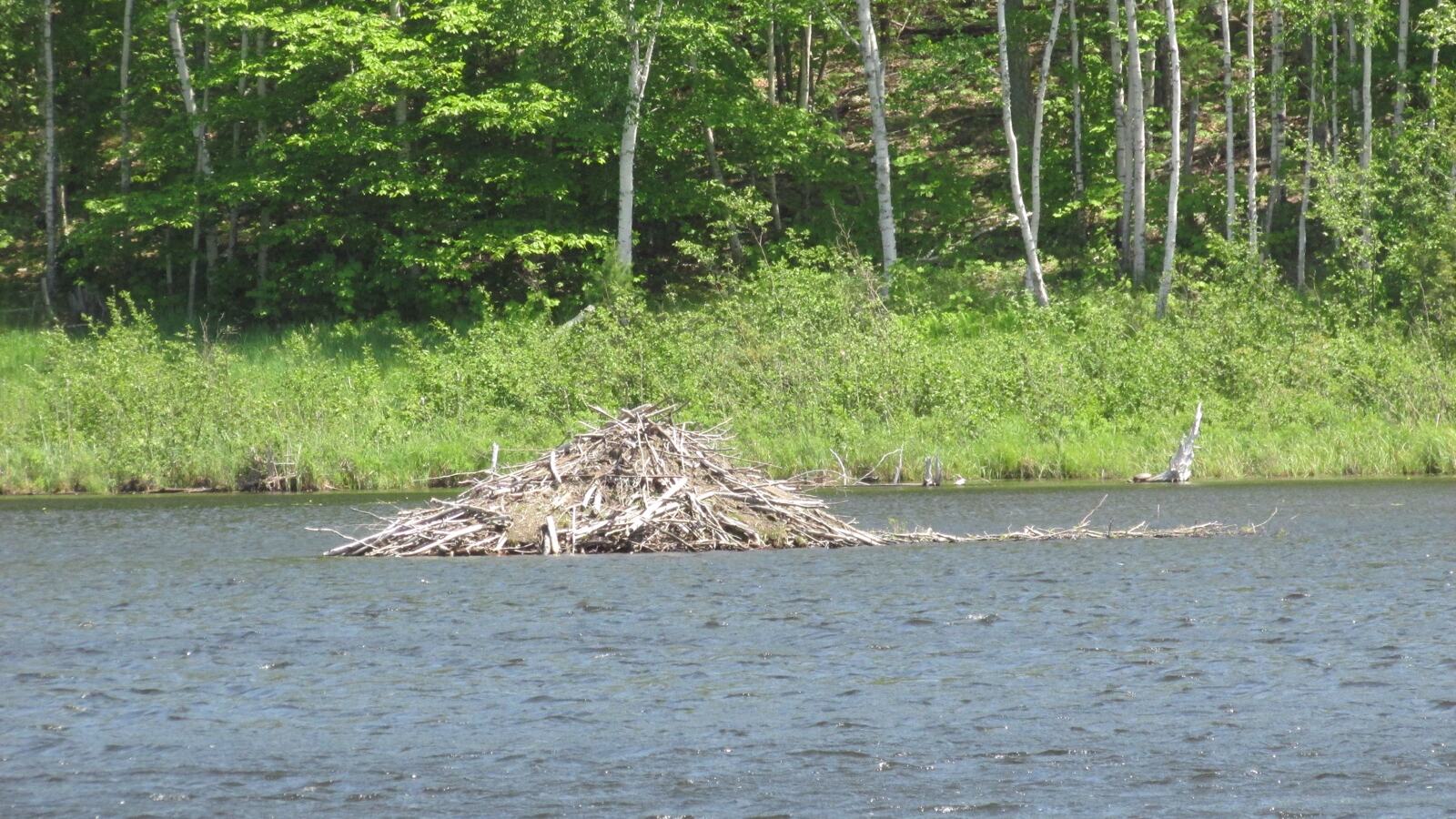
What they are
Two species: Castor fiber in Eurasia and Castor canadensis in North America. Large semi-aquatic rodents, 15 to 30 kg, entirely herbivorous, living in family groups.
They were hunted almost to extinction across both continents for fur and for castoreum. North American populations fell from an estimated 60 to 400 million to perhaps 100,000 by 1900. European beaver was reduced to around 1,200 animals in eight isolated populations.
Both have recovered substantially, and the ecological consequences of their return have been larger than almost anyone predicted.
Why they build
A beaver dams water because it is a slow, vulnerable animal on land and a fast, safe one in water. The pond is a moat: it lets them reach food and lodge entrances underwater, safe from predators.
The trigger is the sound of running water. Beavers dam in response to it, which is why they will dam a culvert, a pipe outlet, or a recording of a stream played beside a pond.
They are not trying to create wetland. They are trying to be safe. The wetland is a side effect, and it is one of the most consequential side effects in ecology.
What a beaver dam actually does
Slows water. A series of dams converts a fast channel into a stepped sequence of pools. Flood peaks arrive later and lower downstream, and studies of beaver-modified catchments consistently show measurable attenuation of storm peaks. This is the same function people build check dams and ponds to achieve, done continuously and maintained for free.
Recharges groundwater. Ponded water has time to infiltrate, raising water tables across the floodplain. That stored water sustains flow in dry periods, so beaver streams often keep running when comparable streams stop. See aquifer recharge and soil water storage.
Traps sediment and nutrients. Ponds settle out suspended soil and the phosphorus attached to it. Studies of beaver ponds have recorded substantial reductions in sediment and nutrient loads downstream, which is the same job riparian buffers do.
Creates structural complexity. Pools, riffles, backwaters, wet woodland, standing dead trees, and gravel sorted by varied flow. This heterogeneity is what most river restoration engineering tries and largely fails to replicate. See structural diversity.
Produces deadwood. Flooded trees die standing, and felled ones lie in and across the channel. Both are prime habitat. See dead wood habitat.
Raises biodiversity sharply. Amphibians, water voles, otters, bats, dragonflies, wetland plants, and fish all benefit. Surveys of beaver sites routinely find substantially higher species richness than comparable unmodified reaches. See amphibians and reptiles.
They also cut trees down
This is the part landowners notice first.
Beavers fell trees for food, mainly the bark and cambium, and for dam and lodge material. They prefer willow, poplar and aspen, birch, and hazel, and generally work within about 20 m of water.
The important detail is that their preferred species coppice. A felled willow or aspen regrows vigorously from the stump, and beaver activity effectively maintains a coppice rotation along the watercourse. The result over time is not loss of trees but a shifting mosaic of regrowth at different ages, which is precisely what coppice rotation achieves deliberately.
Where they will damage valuable specimen trees, individual protection works well: wire mesh around trunks, or sand-and-paint mixtures. Cheap, and it targets the actual problem.
The conflicts, and the fixes
Beaver reintroduction is contested, and the objections are real rather than imaginary. Most have practical answers.
Flooded farmland. The genuine issue. Beavers raise water tables, and low-lying productive land next to a beaver colony gets wetter. Solutions are flow devices, buffer strips of land taken out of production with compensation, or removal in the wrong locations. The honest position is that some places are unsuitable.
Blocked culverts and road flooding. Very common, and well solved with pond levellers and culvert protection fences. A pond leveller is a pipe through the dam with its intake in deep water well upstream, so the beaver cannot hear or locate the flow and the pond level is capped. These work reliably and cost far less than repeated dam removal.
Damage to trees. Protect the ones that matter.
Blocked drainage ditches. Beavers dam ditches enthusiastically, which is a problem in drained agricultural landscapes and part of the point in restoration ones.
Disease and fish passage are raised frequently and the evidence is mostly reassuring. Beaver dams are permeable and seasonally breached, and most studies find fish, including migratory salmonids, pass them, with beaver ponds providing valuable juvenile rearing habitat. Problems occur in specific low-gradient situations rather than generally.
Beavers as a restoration method
The strongest argument is economic. A beaver colony builds and maintains structures continuously, adapts them to conditions, and repairs them after floods, at no cost.
Engineered stream restoration costs a great deal per kilometre and produces a static design that begins degrading immediately. Beavers produce a dynamic system that maintains itself and improves over decades.
Where beavers are absent or not yet acceptable, beaver dam analogues, posts woven with brush across a channel, mimic the effect and often attract actual beavers, which then take over maintenance. This has become a standard low-cost technique in the western United States for rewetting incised streams.
The wider point is that restoring a process is more durable than building a structure. See wetland restoration, water mapping, and restoration economics.
Living with them
Reintroduction succeeds or fails on social grounds, not ecological ones. Beavers thrive almost anywhere with water and woody vegetation; the question is whether people accept the changes.
The programmes that have worked share features: early engagement with landowners, a properly funded management scheme that pays for mitigation and compensation, trained people who can install flow devices quickly, and a clear legal framework. Those that skipped the social groundwork have produced conflict and illegal killing.
See stakeholder mapping and community engagement. The technical part is straightforward; the negotiation is the work.
See also
- Wetland Restoration the habitat they build
- Check Dams the engineered equivalent
- Riparian Buffers the corridor they live in
- Willow their food and building material
- Dead Wood Habitat what flooded trees become
- Restoration Economics why free maintenance matters
- Dragonflies and Pond Life
- Stormwater Management
- Keystone Species
- Trophic Cascades