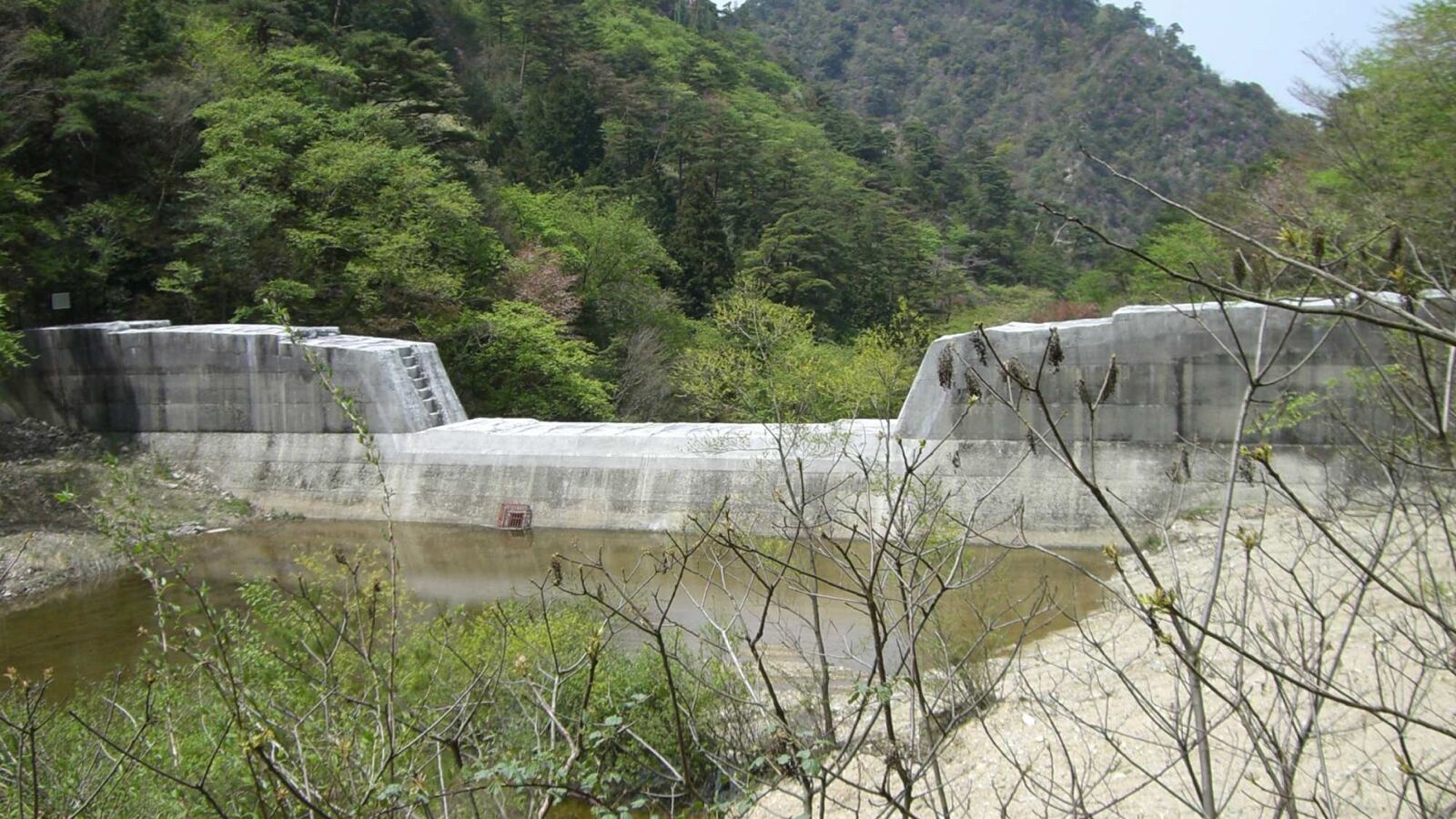
What it is
A sand dam is a reinforced wall built across a seasonal (ephemeral) sandy riverbed. It sounds pointless — most of the year the river is dry — but that is exactly the point. When the river does flow in the rains, it carries sand; the wall slows the water, the heavy sand drops out and piles up behind the dam, and the finer silt washes on over the top. Season by season the sand builds up until it fills the reservoir to the crest.
And wet sand stores water. The spaces between the sand grains hold water like a sponge — up to about 35% of the volume — so behind a mature sand dam lies a great buried body of clean water, held in the sand, that people can draw on through the long dry season by digging a hole or fitting a pipe or well.
Why it is so effective
Sand dams solve the two great problems of storing water in a hot dry climate:
- Evaporation. An open pond or dam in the drylands loses a huge fraction of its water to evaporation. Water held in sand, below the surface, barely evaporates at all — the dry top layer of sand seals the moisture below.
- Contamination and disease. Open water breeds mosquitoes and is easily fouled by animals and people. Water filtered through and stored in sand is naturally clean and protected, so sand dams sharply reduce water-borne disease. The sand itself filters the water.
They also recharge the surrounding groundwater — the stored water spreads sideways into the banks, raising the water table, reviving nearby wells and springs, and letting vegetation and trees return along the river. A single well-sited sand dam can supply hundreds or thousands of people and their livestock, and last for generations with almost no maintenance.
Building them
The dam is a masonry or concrete wall keyed deep into the riverbanks and, crucially, down to bedrock or an impermeable clay layer beneath the sand — otherwise the stored water simply drains away under the wall. Choosing the right site (sound rock foundation, sandy river, good catchment above) is the whole art, and getting it wrong wastes the effort.
The wall is built low and raised in stages across successive rainy seasons, rather than all at once. If built to full height immediately, the fast-flowing water drops fine silt as well as sand behind it, and silt does not store or yield water well. Raising the dam a little each year lets only the coarse, water-bearing sand accumulate. This staged patience is the key to a good sand dam.
Where they fit
Sand dams belong to the same dryland toolkit as check dams (which they resemble but are built specifically to store water in sand) and the runoff-harvesting contour bunds and zaï pits. They have been spread most widely in Kenya, where organisations have built thousands, and are among the most cost-effective water-supply interventions known for dryland communities. They complement spring development and wells as ways of reaching stored underground water — here, water stored in an underground reservoir that the community built itself.
See also
- Check Dams the related structure for slowing gully flow
- Aquifer Recharge how sand dams refill the groundwater
- Ponds and Dams surface storage, and why sand beats it in the drylands
- Wells and Boreholes drawing the stored water out
- Keeping Stored Water Clean the natural filtration sand provides
- Contour Bunds the catchment-scale partner technique