What it is
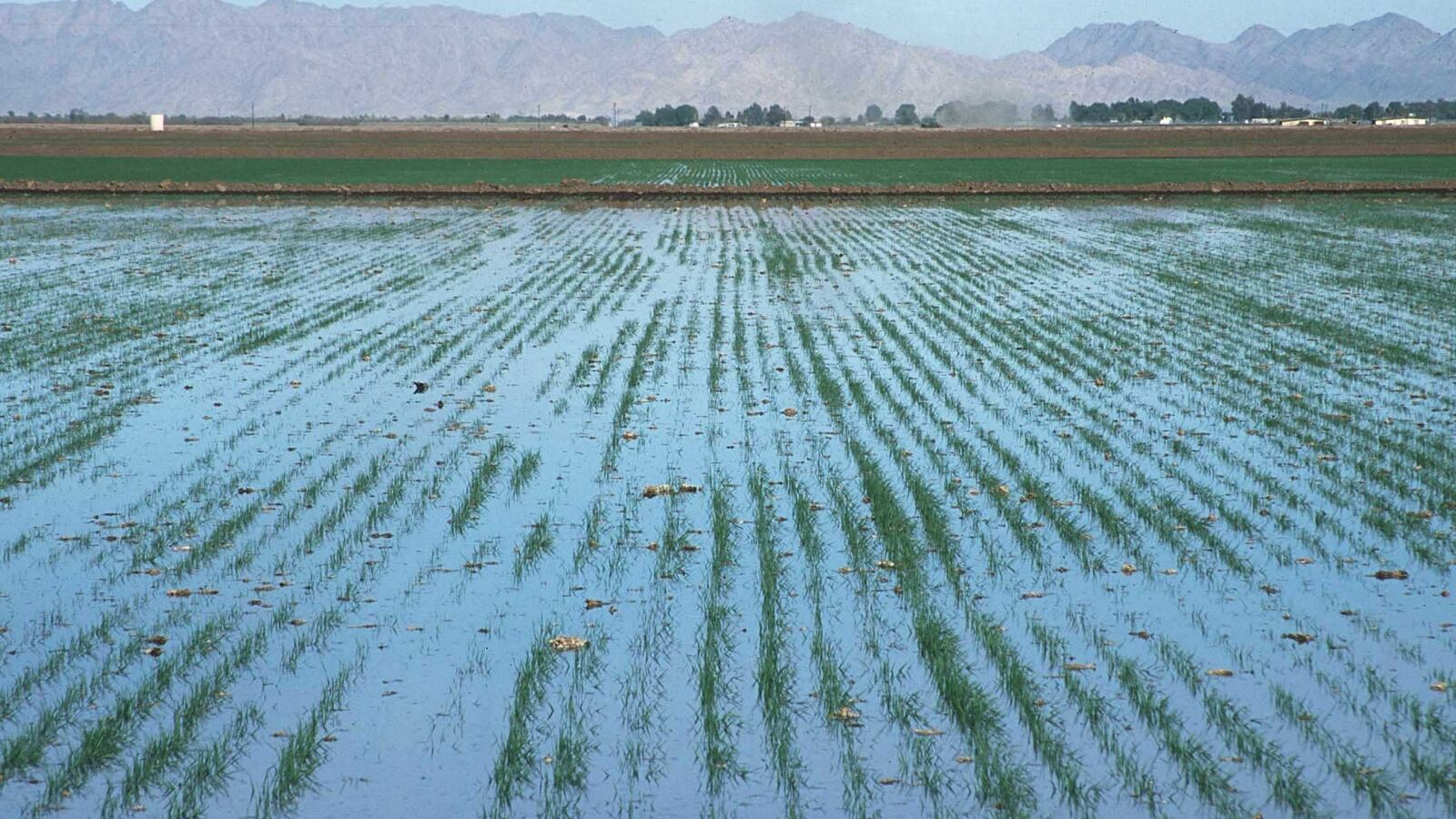
Spate irrigation is the practice of diverting the flash floods of a normally-dry or seasonal river — the sudden, brief, sediment-laden "spate" that follows a storm in the hills — out of the channel and onto the fields, where the water is spread, ponded behind field bunds, and allowed to soak deep into the soil. A crop is then sown into that stored moisture and grows on the single deep wetting, with no further water.
It is one of the oldest forms of irrigation in the world, practised for thousands of years in the arid foothills of Yemen, the Horn of Africa, Pakistan, North Africa, and beyond — a way of farming in places far too dry for rain-fed cropping and with no perennial river to tap.
How it works
The floods come a handful of times a year, unpredictably, and last only hours. The system must therefore be built to catch a violent, brief, uncertain flow and turn it into a slow, deep soaking:
- Diversion structures — traditionally earth or brushwood weirs and spurs, thrown across or into the channel — push part of the flood out into a network of canals. These are often deliberately built to wash out in a big flood (and be rebuilt), which protects the fields and the structure alike.
- Field bunds — earth walls around large basins — pond the diverted water so it stands and soaks in rather than running through. Fields are flooded in sequence, the water passing from the highest to the next once each is full.
- The soil is wetted deeply, often a metre or more, and this stored soil moisture carries a crop of sorghum, millet, wheat, or pulses through to harvest.
The hidden gift: fertility
Spate floods carry not just water but a heavy load of fertile silt scoured from the uplands. Each flood lays down a fresh layer of this nutrient-rich sediment on the fields, so spate-irrigated land is fertilised and even physically raised year by year — the flood brings the fertiliser with the water. This is the same principle that made the Nile floodplain fertile before the dams, and it means spate systems can crop for centuries without external inputs.
The difficulties
Spate irrigation is difficult precisely because floods are unpredictable and violent. A season may bring no useful flood at all, or a destructive one that washes out the diversion works. Water rights — who upstream gets the first, most reliable floods, and who downstream gets what is left — are the source of elaborate customary law and frequent dispute. The sediment that fertilises the fields also silts up the canals, which need constant clearing. And modern concrete diversion structures, though more durable, can concentrate the flood destructively and disrupt the traditional sharing, so they have a mixed record.
For all that, spate irrigation supports millions of people on land that could otherwise grow almost nothing, and interest in it is reviving as a model of dryland water management. It sits at the large, river-scale end of the harvesting spectrum, beyond the field-scale contour bunds and microcatchments, and alongside the sand dam as a way of wringing a crop from erratic dryland rivers.
See also
- Sand Dams another way of harvesting a seasonal river
- Contour Bunds and Half-Moons the smaller-scale harvesting kin
- Soil Water Storage how a single deep wetting carries a crop
- Rainwater Harvesting Basics the family of runoff-farming methods
- Riparian Buffers the floodplain fertility spate mimics
- Dryland Restoration managing erratic dryland water