What they are
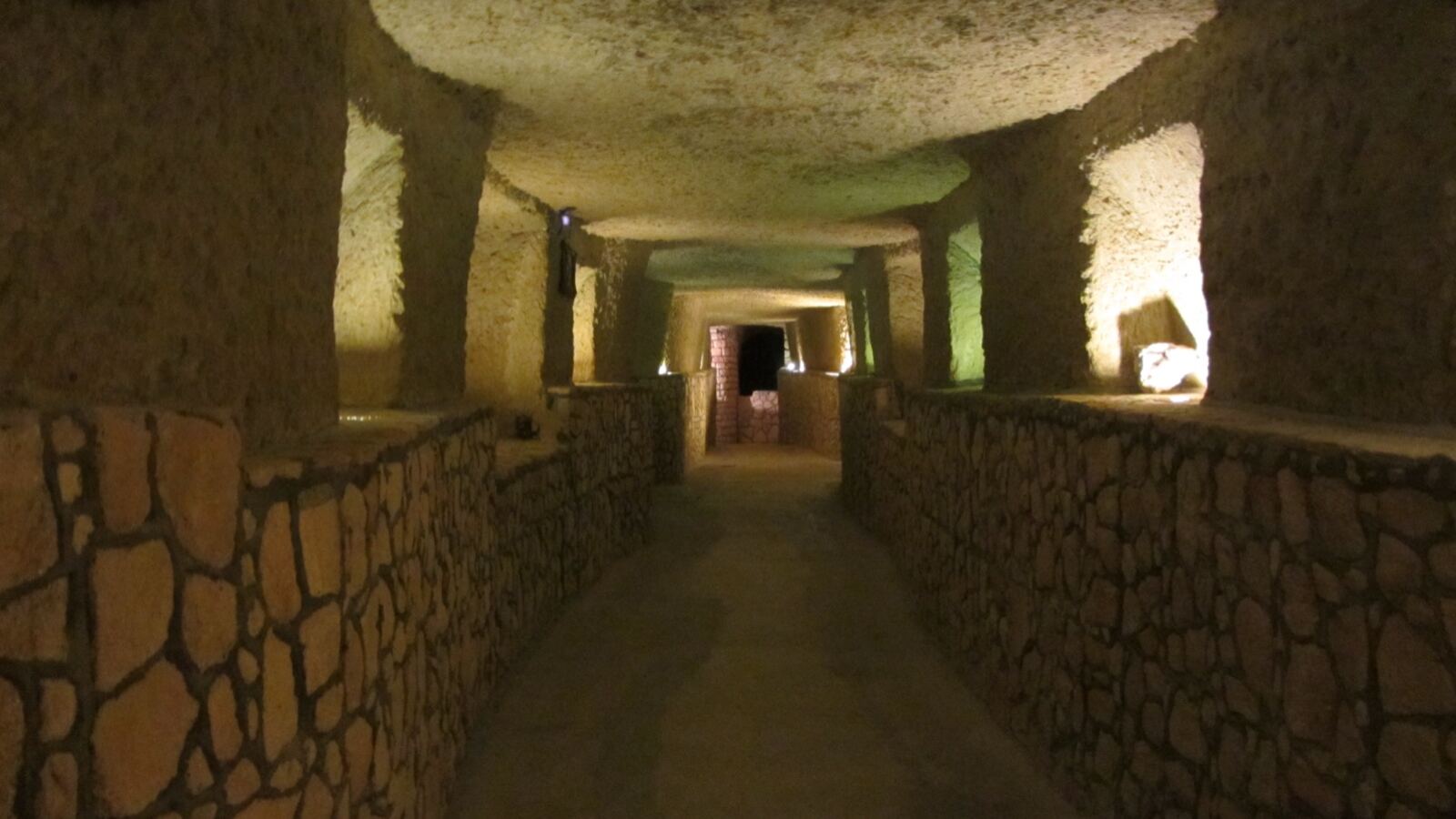
A qanat (called karez in Central Asia and western China, foggara in North Africa, falaj in Oman) is a gently-sloping tunnel that carries groundwater by gravity from an aquifer in the highlands, underground, to the surface at a distant, lower, drier place where it is needed. It taps the water table beneath the foothills where rain and snowmelt collect, and leads that water — without any pumping — for a few hundred metres to many kilometres, emerging as a reliable stream at the desert's edge to water a town and its gardens.
Invented in ancient Persia perhaps three thousand years ago and spread across the whole dry belt from Spain to China, qanats are among the greatest and most durable feats of pre-industrial engineering, and some have flowed continuously for over a thousand years.
How they work
The genius of the qanat is that it moves water by gravity alone, underground, which solves the desert's two great water problems at once:
- because the water travels in a buried tunnel, almost none is lost to evaporation on the way, unlike an open desert canal;
- because it flows downhill by gravity, it needs no energy, no pump, and no fuel — it runs itself.
The tunnel is dug with a very slight, carefully-controlled downhill gradient — steep enough to flow, gentle enough not to erode. A line of vertical shafts is sunk down to the tunnel at intervals along its whole length; these were used to remove spoil and give air during digging, and now allow access for cleaning and maintenance. From the air, a qanat appears as a dotted line of shaft-mouths, like a string of craters, marching across the plain to the "mother well" at the aquifer.
The self-limiting virtue
A qanat has a quiet ecological wisdom that a modern pumped borehole lacks: it can only ever take the water that gravity delivers. It draws from the top of the water table and flows at the rate the aquifer feeds it; it cannot pump the aquifer dry, and in a dry year it simply flows less. This makes the qanat inherently sustainable and self-regulating in a way that a diesel or electric pump — which can and routinely does draw a water table down faster than it recharges — is not. The tragedy across much of the qanat's homeland is that cheap pumped tube-wells, sunk nearby, have lowered water tables below the qanats and killed systems that had run for centuries.
Building and maintaining them
Qanats were dug by specialist crews (muqannī) of great skill and considerable danger — collapse and flooding of the tunnel were ever-present risks. Construction was slow and costly, often taking years, but the payoff was a water supply lasting generations. They demand continuous maintenance — the shafts and tunnel must be cleared of silt and collapse, a communal task governed, like spate irrigation, by elaborate customary water-sharing law that divides the qanat's flow among the households and fields it serves by carefully-timed turns.
Where they survive — in Iran, Oman, the oases of the Sahara, Xinjiang — qanats still water date-palm gardens and towns, and there is growing interest in restoring them as models of low-energy, sustainable groundwater use. They belong with the sand dam and the developed spring as ways of reaching underground water gently, by gravity, without drawing it down faster than nature refills it.
See also
- Wells and Boreholes the pumped alternative that has undermined many qanats
- Aquifer Recharge the groundwater a qanat sustainably taps
- Gravity-Fed Systems the energy-free principle qanats embody
- Spring Development another gentle way of reaching groundwater
- Sand Dams storing dryland water without evaporation
- Spate Irrigation the shared customary water law of dry lands