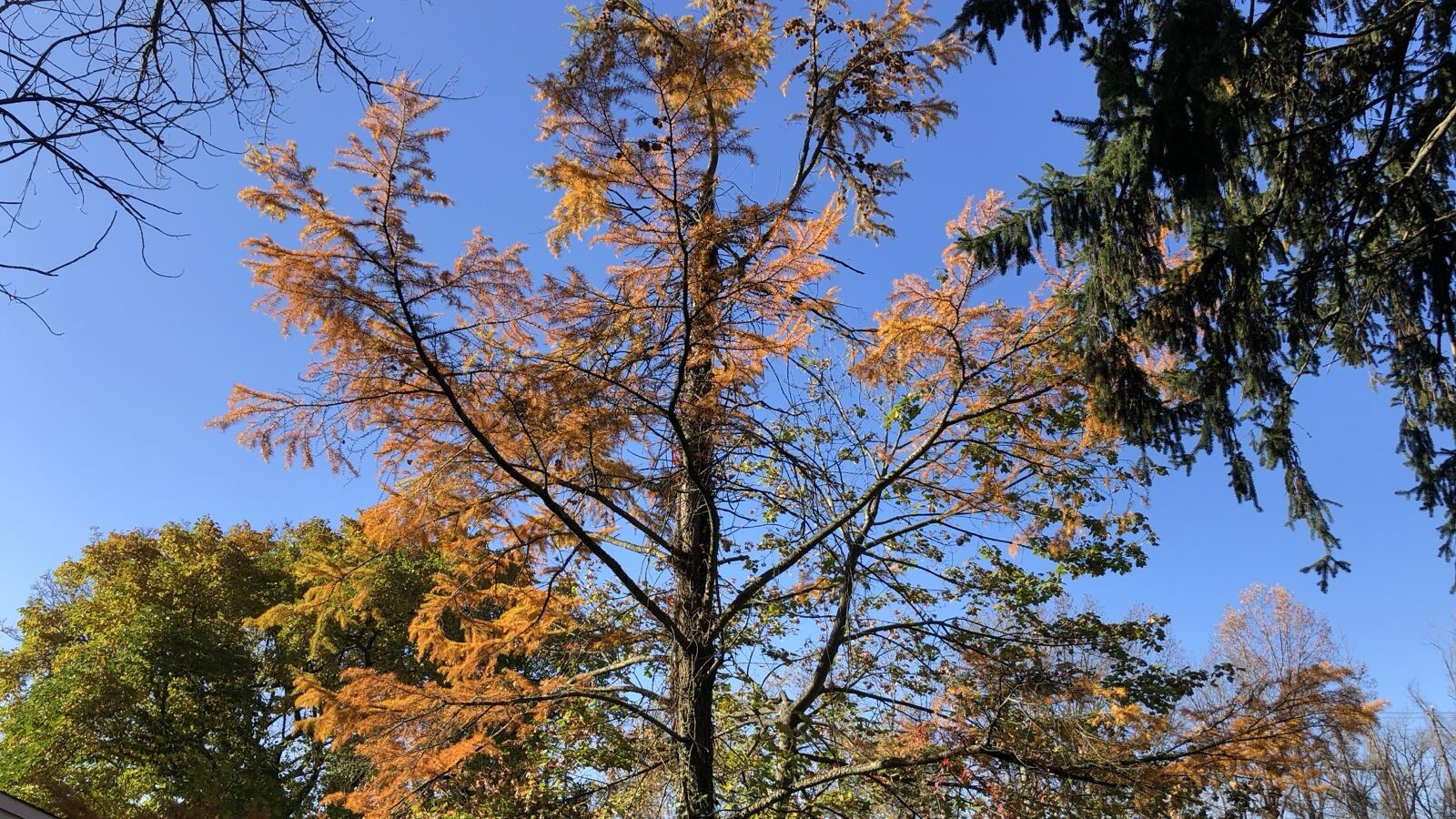
What it is
Pseudolarix amabilis, the golden larch — a rare and beautiful deciduous conifer of eastern China, and one of the finest of all trees for autumn colour.
Its name means "false larch," and it does closely resemble the true larch: like the larch, it is one of the small handful of conifers that are deciduous, dropping all their needles each winter — the club that also includes the swamp cypress and dawn redwood and the ginkgo. But the golden larch is a distinct genus, standing alone, and it is grown above all for what its needles do before they fall.
A blaze of gold
The golden larch earns its name in autumn. Its soft, larch-like needles — carried in whorls at the tips of short spur shoots, giving a delicate, feathery look — are fresh green through spring and summer, and then, in autumn, they turn a spectacular, glowing, pure golden yellow to orange, lighting up the whole broad, conical tree before dropping to lay a golden carpet beneath.
This autumn display is among the most beautiful of any conifer — richer and more golden than even the true larch's fine yellow — and it is the reason the golden larch is prized as a specimen tree, despite its rarity and slowness. In its native China the tree also had a use in traditional medicine (a bark preparation), and it is a classic and treasured subject for bonsai, its fine deciduous foliage and golden autumn making a superb miniature. As a rare relict of a group of trees once far more widespread — known also from the fossil record, like its fellow deciduous conifers — it has a place among the living treasures of the conifer world. See historical ecology and seed banking.
Growing it
Hardy but particular, the golden larch wants a cool-to-warm temperate climate, full sun, shelter from harsh wind, and deep, moist, well-drained, acidic soil rich in organic matter — it dislikes drought, waterlogging, exposure, and (importantly) alkaline or chalky soil, on which it does poorly. Given the right acid, moist, sunny conditions it is easy and rewarding, if slow.
It grows slowly into a broad, conical-to-spreading tree, and it is long-lived and largely trouble-free. It is grown from seed (which can be shy and slow) and, for special forms, by grafting. For a garden with the right soil and room for a slow, spreading specimen, few trees give a more glorious autumn than the golden larch, and it is a fine, distinctive addition to the small group of deciduous conifers. See propagation and conifers.
See also
- Larch the true larch, the other common deciduous conifer it resembles
- Swamp Cypress and Dawn Redwood more deciduous conifers
- Ginkgo another golden-autumn tree that drops its "needles"
- Conifers the wider group, mostly evergreen
- Cryptomeria and China Fir other notable East Asian conifers
- Historical Ecology the golden larch as a relict tree