What it is
Cornus mas, a large shrub or small tree of central and southern Europe and western Asia — a dogwood, in the same genus as the dogwoods grown for stem colour and the flowering dogwoods with showy bracts, but grown for something different again: its winter flowers and its edible fruit.
Not a cherry — the fruit merely resembles one — and "cornelian" refers to the deep red of the fruit, the colour of the cornelian gemstone.
Three seasons of use
Cornelian cherry earns its place across the year, which is unusual for a small tree.
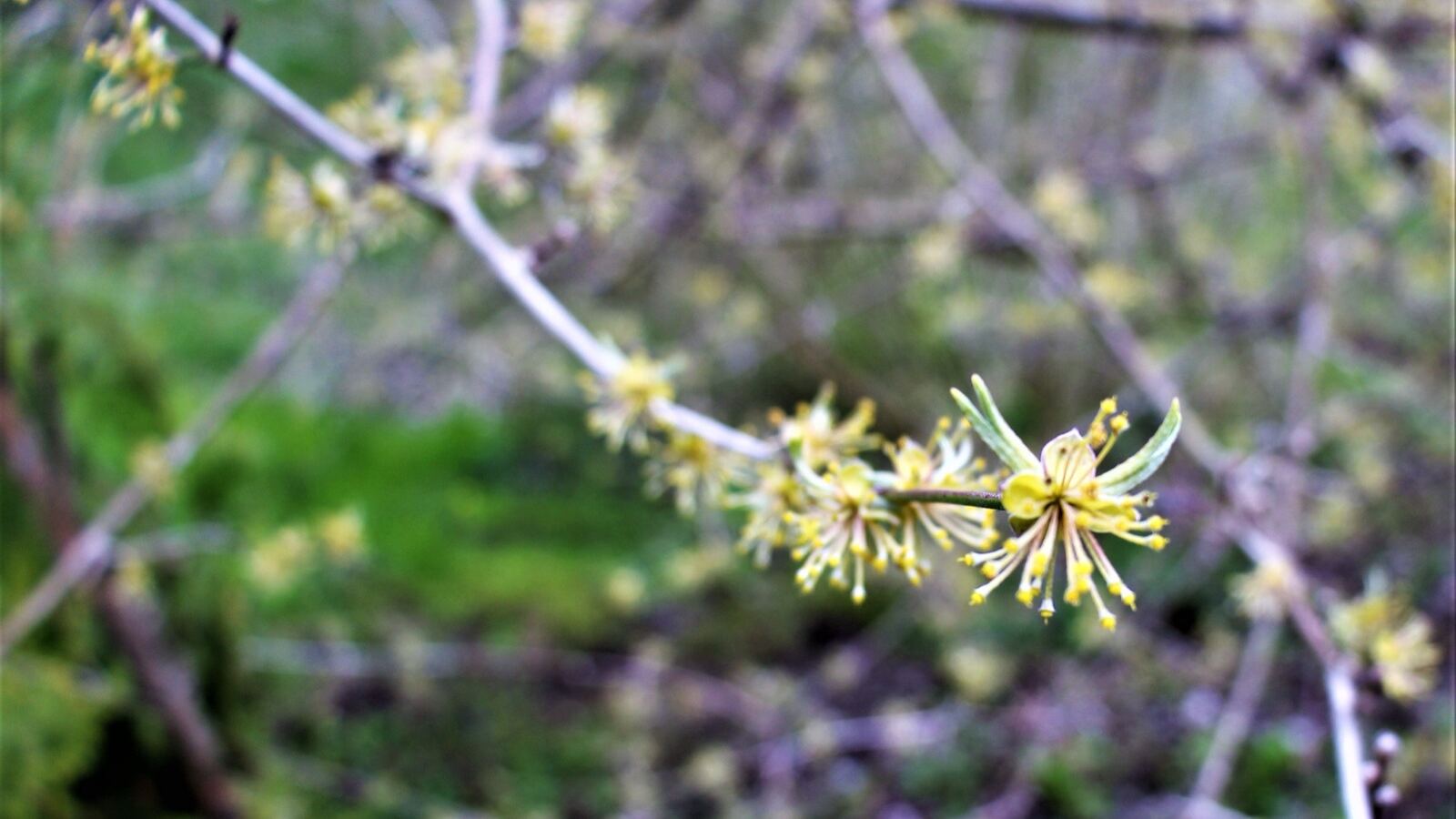
Late winter flowers. It is one of the earliest trees to flower, opening clusters of small bright yellow flowers on bare stems in late winter, weeks before most things stir — a haze of yellow when the garden is still bare, and a valuable early nectar source for the first bees and hoverflies flying on mild days. Only witch hazel, hazel catkins, and a few others are out with it. See pollinator habitat and native bees.
Summer fruit. The flowers give way to oblong, glossy, deep-red fruit that ripen in late summer — tart, astringent when underripe, sweet-sour and pleasant when fully soft. It is a genuine crop across eastern Europe, the Caucasus, and western Asia, made into preserves, syrups, sauces, a tart drink, and traditionally used to flavour and sour dishes as well as fermented into wine and spirits. In Turkey and the Caucasus it is a familiar market fruit. The fruit is high in vitamin C and pectin.
Autumn colour and a neat form round out the year.
That combination — very early flowers, edible late fruit, wildlife value, toughness, and small size — makes cornelian cherry one of the better multi-purpose small trees for a food forest or an edible hedge, and it is a natural component of a productive hedgerow.
The wood
Like several of the trees called ironwood, cornelian cherry has extraordinarily dense, hard, heavy wood — dense enough to sink in water, one of the few European timbers that does.
It was valued for exactly that: tool handles, mallet heads, wheel parts, ladder rungs, and — famously — spears and javelins in antiquity. The Greek and Roman cornus javelin took its name from the tree, and the wooden horse of Troy, in one tradition, was made of cornel. The Macedonian sarissa, the long pike, was cornel-wood. It shares this extreme-hardness, weapon-and-handle use with hop-hornbeam, hornbeam, and spindle, the other dense-wooded small trees.
Growing it
Genuinely easy and tough.
Full sun to light shade, and almost any well-drained soil including chalk and alkaline ground — it is notably lime-tolerant — as well as poor and dry soils. It dislikes only waterlogging. That toughness, plus its size, makes it a good street and amenity tree as well as a garden and hedge plant. See urban forestry.
Slow-growing, reaching 5 to 8 m, dense and twiggy, and long-lived. It clips well and makes a good component of a mixed hedge or a specimen, and it stands hard pruning.
Largely free of pests and diseases — a real advantage over the flowering dogwoods, which suffer from anthracnose.
For fruit, more than one plant improves cropping, and named fruiting varieties from eastern Europe give larger, sweeter fruit. Grows from seed, which is slow and doubly dormant, and from cuttings and layering. See propagation.
Cornelian cherry is an underused small tree that does a great deal: the first yellow flowers of the year, a real fruit crop, wildlife value, iron-hard historic wood, and complete toughness and reliability.
See also
- Spindle and Dogwood the dogwood relatives
- Witch Hazel the other winter-flowering shrub
- Hazel the companion very-early flowerer
- Hedgerow Care cornelian cherry in a mixed hedge
- Food Forest Design a multi-purpose small fruit tree
- Hop-Hornbeam another iron-hard small tree
- Loquat