What it is
Eriobotrya japonica, the loquat, an evergreen tree of Chinese origin (despite the "japonica"), long cultivated across China, Japan, and the subtropics, and now common in warm-temperate gardens worldwide.
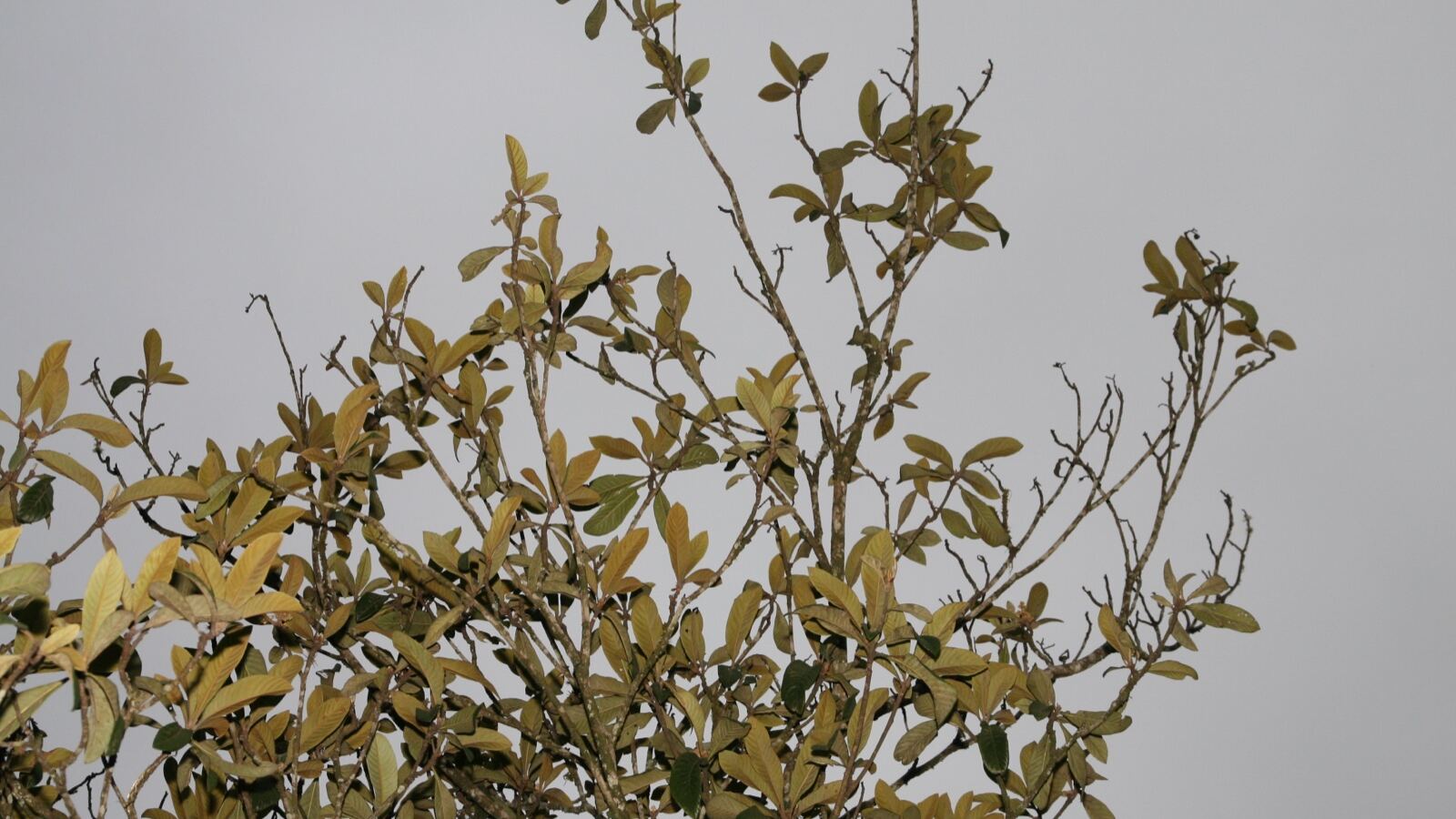
It is a member of the rose family, Rosaceae, and a pome fruit — the same fruit structure as the apple and pear — so it is a close relative of those temperate orchard trees, but an evergreen and subtropical one. It is a handsome tree in its own right: large, bold, deeply-veined, leathery evergreen leaves with a felted underside, giving it an almost tropical presence, which is why it is widely planted as an ornamental even where it fruits poorly.
The tree that runs backwards
The loquat's most distinctive feature is its reversed season. Where almost every fruit tree flowers in spring and ripens in late summer or autumn, the loquat does the opposite:
- it flowers in autumn and early winter, opening clusters of small, fragrant, creamy-white flowers when the year is closing down;
- it carries developing fruit through the winter;
- and it ripens its fruit in early spring, before almost any other fruit of the year.
This backwards cycle is what makes the loquat both valuable and vulnerable. The winter flowers are a rare and precious nectar and pollen source, feeding bees and other insects on mild days in the depths of winter when virtually nothing else is in bloom — one of the very best trees for winter pollinator habitat in a mild climate, alongside the cornelian cherry and witch hazel. But the winter-developing fruit is easily killed by hard frost, so although the tree itself is reasonably hardy and often grown for its foliage well into cool-temperate regions, it only crops reliably where winters are mild — which is the single biggest limit on loquat as a fruit tree.
The fruit
The fruit are small, round to pear-shaped, orange-yellow, borne in clusters, with a thin skin, soft juicy flesh, and a few large glossy brown seeds. The flavour is sweet-tart and refreshing — variously compared to a blend of apricot, plum, and citrus — and because it is highly perishable and bruises easily, loquat is very much a garden and local-market fruit rather than a supermarket one, best eaten straight from the tree. It is also made into jam, jelly, syrup, and liqueurs, and both fruit and leaves have a long use in Chinese herbal medicine (loquat-leaf syrup for coughs is well known). As with its apple and cherry relatives, the seeds contain cyanogenic compounds and should not be eaten.
A pome-fruit relative, with pome-fruit problems
Being a close relative of the apple and pear, the loquat shares some of their diseases — most importantly fireblight (Erwinia amylovora), the bacterial disease that blackens and kills the shoots of pome fruit, to which loquat is quite susceptible. It also gets the pear-family scab and, in some regions, fruit fly. Managing it is much the same as managing an apple or pear: remove blighted wood, avoid over-lush growth, and work within integrated pest management. See tree diseases.
Growing it
Warm-temperate to subtropical, frost-free enough in winter to carry the developing fruit; the tree survives cold to around −10°C but the flowers and fruit are lost to hard frost.
Soil and site. Undemanding — any well-drained soil, in full sun for fruit, tolerant of drought once established and of coastal and urban conditions, which adds to its value as a tough evergreen ornamental. A warm, sheltered, sunny wall helps it fruit at the cool edge of its range.
Propagation. Seedlings grow easily from the large fresh seeds but are variable and slow to fruit; superior named fruiting varieties are grafted, often onto loquat or quince rootstock, in the manner of other pome fruit. See grafting and propagation.
Care. Thin the fruit clusters for larger fruit, and prune lightly after harvest. See pruning basics and harvest and storage.
The loquat is an ideal small tree for a mild-climate garden: evergreen and handsome all year, sweetly scented and full of bees in winter, and bearing the first tree fruit of spring — a natural component of a subtropical food forest.
See also
- Apples and Pears the temperate pome-fruit relatives
- Pollinator Habitat loquat's rare winter flowers
- Cornelian Cherry another very early flowering fruit tree
- Witch Hazel a companion winter-flowerer
- Tree Diseases fireblight in loquat and its relatives
- Food Forest Design an evergreen fruit tree for mild climates