What it is
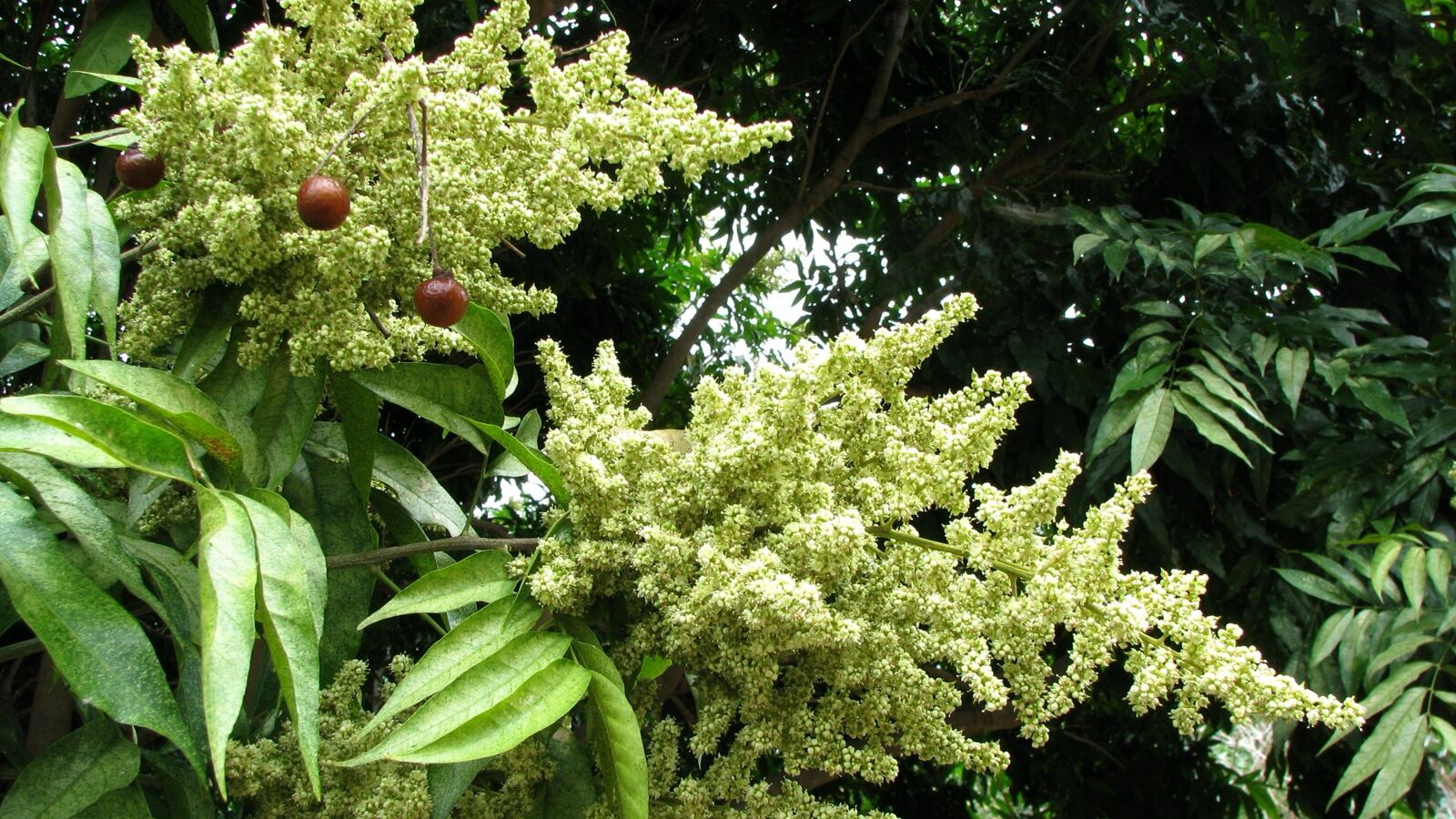
Sapindus, the soapberries or soap nut trees — a genus of trees of the warm regions of Asia and the Americas whose fruit is, quite literally, a natural soap. The Indian soap nut or reetha (Sapindus mukorossi and S. trifoliatus) is the most used.
The genus name says it: Sapindus comes from the Latin sapo indicus, "Indian soap." It is the type genus of the soapberry family, Sapindaceae — which makes the soap nut a relative of the lychee and longan, the maples, the golden rain tree, and the ackee — a family better known for its fruit than its chemistry, but here the chemistry is the point.
Soap that grows on a tree
The soap nut's fruit is a small, round, fleshy berry that dries to a sticky, translucent, amber shell around a hard black seed. Those shells are packed with saponins — natural soap-like compounds that foam in water and lift away grease and dirt — and this is the whole basis of the tree's use.
Soaked or agitated in water, a handful of soap nut shells release their saponins and produce a mild, soapy lather, and this natural surfactant has been used across Asia for centuries as a soap, shampoo, and laundry detergent — a genuine, everyday cleaning agent that grows on a tree and needs no processing beyond drying. Traditionally the shells are used to wash the body and hair, to launder clothes (they are famously gentle, and were used for washing delicate silks and woollens, and prized for cleaning fine jewellery), and in Ayurvedic medicine.
In recent years the soap nut has been enthusiastically rediscovered by the eco-conscious, marketed as a plastic-free, biodegradable, low-allergen, "zero-waste" laundry detergent: a small cloth bag of soap nut shells is tossed in with the wash, reused for several loads, and then composted, replacing a plastic bottle of synthetic detergent. It is a rare case of a natural product genuinely and directly substituting for an industrial one, and demand has grown enough to raise (as ever) questions about the sustainability of harvesting it and the effect of the export boom on the communities that gather it. See restoration economics.
The saponins are mildly toxic if eaten (they are why the fruit is inedible, and traditionally soapberry pulp was used to stun fish for harvest), so the soap nut is a washing plant, not a food — the opposite of its edible lychee and ackee cousins, and a reminder of how varied one plant family can be.
The seeds and the beads
The hard, round, black seeds inside the shells have their own uses: they are strung as beads — for rosaries, prayer beads, and jewellery, exactly like the seeds of the chinaberry bead tree — and pressed for oil. So the tree yields soap from the shell and beads and oil from the seed, a thoroughly useful plant.
Growing it
The soap nut trees are subtropical to tropical (the Indian soap nut, from the Himalayan foothills, is the hardier, taking some frost; the Chinese and American soapberries vary), wanting full sun and deep, well-drained soil, and they are fairly drought-tolerant and tough once established, growing on a range of soils.
They are medium-to-large deciduous or semi-evergreen trees, moderately fast, long-lived, and grown from seed (which is hard-coated and benefits from scarification) — the tree cropping heavily once mature and needing little care. As a useful, tough, multi-purpose tree that yields a genuine natural detergent, the soap nut is a natural component of a subtropical food-and-utility forest and a good shade tree. See propagation.
See also
- Lychee and Longan the edible fruit of the same soapberry family
- Ackee another Sapindaceae — edible where the soap nut is not
- Golden Rain Tree and Maples more of the soapberry family
- Chinaberry the other tree whose seeds are strung as beads
- Restoration Economics the eco-detergent export boom
- Food Forest Design a multi-purpose utility tree
- Yellowhorn