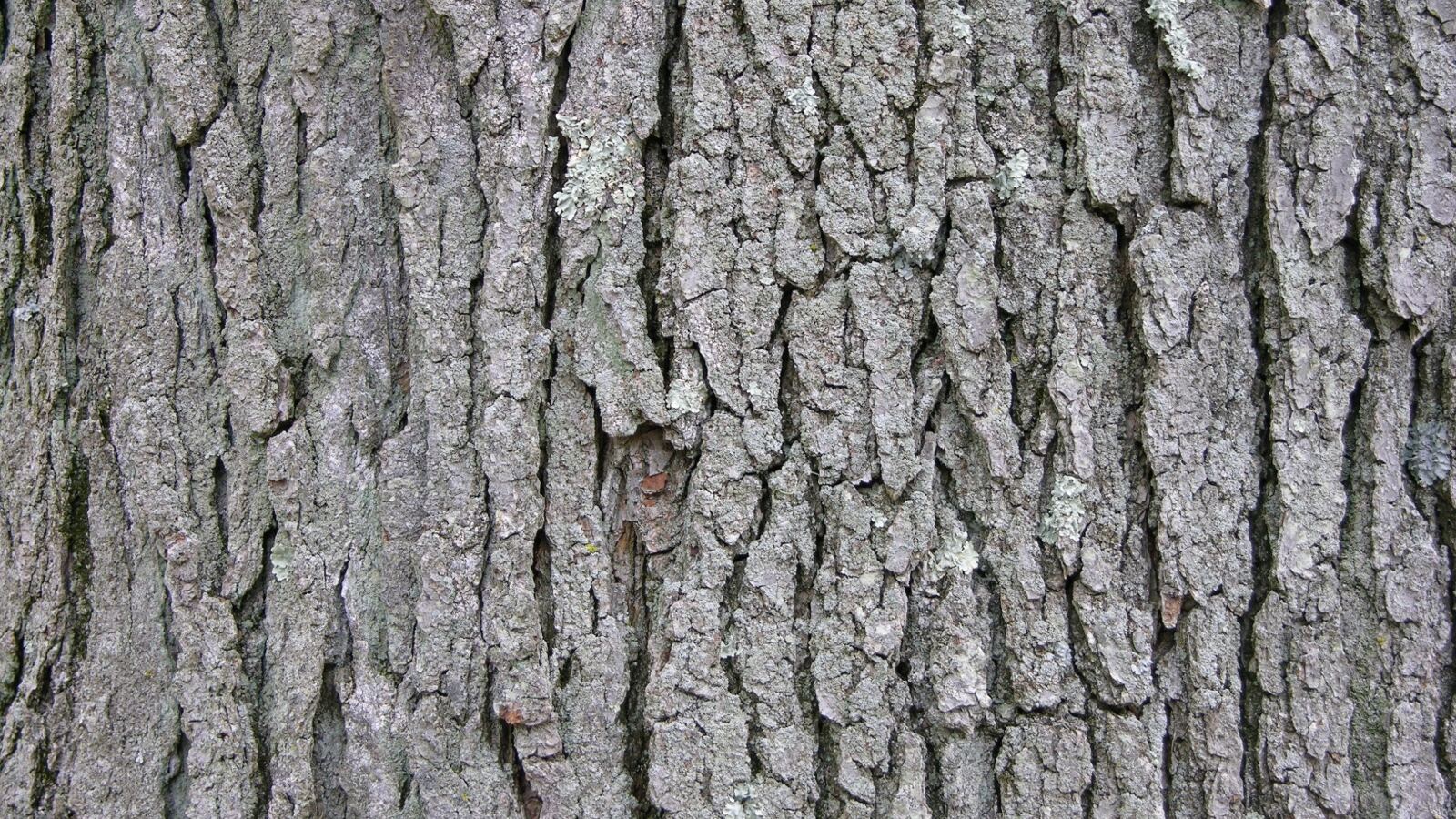
What it is
Gymnocladus dioicus, an uncommon legume tree of the central and midwestern United States, and one of the more curious trees of that region.
The genus name means "naked branch," and it describes the tree well: it is one of the last trees to leaf out in spring and one of the first to drop in autumn, so it stands bare and stark-branched for a longer stretch of the year than almost any neighbour — a coarse, gaunt winter silhouette that identifies it at a distance.
The largest leaves in North America
Its most remarkable feature is the leaf. Kentucky coffeetree has bipinnate (doubly-compound) leaves that can be up to a metre long and 60 cm wide — the largest of any tree native to North America.
Each huge leaf is divided into many leaflets, so the effect is ferny and light despite the size, and in autumn the whole structure — leaflets, stalks, and all — drops as a unit, giving the bare-branch look early. It shares this big-bipinnate-leaf character with the silk tree and the honey locust, its legume relatives.
The coffee, and the poison
The pods are thick, hard, leathery, and flat, filled with large hard dark seeds embedded in a sticky pulp.
Early European settlers in Kentucky roasted and ground the seeds as a coffee substitute — hence the name — during periods when real coffee was unavailable. By all accounts it was a poor substitute, and its use died out entirely once trade restored the real thing.
More importantly, the raw seeds and pods are poisonous, containing the alkaloid cytisine, the same toxin found in laburnum. Roasting destroys the toxin, which is what made the coffee safe, but raw seeds have poisoned people and livestock. This is a tree to admire rather than to nibble.
Another orphaned fruit
Like the honey locust and osage orange it grows among, the Kentucky coffeetree has the marks of an evolutionary anachronism: heavy pods full of hard seeds set in pulp, adapted to be eaten and dispersed by large mammals — and no living animal in its range does the job.
The pods mostly fall and rot beneath the parent, the seeds have a hard coat needing scarification to germinate, and the tree spreads mainly by root suckers, forming small clonal groves rather than dispersing widely. It is one of the classic examples used to argue that some American trees are still waiting for the mastodons to come back. Its natural rarity and patchy distribution may be partly a consequence of losing its disperser.
A tough, clean urban tree
Despite its oddities, the coffeetree is an excellent and underused ornamental and street tree.
It tolerates drought, heat, cold, pollution, alkaline soil, and urban conditions; it is deep-rooted, wind-firm, and free of serious pests and diseases; and the light shade from the ferny foliage lets grass grow beneath. Because the messy pods form only on female trees, seedless male cultivars (Espresso, Stately Manor) are planted to avoid litter. It is exactly the kind of tough, distinctive diversifier that urban forestry keeps calling for to break up monocultures of maple and ash. See climate adaptation.
Growing it
Full sun and almost any soil; extremely tough and adaptable once established.
Slow to moderate, reaching 18 to 24 m, with a narrow crown when young broadening with age. Late to leaf and early to drop, so site it where its long bare season is not a drawback.
Grows from seed, which needs scarification (settlers filed or acid-treated the hard coat), and from root cuttings and suckers. Like the honey locust it is not a nitrogen fixer despite being a legume — it forms no nodules — so plant it for its form and toughness, not for fertility. See nitrogen fixers for the trees that do the job.
See also
- Honey Locust the same region, the same orphaned pods, the same non-fixing legume
- Osage Orange another anachronistic fruit of the American Midwest
- Laburnum the source of the same cytisine poison
- Silk Tree another big bipinnate-leaved legume
- Urban Forestry coffeetree as a tough diversifier
- Maples the overplanted trees it could relieve
- Devil's Walking Stick