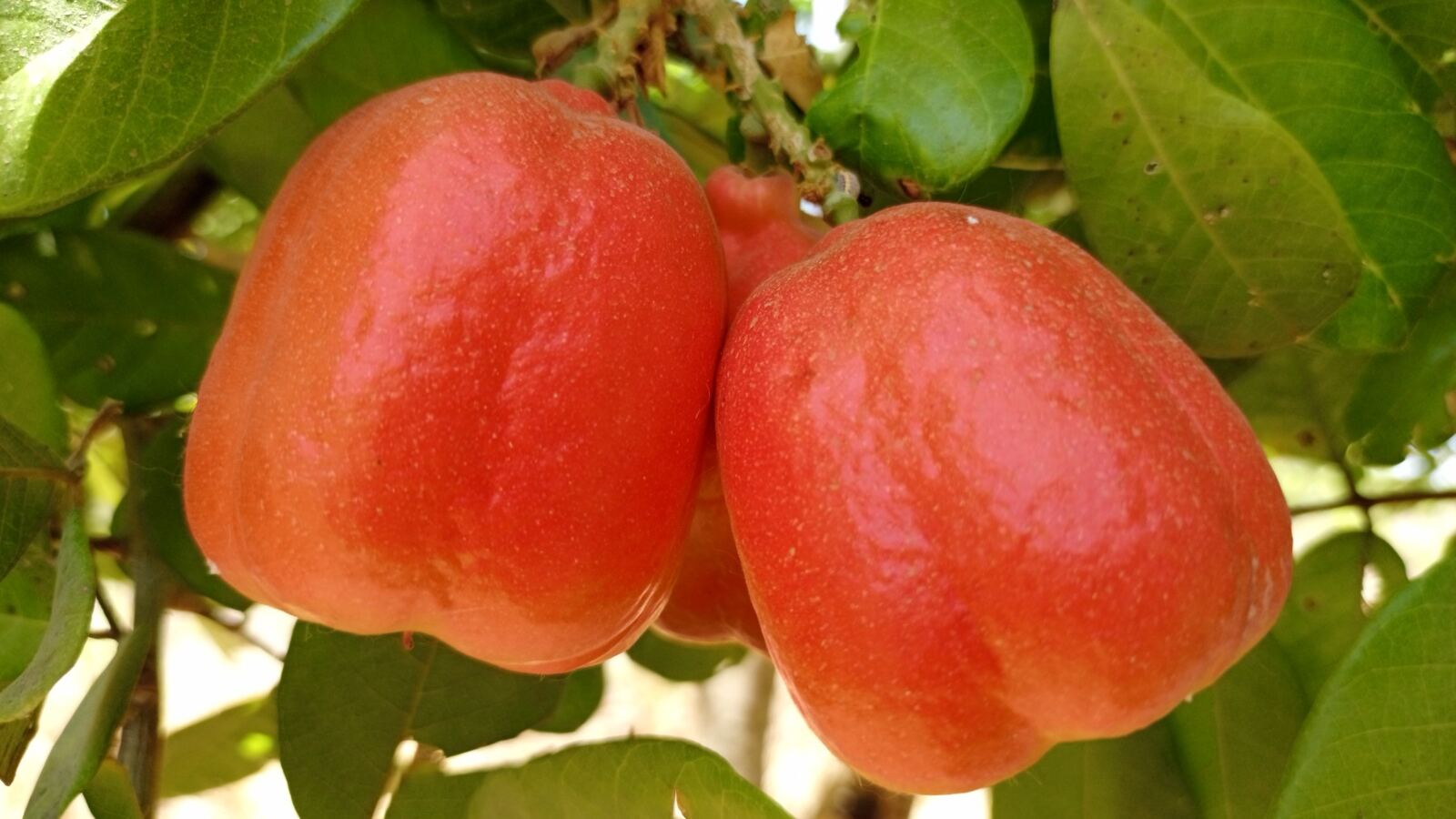
What it is
Blighia sapida, the ackee, an evergreen tree native to West Africa and now most famous as the national fruit of Jamaica, where it is the centrepiece of the national dish, ackee and saltfish.
It belongs to the soapberry family, Sapindaceae — the same family as the lychee and longan, and, crucially, the family whose fruits carry the hypoglycin toxins — a kinship that turns out to be a matter of life and death, as with the lychee. The edible part is not the fruit flesh but a fleshy aril around the seed, exactly as in its lychee cousins.
The name and the crossing
The ackee's scientific name carries a piece of history. It was carried from West Africa to the Caribbean in the eighteenth century on the ships of the slave trade — the fruit a food of the enslaved — and it was later named Blighia after Captain William Bligh (of the breadfruit and the Bounty mutiny), who carried specimens from Jamaica to Britain. So the tree links two of the era's stories: the forced movement of people and plants across the Atlantic, and the same naval breadfruit-collecting captain who appears in the breadfruit's tale. The common name "ackee" comes from a West African (Akan) name for the tree, one of the linguistic traces of that crossing.
The window of safety
The ackee is one of the most striking examples of a food that is safe and deadly depending entirely on timing, and the rule that governs it is absolute.
The unripe fruit and its arils contain high levels of hypoglycin A — the same class of toxin as in unripe lychee — which crashes blood sugar and causes "Jamaican vomiting sickness," a severe illness of vomiting, hypoglycaemia, seizures, coma, and, in serious cases, death. The toxin is concentrated in the unripe fruit and in the seeds and the pink membrane, and it is destroyed as the fruit ripens.
The safe practice is precise and non-negotiable:
- the fruit must be left on the tree until it ripens fully and opens by itself, splitting its red leathery pods to expose the arils (a naturally opened ackee is the sign it is ready);
- only the firm, cream-coloured arils are eaten, and only after the toxic pink membrane and the black seeds are completely removed;
- never eat ackee that has been picked or forced open before it opened naturally, and never the seeds.
Prepared correctly by people who know it — as it is throughout Jamaica — ackee is a safe, delicious, buttery staple. Eaten wrongly it kills, and poisonings still occur where the rules are not known. It is the clearest cautionary tale in this encyclopedia that "edible" can be entirely conditional, and that traditional knowledge of how and when to eat a plant is as important as the plant itself. (Because of this, importing ackee is tightly regulated in some countries, including periods of outright ban in the United States.)
Growing it
Tropical and warm-subtropical, frost-tender, wanting a warm, frost-free climate with a distinct wet and dry season and deep, well-drained soil; it tolerates a range of soils and some drought once established, and is an attractive, dense evergreen shade tree as well as a fruit tree.
It is grown from seed (which is quick but variable) and by grafting for reliable fruiting types, and is a common dooryard and small-orchard tree across the Caribbean and West Africa. The tree flowers with fragrant greenish-white blooms worked by bees, and fruits heavily. Anyone growing ackee for food must learn, and teach, the ripeness rules absolutely. See propagation, grafting, and tropical fruit trees.
See also
- Lychee and Longan the Sapindaceae relatives with the same hypoglycin toxin
- Breadfruit and Jackfruit the other crop tied to Captain Bligh
- Tropical Fruit Trees ackee in the wider warm orchard
- Carambola another fruit whose safety depends on the eater
- Grafting propagating reliable ackee varieties
- Cashew another tree with edible and toxic parts on the same plant
- Soap Nut
- Monkey Orange