What it is
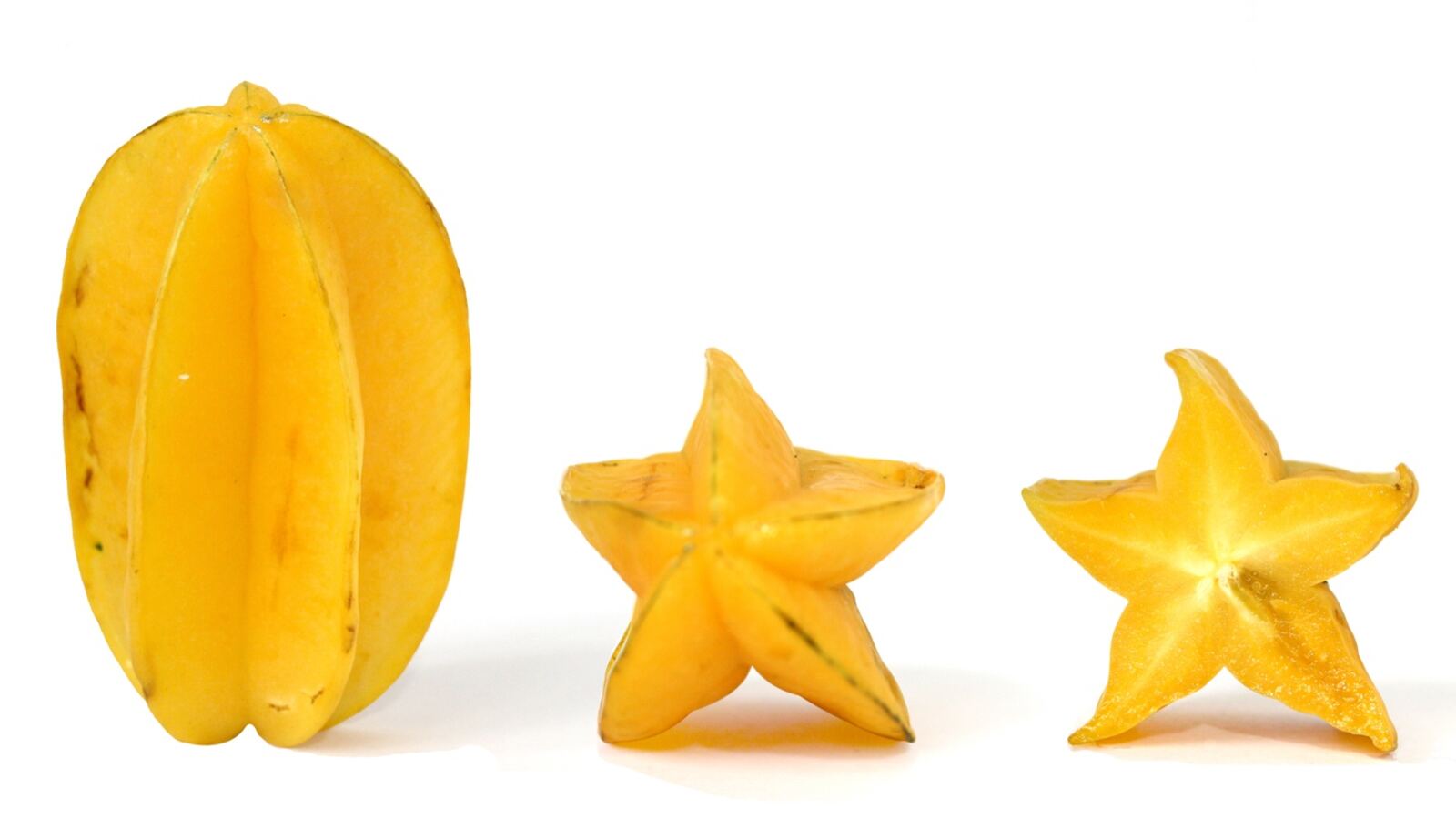
Averrhoa carambola, the carambola or star fruit, a small tropical evergreen tree of Southeast Asian origin, grown throughout the tropics for its distinctive ridged, translucent, yellow-green fruit. Sliced across, the fruit falls into perfect five-pointed stars, which is the whole reason for its popularity — the crisp, juicy, mild sweet-sour slices are used as much for decoration as for flavour, garnishing drinks, salads, and desserts.
A close relative, the bilimbi (Averrhoa bilimbi), is a smaller, intensely sour cousin borne directly on the trunk, used as a souring agent and in pickles and chutneys across South and Southeast Asia. Both belong to the wood-sorrel family, Oxalidaceae, and both are notably rich in oxalic acid, which matters for the warning below.
The star that hides a poison
The carambola looks innocent, and for most people it is — but it carries a genuine and under-appreciated hazard that makes it one of the few common fruits that comes with a serious medical caution.
Star fruit contains a neurotoxin, caramboxin, along with high levels of oxalic acid. In people with healthy kidneys, these are cleared harmlessly and the fruit is a safe, pleasant food. But in people with impaired kidney function — chronic kidney disease, kidney failure, dialysis patients — the toxin is not cleared and accumulates, and even a small amount of star fruit (a couple of fruit, or a glass of juice) can cause "star fruit intoxication": hiccups, confusion, vomiting, seizures, and, in serious cases, death. It is a well-documented cause of poisoning in dialysis units, and doctors specifically warn kidney patients never to eat it. The oxalic acid can also contribute to kidney stones in susceptible people even with normal kidneys.
This makes the carambola a striking example of a fruit whose safety depends entirely on the eater: harmless and even healthy for most, potentially lethal for a vulnerable group. It is worth knowing, and worth passing on to anyone with kidney trouble, because the danger is real and not widely known. (The fruit is safe for the general population eaten in normal amounts.)
Sweet and sour types
There are two broad kinds of carambola — a sour type, higher in oxalic acid and used for cooking, juice, and preserves, and a sweet type, milder and eaten fresh. Even the sweet type has a tart edge, and the fruit is prized as much for its refreshing juiciness and ornamental shape as for sweetness. The whole fruit is edible, skin and all, with only the small seeds removed, and it does not need peeling.
Growing it
Tropical to warm-subtropical and frost-tender, though it tolerates a few degrees of frost when mature and is grown in the warm subtropics (southern Florida, for instance) as well as the true tropics.
Soil and site. Full sun and rich, moist, well-drained soil; it likes steady moisture and shelter from strong wind (which tatters the foliage and drops the fruit), and it fruits heavily and often more than once a year in a good climate — a productive small tree. It is a fine, attractive component of a tropical or subtropical food forest, ornamental as well as productive, with pretty lilac flowers and glossy foliage.
Propagation. Seedlings are variable and slow, so superior sweet varieties are grafted. See grafting and propagation. Fruit fly is the main pest, managed within integrated pest management.
A carambola is an easy, decorative, heavy-bearing tropical fruit tree — as long as everyone eating from it knows the kidney caution.
See also
- Tropical Fruit Trees carambola in the wider warm orchard
- Citrus another tart, juicy subtropical fruit
- Food Forest Design a decorative, productive small tree
- Grafting propagating sweet carambola varieties
- Cherimoya and Annonas other soft-fleshed exotic fruits
- Integrated Pest Management handling fruit fly
- Ackee