What they are
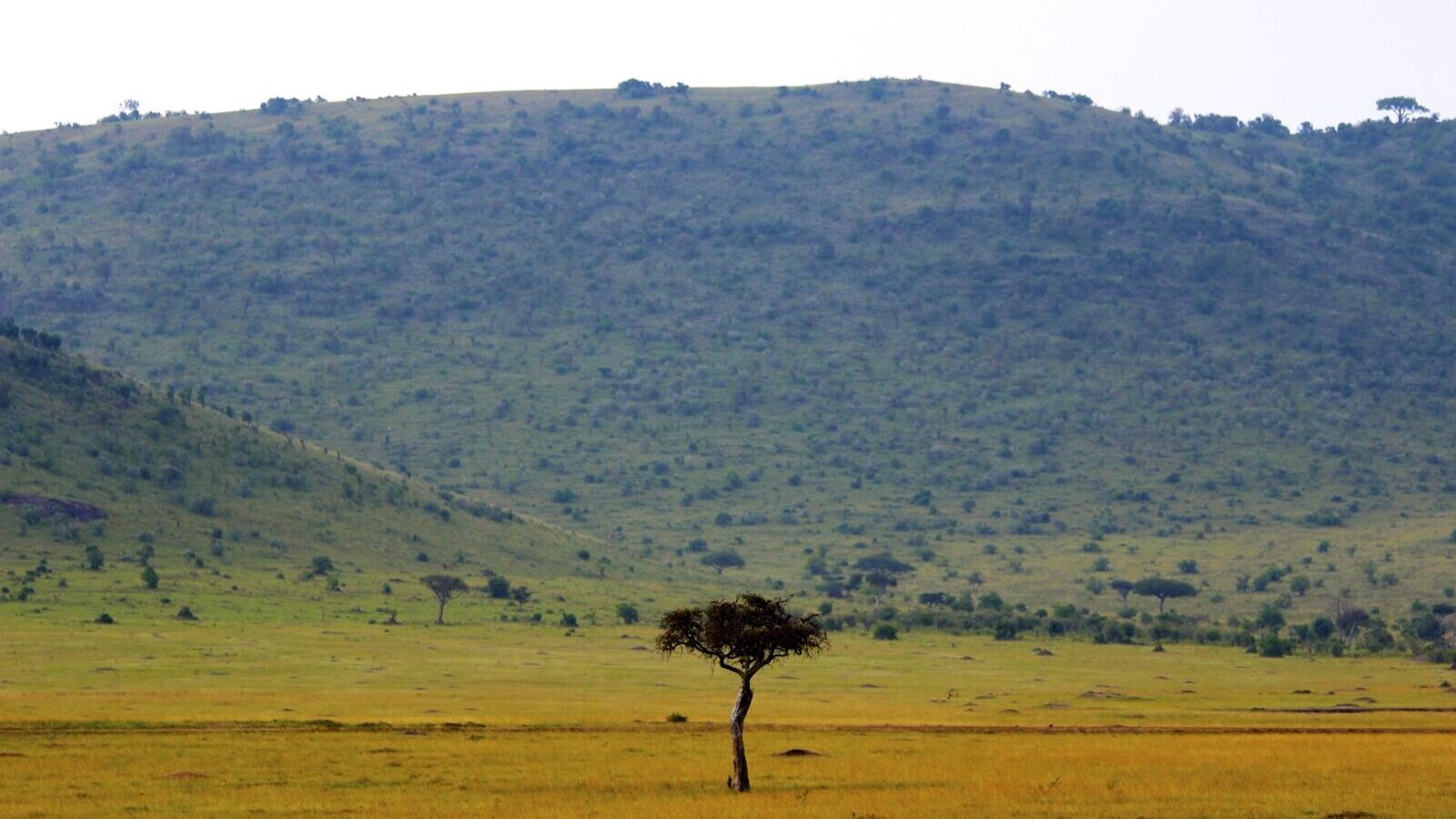
The flat-topped thorn trees of African savanna, the wattles of Australia, and several hundred more species across the world's dry regions. Legumes, in the pea family, and nearly all nitrogen fixers.
The taxonomy was split contentiously in 2005: the name Acacia was retained for the Australian wattles, and the African and American species were moved to Vachellia and Senegalia. Most people still say acacia for all of them, and this article does too.
Two leaf strategies run through the group. Many African species have finely divided bipinnate leaves that reduce heat load and shed little water. Most Australian wattles instead have phyllodes, flattened leaf stalks that do the work of leaves and are held vertically to avoid the midday sun.
Why they matter in drylands
They are keystone species across an enormous area of the world's arid and semi-arid land, and they hold those systems together in several ways at once.
They fix nitrogen. Root nodules with rhizobia bacteria pull nitrogen from the air, which in soils that are chronically nitrogen-poor is decisive. Litter fall then transfers that nitrogen to the surrounding soil. See nitrogen-fixing bacteria and nitrogen fixers.
They make shade islands. Soil under an acacia canopy is cooler, moister, higher in organic matter, and measurably more fertile than the open grassland around it. Grass growing under savanna acacias is frequently more productive and higher in protein than grass in the open, despite the shade. The tree creates a fertility island.
They root deep. Some species reach extraordinary depths, tapping water far below the reach of grasses, which is why they stay green through dry seasons that flatten everything else.
They feed everything. Pods and leaves are critical dry-season fodder for wildlife and livestock, at precisely the point when grass has gone. Gum arabic, from Senegalia senegal, is a globally traded commodity harvested from wild and managed stands.
They stabilise soil. Roots hold ground against wind and water erosion in landscapes with little else holding it. See erosion control.
Faidherbia and reverse phenology
Faidherbia albida deserves its own section because it behaves backwards, and that behaviour makes it one of the most useful agroforestry trees in the world.
Almost all trees leaf out in the wet season and drop leaves in the dry. Faidherbia does the opposite: it drops its leaves at the start of the rains and leafs out during the dry season.
The consequence for a farmer is close to ideal. During the growing season the tree is bare, so crops beneath it get full sunlight and no competition. The leaves it dropped are decomposing into the soil exactly when the crop needs nitrogen. Then in the dry season it leafs out and produces pods, providing shade and livestock fodder when nothing else does.
Maize and millet yields under Faidherbia are routinely reported as substantially higher than in the open, sometimes doubled, with no purchased fertiliser.
This is why Faidherbia is the signature tree of farmer-managed natural regeneration across the Sahel, and central to Tony Rinaudo's work. It is also the clearest natural example of the logic behind alley cropping: a tree that occupies a different temporal niche from the crop.
Defences, and the ants
Acacias are heavily defended and the mechanisms are worth knowing.
Thorns and spines, sometimes enormous, deterring browsers.
Chemical defence. Many species increase tannin concentration in their leaves within minutes of browsing, making the foliage unpalatable. Some release ethylene, which triggers neighbouring trees downwind to raise their tannin levels before they are touched. Giraffes are documented feeding into the wind and moving frequently between trees, apparently in response.
Ant mutualism. Several African and Central American acacias house ants in swollen hollow thorns and feed them with nectaries and protein bodies. The ants in return attack anything that touches the tree, including large herbivores, and clear competing vegetation from around the base. The whistling thorn of East Africa gets its name from wind blowing across the entry holes in its galls.
The relationship is genuinely mutual and genuinely fragile. Where large herbivores have been excluded, some acacias reduce their investment in ant rewards, the aggressive ant species are displaced by less protective ones, and the trees end up more vulnerable to boring beetles. Removing the herbivores made the trees worse off, which is a useful caution about intervening in systems that look simple. See predator-prey balance.
Wattles, and where they became a problem
Australian acacias have been planted across the world for timber, tannin, fuel, and dune stabilisation, and several have become severe invasives.
Acacia mearnsii, black wattle, and A. saligna are among the worst invasive plants in South Africa, where they consume enormous volumes of water in catchments that cannot spare it, replace fynbos with dense monoculture, and change fire behaviour.
The Working for Water programme in South Africa has cleared invasive wattle at large scale, explicitly justified on water yield: removing the trees measurably increases stream flow. It is one of the clearest cases of invasive control paying for itself in hydrological terms.
The general lesson repeats: a species that is a keystone at home can be destructive elsewhere, and fast-growing nitrogen-fixing pioneers are exactly the profile that tends to become invasive. See invasive species and eucalyptus.
Using them
For dryland restoration, indigenous acacias are usually the first choice: they establish on degraded ground, fix nitrogen, provide fodder that gives people a reason to protect them, and create the conditions for other species to follow. They are classic nurse trees and pioneer species.
Seed usually needs scarification, since the hard coat is adapted to survive fire or gut passage. Nicking, hot water treatment, or brief heat all work. Inoculating with appropriate rhizobia matters where the soil has lost its biology. See soil inoculation.
Protect from browsing when young, since the fodder value that makes them useful also makes them a target. See site protection.
And plant local species. The temptation to use a fast Australian wattle because it grows quicker has produced a great deal of subsequent expense.
See also
- Dryland Restoration acacias in FMNR systems
- Nitrogen Fixers the wider group
- Nitrogen-Fixing Food Trees carob, mesquite and relatives
- Invasive Species wattles outside their range
- Silvopasture savanna as a grazed tree system
- Drought-Tolerant Species the dry-climate palette