What it is
Kigelia africana, the sausage tree, a large, handsome tree of the savannas, riverbanks, and woodlands of tropical and southern Africa — and one of the most unmistakable trees on Earth, because of the extraordinary fruit that dangle from it.
It belongs to the trumpet-vine family, Bignoniaceae — the same family as the catalpa and jacaranda — and, like them, bears large, trumpet-shaped flowers, though it puts them to a very different use.
The sausages
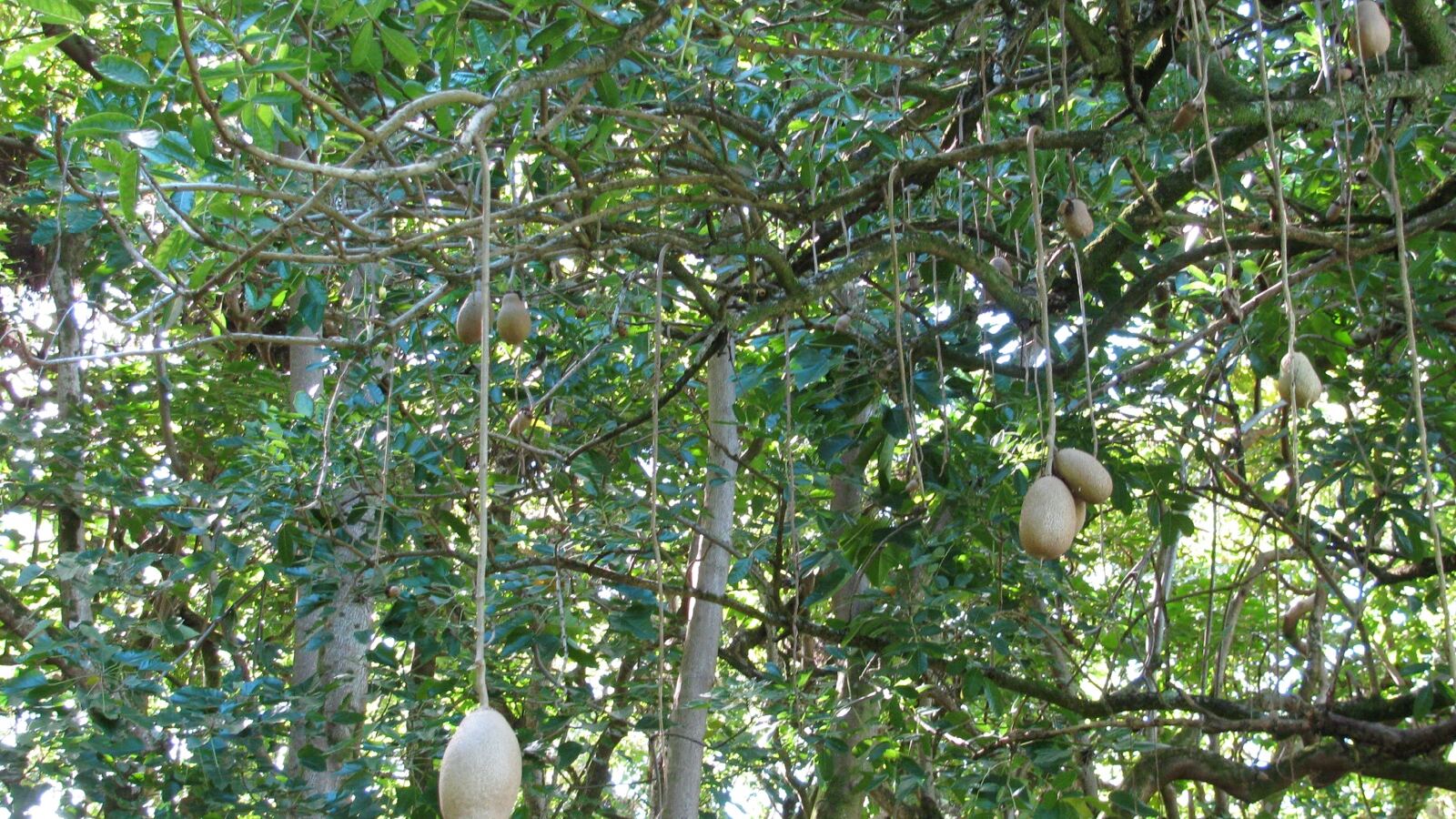
The tree's name comes from its fruit, and no photograph quite prepares you for them. The sausage tree hangs enormous, grey-brown, sausage-shaped fruit — up to 60 cm long and weighing as much as 5 to 10 kg each — on long, rope-like stalks, so that they dangle beneath the crown like giant salamis strung from the branches.
These heavy, hard, woody fruit are a genuine hazard — a several-kilo sausage falling from a tall tree can injure a person or dent a car, so the tree is planted for its drama but sited with care, away from paths and parking. The raw fruit is poisonous to humans, but it is eaten by many wild animals — elephants, baboons, hippos, porcupines, and browsing antelope — which disperse the large seeds, and it has a long list of traditional uses once processed: fermented into a beer-flavouring, and used in medicine and cosmetics (see below). The fruit is roasted and processed before any human use.
Flowers for bats
Look up from the sausages to the flowers, and you find one of the classic examples of bat pollination.
The sausage tree's flowers are large, trumpet-shaped, and a deep blood-red to maroon, and they hang down on the same long cords, opening at night — and they are built, in every detail, for bats. They open in darkness, they are dull red rather than showy (bats hunt by smell and echolocation, not colour), they give off a rank, slightly unpleasant, yeasty smell that attracts bats rather than bees, they produce copious nectar, and they are robust enough for a bat to cling to. Fruit bats visit the flowers at night to drink the nectar and, in doing so, carry pollen from tree to tree. By day the fallen flowers, still full of nectar, are mopped up by birds, insects, and antelope, so nothing is wasted. It is a textbook case of a flower's colour, scent, timing, and shape all being shaped by its pollinator — here, bats rather than the bees and butterflies that shape most flowers. See pollinator habitat.
The skin-cream tree
The sausage tree has become, in recent decades, a modest global commercial plant, on the strength of its traditional medicinal reputation. Extracts of the fruit have a long history in African traditional medicine for skin conditions — applied to the skin for complaints, wounds, and as a cosmetic — and this has been taken up by the international cosmetics industry, so that Kigelia extract now appears in commercial skin creams, firming and anti-ageing products, and sun preparations sold worldwide. As with the marula and its liqueur, the commercial demand has given the tree an economic value that supports its cultivation and, potentially, sustainable wild harvest, though the science behind the skincare claims is still thin. It is another instance of an African tree moving from local use into a global market.
Growing it
Tropical and subtropical, frost-tender, wanting heat, full sun, and — for best growth — a good supply of water, since in the wild it favours riverbanks and moist savanna; it tolerates a range of soils and some drought once established, but grows lushest with moisture.
It is a fast-growing, spreading, densely-shaded evergreen (or briefly deciduous) tree, widely planted for shade and ornament in warm-climate parks, streets, and gardens — magnificent for its flowers and its extraordinary fruit — provided it is sited where the heavy sausages cannot fall on anyone. Grown easily from the numerous seeds. A spectacular, conversation-stopping tree for a large frost-free space. See propagation.
See also
- Catalpa the family relative with similar trumpet flowers and long pods
- Jacaranda and Flame Tree fellow Bignoniaceae ornamentals
- Bats the night pollinators the flowers are built for
- Pollinator Habitat bat pollination and its floral signals
- Marula another African tree turned global commercial product
- Baobab the other iconic, bat-pollinated African giant
- Ipê and Pau d'Arco
- African Tulip Tree