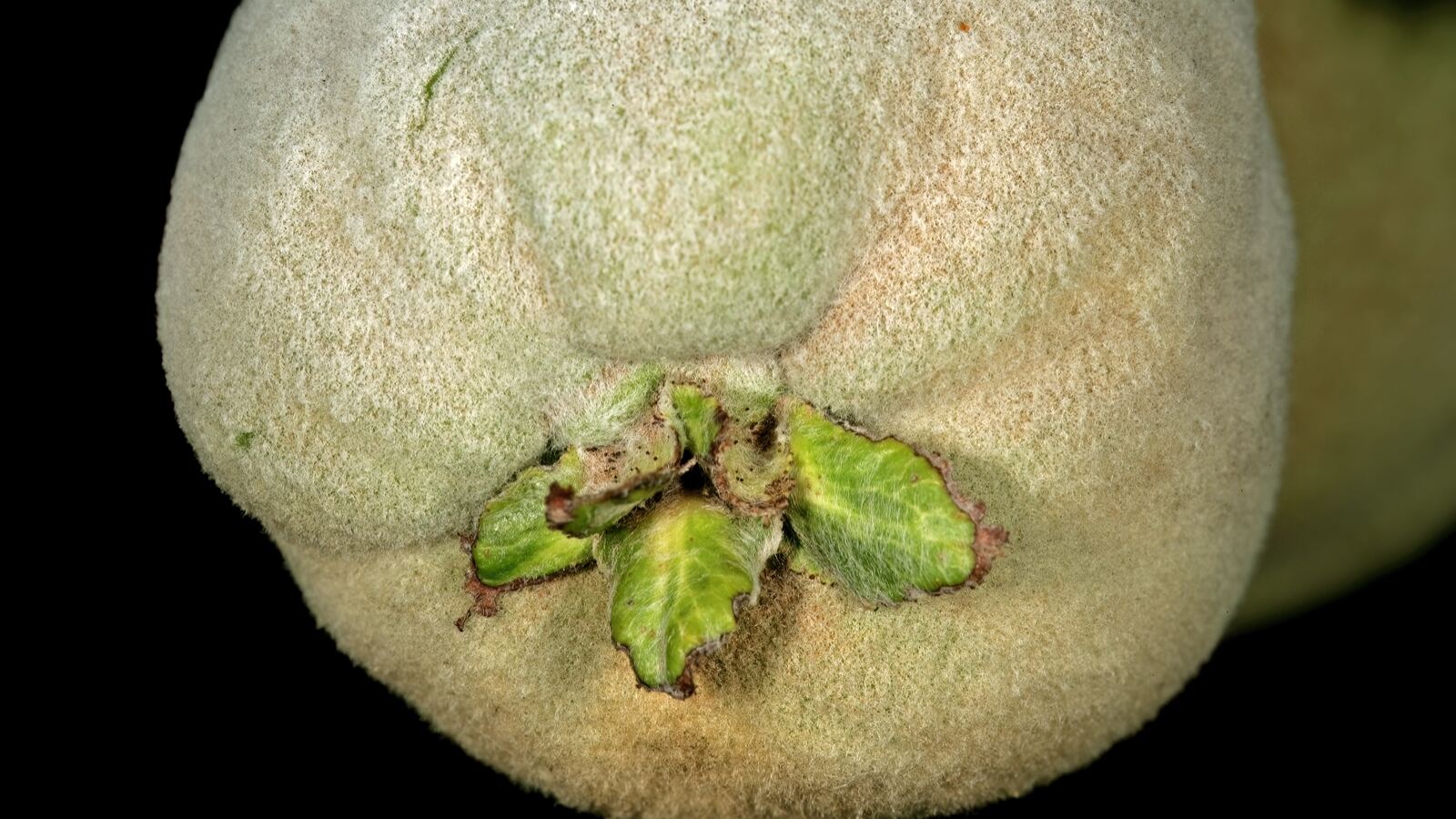
Two forgotten fruits
Both are pome fruits in the rose family, close relatives of apples and pears, and both were standard in European orchards for centuries before falling almost entirely out of use.
Quince, Cydonia oblonga, from the Caucasus and Iran. A hard, golden, downy fruit shaped between an apple and a pear.
Medlar, Mespilus germanica, from western Asia. A small russet-brown fruit with a distinctive open end, flared like a crown of dried sepals.
Neither is edible in the ordinary sense straight off the tree, which is exactly why both disappeared once sugar became cheap and shipping made soft fruit available year round.
Quince: cooked, not raw
Raw quince is hard, astringent, and close to inedible. Cooked, it transforms completely — turning from pale cream to deep pink or ruby over long slow cooking, and developing a flavour that is nothing like an apple.
The colour change is real chemistry, not additives: tannins polymerising with heat over several hours.
The perfume is the thing. A bowl of ripe quinces will scent an entire room for weeks — intensely floral, honeyed, and unlike any other fruit. They were kept in linen cupboards and living rooms for exactly that reason.
Uses: membrillo, the Spanish quince paste eaten with cheese; marmalade, which originally meant quince paste and takes its name from marmelo, the Portuguese for quince; jelly, which sets hard from the very high pectin content; and a few quince slices added to an apple pie, which lifts the whole thing.
Quince is also extremely high in pectin, so like crab apple it will set preserves that would otherwise fail.
Medlar: bletting
The medlar has to rot before you can eat it, and it is the only common fruit of which that is true.
Bletting is a controlled over-ripening. Pick the fruit hard in late autumn, after leaf fall and ideally after a frost, then store it somewhere cool and airy for several weeks — traditionally stalk-down in a tray of sawdust or bran.
The flesh gradually goes from hard and astringent to soft, brown, and sweet, as tannins break down and starches convert to sugars. The result has been compared to spiced apple sauce, or to a date.
It looks unappetising and tastes considerably better than it looks, which is roughly the medlar's entire problem as a commercial crop.
The fruit's appearance and its need to rot gave it a long history of bawdy names in English and French, and Shakespeare and Chaucer both make the joke.
Eaten with a spoon, or made into medlar jelly, which is excellent with game and is far more approachable than the fruit itself.
Growing them
Both are small, undemanding, and remarkably trouble-free — genuinely good garden trees that almost nobody plants.
Size. 3 to 6 m for both. Small enough for an ordinary garden, and both are attractive: quince with large pink-white spring blossom, medlar with big white flowers and superb russet autumn colour.
Soil and site. Fertile, moisture-retentive, well-drained. Both want full sun, and quince needs warmth and shelter to ripen properly — in cool climates a south-facing wall makes the difference. See espalier and training.
Self-fertile. Both are, so a single tree crops, which is a considerable advantage over most apples and pears.
Grafted, usually onto quince rootstock, which is also the standard rootstock for pears. See grafting and rootstocks.
Prune lightly in winter, and only to keep an open shape. Both fruit on the tips of the previous year's growth, so hard spur pruning removes the crop.
Problems are few. Quince leaf blight causes brown leaf spots and can defoliate in wet summers; fireblight affects both, since they are in the rose family. Otherwise they are among the least troubled fruit trees available. See tree diseases.
Harvest
Quince: leave on the tree as long as possible, until fully golden and fragrant, and pick before hard frost. They bruise easily despite feeling like rocks. Store cool and airy, not touching, and keep them away from other stored fruit — the perfume transfers, and apples stored with quince taste of quince. See harvest and storage.
They keep for two or three months and the scent intensifies.
Medlar: pick hard after leaf fall, then blet as above.
Why plant them
The honest case is that both are small, tough, self-fertile, largely pest-free, ornamental in three seasons, and produce something you cannot buy.
They are also a piece of orchard heritage that is genuinely at risk. Old medlar and quince trees survive mainly in walled gardens and churchyards, and the varieties are held by a handful of collections. Planting one is a small act of the preservation argued for in seed banking.
For a mixed orchard or a fruit tree guild, both slot in easily, flower usefully for pollinators, and ask for very little.
Note that flowering quince, Chaenomeles, is a different genus — the thorny ornamental shrub with scarlet spring flowers. Its fruit is also edible and also needs cooking, and it makes a good jelly, but it is not the true quince.
See also
- Apples and Pears the close relatives and the orchard context
- Crab Apple the other high-pectin setting fruit
- Grafting and Rootstocks quince as pear rootstock
- Harvest and Storage bletting and keeping
- Espalier and Training quince on a warm wall
- Fruit Tree Guilds fitting them into a mixed orchard