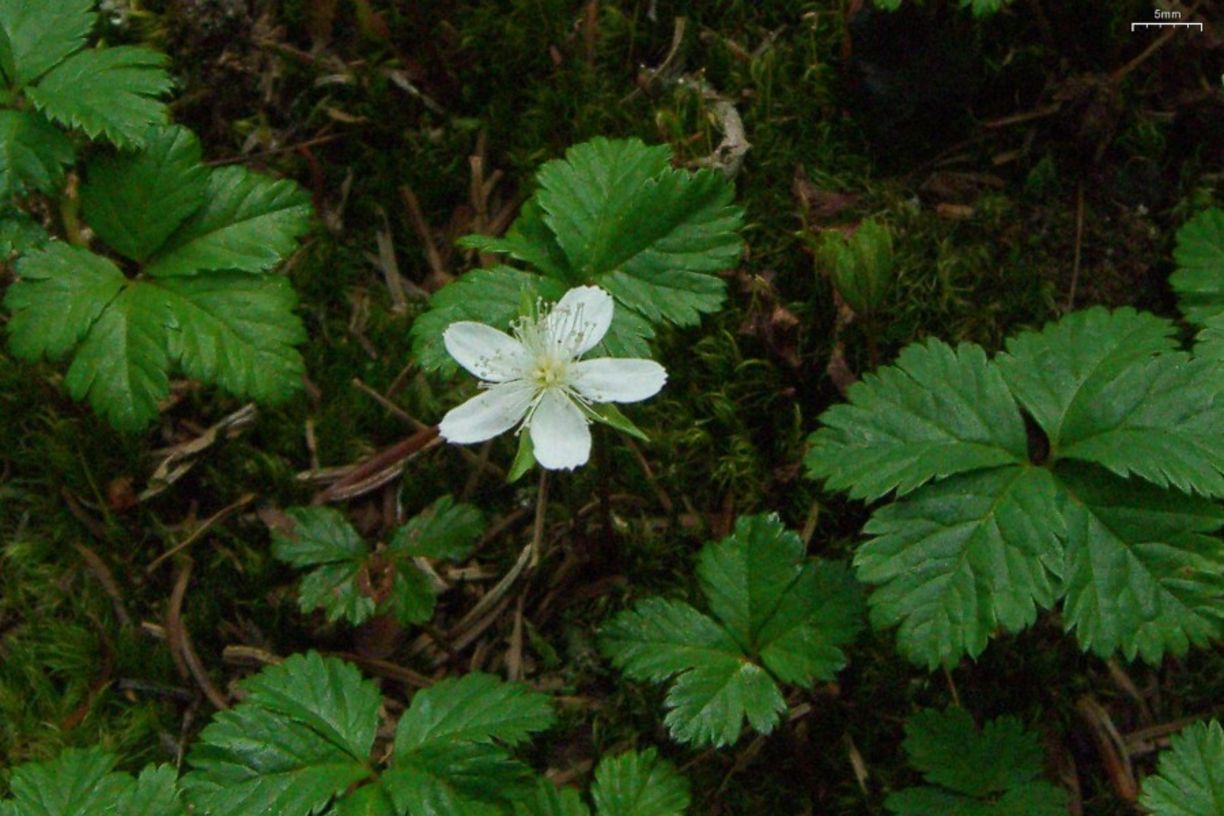
What they are
One genus, hundreds of species. Rubus covers raspberries, blackberries, dewberries, and the hybrid tayberry and loganberry that crossed the two in Victorian breeding plots. Thorny. Biennial canes. Suckers from the root.
The wild European bramble, Rubus fruticosus, is a species complex with more than 300 microspecies. Botanists gave up counting. The pattern holds across the genus: a perennial root system throwing up new canes every year, running across any disturbed ground it can reach.
The fruit is an aggregate of drupelets, each a tiny stone fruit with its own seed. That is why a raspberry crumbles when ripe and a blackberry holds together.
Cane biology
This is the one piece of Rubus you have to learn. Get it wrong and you prune off next year's crop.
The root lives for decades. The canes live two years. A first-year cane is called a primocane. It grows from the crown in spring, shoots up to 1.5 to 2.5 m, and usually fruits nothing. It overwinters as bare wood.
In its second summer that same cane becomes a floricane. It puts out side shoots, flowers, fruits, then dies. While it is fruiting, new primocanes are already growing up beside it for next year.
So a healthy summer-fruiting patch carries two generations at once. Tall floricanes with berries, fresh primocanes coming up behind them. Cut the wrong stems and you lose the harvest.
Everbearing (also called autumn-fruiting or primocane-fruiting) cultivars break the rule. They fruit at the tip of the primocane in late summer of its first year, then again lower down as a floricane the following summer if you let them. Most growers run them on a single cycle and mow the whole patch flat each winter.
Pruning by type
The regime depends entirely on which type you planted.
Summer-fruiting raspberry (Glen Ample, Tulameen, Malling Jewel). After the last berry comes off in July or August, cut every fruited floricane to the ground. Leave the green primocanes alone. Thin those primocanes to eight strong canes per meter of row. Tie them to a two-wire trellis at 60 cm and 1.5 m.
Everbearing raspberry (Autumn Bliss, Heritage, Polka). Simplest pruning in the garden. In late winter, mow the whole patch to 5 cm above ground. Every new cane that comes up is a primocane that will fruit at its tip in autumn. One crop, one cut, done.
Blackberry and hybrid berries (tayberry, loganberry, marionberry). Same primocane and floricane logic, but the canes are longer, often 3 to 5 m, and need a fan trellis. Train this year's primocanes to one side. Crop the floricanes on the other. After harvest, cut the spent floricanes out and swap the primocanes across for next season. Read the broader pruning basics for cuts and tool care.
Tip pruning a primocane in midsummer at 1 m forces side shoots and a bushier floricane next year. Useful for blackberries, less so for raspberries.
Site and soil
Rubus tolerates a wide pH window (5.5 to 7.0) but hates wet feet. A raspberry planted in heavy clay rots at the crown within two seasons. Build a raised row 20 cm above grade if you have to.
Full sun for production. Half shade still gives you fruit but the canes get leggy and disease pressure climbs. Space rows 2 m apart. Plants 40 cm apart in the row.
Feed the root, not the cane. A 5 cm mulch of finished compost or rotted manure every spring keeps the patch productive for fifteen years. Skip synthetic nitrogen. It pushes soft growth that cane blight loves.
Raspberry roots run shallow, 25 cm down at most. They dry out fast in summer. Drip irrigation along the row beats overhead watering, which spreads spur blight and grey mould onto the fruit. See drip irrigation for layout.
Bramble as restoration species
Wild Rubus fruticosus is one of the fastest colonizers of disturbed temperate ground in Europe and the Pacific Northwest. It takes raw, compacted soil that bare-root trees would die in, drives roots 60 cm deep within two seasons, and pulls organic matter back into the surface horizon.
The thorny tangle does three jobs. It excludes deer and rabbits from anything growing inside it. It feeds 40-plus bird species through autumn, with thrushes and blackbirds carrying Rubus seed across the landscape. And it shelters seedlings of oak, ash, and hawthorn that would otherwise be browsed flat. Foresters call this nurse-thicket regeneration. See nurse trees and pioneer species.
On a degraded site, leave the bramble. Cut paths through it. Plant target trees inside the thicket and wait ten years. When the canopy closes, bramble dies back on its own.
In a hedgerow, Rubus fills the gap between hawthorn and the field margin. A double row of hawthorn and bramble makes a stock-proof boundary in seven years. Add elderberry for bird food.
When it goes wrong
Crumbly berry. Drupelets do not all set. Usually poor pollination from cold wet bloom weather, sometimes a virus. Plant near a hedge that hosts native bees and bumblebees, which work raspberry flowers harder than honeybees do.
Cane wilt mid-summer. Cane blight or cane borer larvae inside the stem. Cut wilted canes to ground, well below the damage, and burn them. Do not compost.
Patch declines after eight years. Virus load builds in old stock. Pull the whole row, plant a different crop for two seasons, and start again with certified clean canes on fresh ground.
Bramble swallows the orchard. It will, given the chance. Mow a 2 m strip around any planted area twice a year and the patch holds where you want it. Forget one season and the suckers reach into the next bed.
See also
- Berry Bushes, the broader edible shrub group
- Hawthorn, classic hedgerow partner
- Pruning Basics, cuts and timing
- Pioneer Species, why bramble belongs on raw ground
- Wildlife Shrubs, Rubus as bird and mammal food