Why they matter to a grower
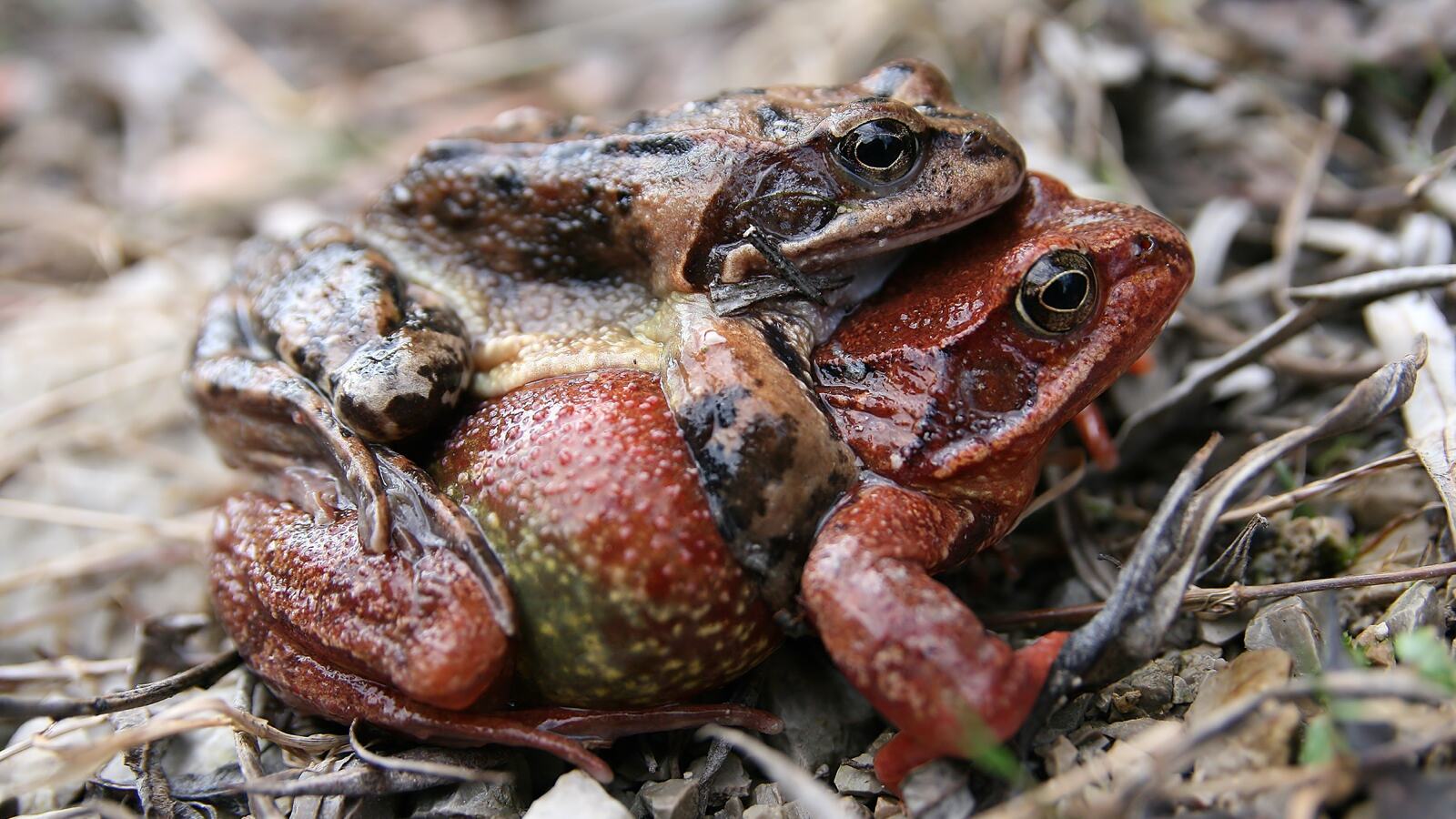
A single common toad eats a substantial number of invertebrates every night through the active season, and a large proportion of them are the things that eat your crops.
Slugs and snails are the obvious case. Toads and newts take them in quantity, and unlike most controls they work at night, which is when slugs are active. A garden with a healthy amphibian population has a noticeably different slug problem from one without.
Slow-worms, which are legless lizards rather than snakes, are among the most effective slug predators available and will live quite happily under a sheet of corrugated iron in a corner of a vegetable garden.
This is the practical end of predator-prey balance: build the habitat and the control follows, without anything to buy or apply.
What amphibians actually need
The common mistake is thinking they need a pond. They need a pond and everything around it, and they spend most of the year in the everything around it.
Water for breeding. Shallow, sunny, and ideally fish-free. This is the single most important condition. Fish eat amphibian eggs and larvae, and a stocked ornamental pond typically supports very few amphibians. A small, shallow, plant-filled pond with no fish will support a great many.
Frogs prefer shallow water with vegetation. Newts need submerged plants with soft leaves, since they wrap eggs individually in them. Toads prefer somewhat deeper, larger water.
Depth variation matters, with shallow margins for warmth and egg-laying and a deeper section that will not freeze solid. Gently sloping sides are essential so animals, including hedgehogs, can get out.
Terrestrial habitat, which is where they spend most of the year. Damp, cool, undisturbed cover within reach of the water: log piles, rockeries, long grass, dense ground cover, compost heaps. See rock and log piles and rewilding edges.
Somewhere to overwinter. Frost-free refuges underground, under logs, in stone piles, or in compost heaps.
Connections. Amphibians move between ponds and terrestrial habitat, and populations need to exchange individuals to persist. Isolated ponds surrounded by mown grass or roads support declining populations. See wildlife corridors and minimum viable populations.
Reptiles want the opposite
Reptiles are ectotherms that need to reach high body temperatures, so their requirements invert amphibian ones in one respect: they need sun.
Basking sites. South-facing bare ground, flat stones, log ends, sunny banks. A reptile that cannot get warm cannot digest or breed.
Cover immediately adjacent. They will not bask where they cannot reach shelter in one movement. The valuable structure is the junction: bare warm ground beside dense cover, which is another instance of edge effects.
Refugia. Corrugated iron or roofing felt sheets laid on rough grass are the standard: they warm quickly and reptiles shelter beneath. This is also how surveys are done.
Hibernation sites. Frost-free, well-drained, undisturbed. Rubble piles, banks, and old stone walls.
Rough grassland and scrub mosaic. Uniformly mown or uniformly overgrown ground supports few reptiles. They need the mixture. See grassland restoration.
Building a pond that works
The highest-return habitat intervention available for a garden or small site, and it works fast. Amphibians colonise new ponds within a season or two if there is a source population within reach.
Do not stock fish. Repeated because it is the decision that determines everything else.
Do not introduce spawn from elsewhere. It moves disease, including ranavirus and chytrid fungus, both of which have caused serious declines. Let them arrive.
Shallow margins and a gentle slope on at least one side.
Plant it, with submerged oxygenators, floating leaves for cover, and emergent marginals. Avoid invasive aquatic plants, several of which are sold and are extremely damaging in the wild. See invasive species.
Leave the surroundings rough. A pond ringed by mown lawn is a pond with no terrestrial habitat attached, and it will hold far fewer animals.
Several small ponds beat one large one, since they vary in depth, temperature, and drying, and different species use different ones.
Some drying is acceptable and sometimes beneficial. Ponds that dry occasionally cannot hold fish and often support more invertebrate diversity.
See self-sufficient ponds and rain gardens, both of which double as amphibian habitat, and wetland restoration at larger scale.
Threats you control
Fish, again.
Chemicals. Amphibians breathe through their skin, which makes them exceptionally vulnerable to pesticides, herbicides, and metaldehyde slug pellets. Killing slugs with pellets removes the predator that would have controlled them. See organic sprays and integrated pest management.
Tidiness. Removing log piles, leaf litter, and rough corners removes the habitat entirely.
Strimmers and mowers. The commonest direct cause of injury and death. Check long grass before cutting, cut in the middle of the day when reptiles have moved off, and leave uncut refuges.
Steep-sided containers. Ponds with vertical sides, cattle troughs, and drains are traps. Provide an exit ramp.
Habitat fragmentation. Roads between breeding ponds and terrestrial habitat cause enormous mortality during migration.
Bigger picture
Amphibians are the most threatened vertebrate class globally, with roughly 40 percent of species at risk. The drivers are habitat loss, the chytrid fungal pandemic, pollution, and climate change.
They are also excellent indicator species. Permeable skin and a life cycle spanning water and land make them sensitive to pollution and hydrological change, so their presence says something reliable about site condition.
Both groups are legally protected to varying degrees in many countries, and some species carry strict protection that affects what you may do to habitat. Check before clearing a pond or a rubble pile.
See also
- Slugs and Snails the main thing they eat
- Rock and Log Piles the terrestrial habitat
- Self-Sufficient Ponds building the breeding water
- Predator-Prey Balance habitat instead of sprays
- Beavers the animal that creates amphibian habitat at scale
- Indicator Species what their presence tells you