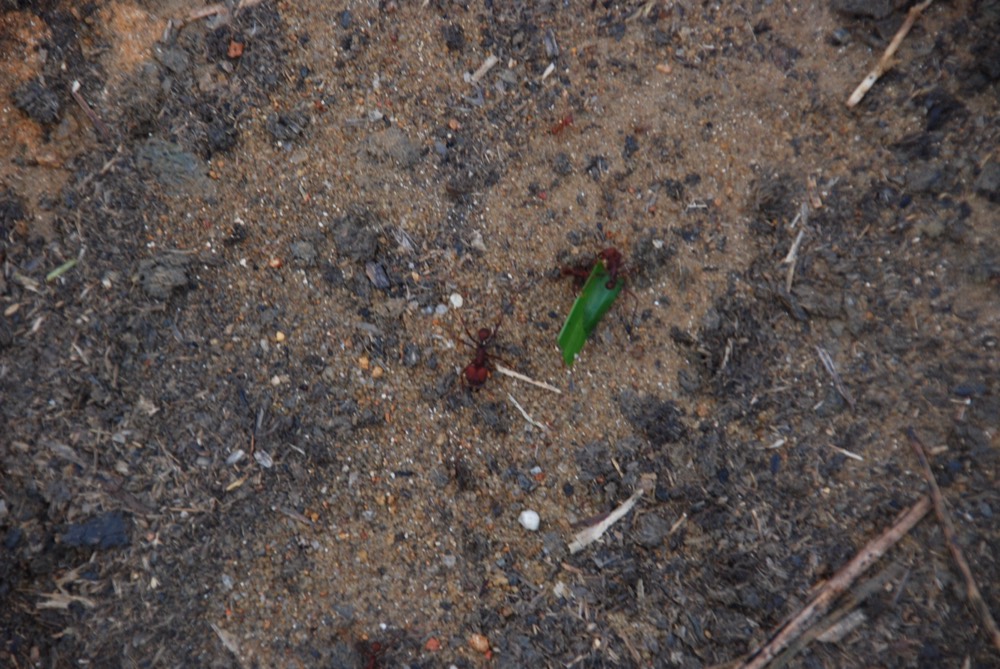
What they are
Two genera, both farmers. Atta (the bigger one, with major workers up to 16 mm) and Acromyrmex (smaller, hairier). Both build underground colonies that can stretch six meters down and hold five to eight million ants in a mature Atta nest.
The leaves they cut are not food. The ants take the fragments back to the colony, chew them into pulp, and feed the pulp to a cultivated fungus, Leucoagaricus gongylophorus. The fungus is what feeds the colony. The whole operation is an underground mushroom farm with the entire ant workforce as gardener, harvester, and security.
This is why you can't just kill the foragers. The colony eats the fungus, not the leaves, and as long as the queen and fungus garden are intact, the workers will keep coming.
Why they hit your trees
Leafcutters prefer soft, young leaves with high water content and low secondary chemistry. A newly planted citrus, mango, or avocado is exactly what their fungus likes. A mature tree with thick, waxy, terpene-loaded leaves is much less attractive, which is why an old grove can sit next to a colony without obvious damage.
They forage along scent trails up to 200 meters from the nest, mostly at night in hot weather and in shifts around the clock in cooler conditions. A single mature Atta colony can strip 50 to 400 kg of fresh leaf per year. Watch where the trail enters your land. That tells you which direction the nest sits.
Find the nest
Every control method starts here. Walk back along an active trail until you find a fan of fresh soil, often crescent-shaped, with a hole the size of a coin to a fist. Mature Atta nests have a central mound up to several meters across with dozens of entrances and ventilation chimneys. Acromyrmex nests are smaller, often under leaf litter or a fallen log.
If the trail crosses your property line and disappears into a neighbor's land or the bush, you may not be able to treat the colony directly. In that case the strategy shifts to barriers and acceptance.
Live with them: barriers
You will not eliminate leafcutters from a tropical landscape. The goal is to keep them off the trees that matter while leaving the colony in place.
Ant guards on young trees. A 30 cm wide skirt of slick plastic or sheet metal around the trunk, set 30 cm off the ground, breaks the climbing route. The ants will not cross a slick vertical face. Smear the lower edge with a sticky band (Tanglefoot or equivalent) and check it monthly.
Water moats. For a high-value young tree, sink a shallow ring trench 60 cm out from the trunk, line it, and keep it filled. They will not swim.
Wrap the trunk in cinnamon paper or sticky tape. Cheaper, less reliable, has to be replaced often. Useful for the first six months after transplant when a tree is most vulnerable.
Mulch heavily around the base. Strange but effective. Thick mulch confuses the scent trail and slows the climb. Replace it after rain.
Live with them: bait
Commercial leafcutter baits are sulfluramid or fipronil pellets disguised as dried citrus pulp. The workers haul the pellets into the nest, feed them to the fungus, and the active ingredient kills the colony slowly over weeks. They work. They are also broad-spectrum insecticides, and the residues persist. Use sparingly, only on confirmed nests, and never near water.
If you go this route: place the pellets at active entrances at dusk. Avoid rainy weather. The bait must reach the fungus garden intact, which means it cannot dissolve in puddles or be diluted before the ants haul it down.
Homemade citrus-and-borax bait works on smaller Acromyrmex colonies but rarely on a mature Atta nest. The colony is too large and the workers can detect the borax taint.
Live with them: plant choices
What you plant matters more than what you spray. Leafcutters avoid:
- Cassava (most varieties, since they actively reject the cyanogenic glycosides)
- Sesame (toxic to the fungus garden; sesame oil sprays repel for days)
- Citrus mature leaves (high in d-limonene; young leaves are still vulnerable)
- Most pines and conifers (resin)
- Many natives with thick cuticles and high tannins
Plant a sesame border around your nursery beds. Mulch with sesame leaves where you can. Choose tree species with hard new growth (jaboticaba, certain palms) for the row closest to known trails.
Encourage their enemies
Armadillos and giant anteaters dig up nests directly. In northern South America, the southern tamandua specializes in Atta. Where these animals are still present, leave undisturbed habitat at the margins of your land and they will do work no chemical can.
Several bird species pick off foragers, especially at dawn near the nest entrance. Tropical kingbirds, motmots, and antbirds are all opportunistic. Hedgerows and perching trees give them somewhere to hunt from.
Beauveria bassiana, an entomopathogenic fungus, infects and kills leafcutter workers. Commercial preparations exist. Apply at dusk along active trails. Effect is slow but cumulative, and it does not touch pollinators or the soil microbiome the way sulfluramid does.
When it goes wrong
One nest disappears, another moves in. Open ground attracts foragers from neighboring colonies. Plant the disturbed area fast, ideally with sesame or cassava as a pioneer.
The barrier fails after rain. Sticky bands lose their tack and slick metal corrodes. Inspect monthly during the rainy season and replace the band whenever leaf debris bridges it.
Foragers find a new tree. They will. Watch for the first cut leaves on the ground, then guard that tree before they recruit a full trail.
The bait kills the workers but not the colony. That means the pellets dissolved before reaching the fungus garden, or the queen survived. Re-bait in dry weather; place the bait closer to the central mound; or accept that this nest will need months of repeated treatment.
The honest endpoint with leafcutters is coexistence, not eradication. Plan the orchard around their trails. Guard the trees you most want to save. Tolerate the rest.