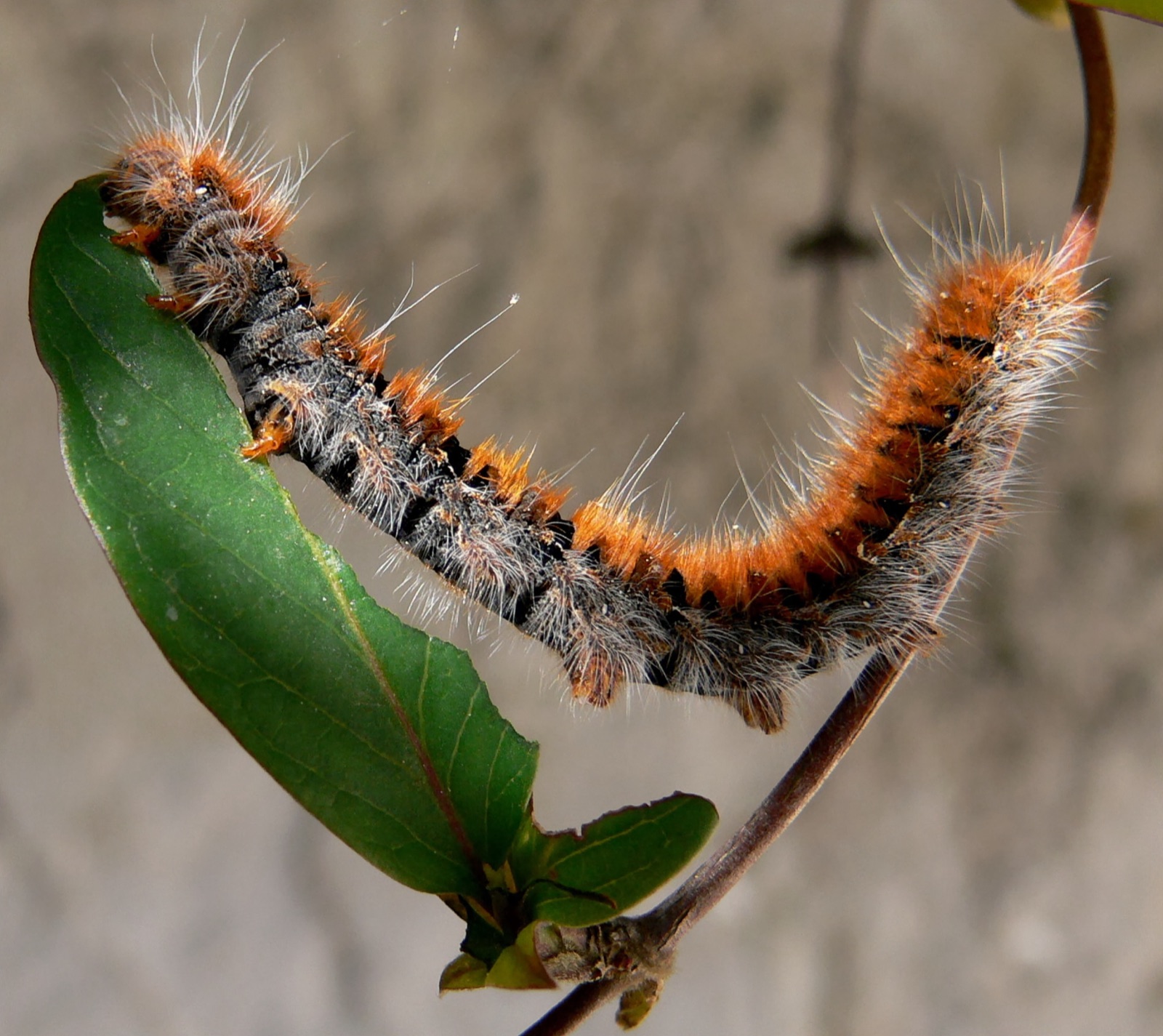
What they are
The larval stage of moths and butterflies. Five of them do most of the damage in a temperate vegetable garden and small orchard.
Pieris rapae and Pieris brassicae are the cabbage whites. The small white drops eggs singly on brassicas, the large white in yellow clusters. The caterpillars eat kale, cabbage, broccoli, and collards down to ribs.
Trichoplusia ni is the cabbage looper. Pale green, three pairs of front legs missing, walks in inchworm arches. Same crops as the whites, plus lettuce and beans.
Cydia pomonella is the codling moth. The worm in the apple. Larvae tunnel to the core and exit through a brown frass-packed hole.
Melittia cucurbitae is the squash vine borer. The wasp-mimic moth lays eggs at the base of squash stems and the larvae chew inward, collapsing the whole vine in a day.
Manduca quinquemaculata is the tomato hornworm. Up to 10 cm long, green with white V-stripes, a black horn on the rear. Strips a tomato plant in two nights.
Why timing wins
Every caterpillar problem is a moth problem two weeks earlier.
The adult flies, mates, lays eggs. Eggs hatch in three to ten days depending on temperature. The larvae feed for two to four weeks, then pupate. Miss the flight window and you are reacting to chewed leaves instead of stopping eggs from landing.
Track the calendar. Cabbage whites start flying when daytime temperatures hold above 12 Celsius, often March in mild zones. Codling moth flies at apple bloom and again 6 to 8 weeks later for the second generation. Squash vine borer emerges when soil temperature reaches 18 Celsius, usually late June in the mid-Atlantic. Hornworm moths fly at dusk in midsummer.
Pheromone traps for codling moth and squash vine borer pin the flight to the day. Hang them at petal fall and check weekly. The first catch is your signal to act.
Hand-pick first
The fastest, cheapest control is your fingers at 7 a.m.
Cool morning caterpillars sit still on the upper leaf surface. Cabbage loopers and white larvae are easy to see against green. Drop them in a jar of soapy water. Five minutes a day through the brassica bed in May beats a weekly spray in June.
Hornworms hide on the underside of tomato leaves and blend into the stems. Look for black frass pellets on lower leaves and trace upward. A blacklight at night makes them glow faintly green.
Codling moth larvae you cannot pick. By the time you see the entry hole the worm is already inside the apple. Sanitation matters instead: pick up windfall daily, bag and remove, do not compost.
Bacillus thuringiensis kurstaki
BTk is a soil bacterium that produces a protein toxic only to caterpillar guts. It does not touch bees, ladybugs, predatory wasps, or birds. The larva eats a treated leaf, stops feeding within hours, dies in two to four days.
Spray at first sign of larvae, repeat every 7 to 10 days while moths are flying. Cover the underside of leaves where eggs and small larvae sit. UV breaks BTk down in 24 to 48 hours, so spray at dusk for maximum residual.
It will not kill borers already inside a vine or apple. BTk only works on the chewing stage on exposed plant surfaces. Time it to the hatch.
Two cautions. BTk kills all caterpillars that eat the treated leaf, including swallowtail and monarch larvae. Spray brassicas and orchards, not milkweed or fennel. And rotate with spinosad sparingly if you see reduced control after several seasons.
Row covers at flight time
Floating row cover (Agribon 15 or 19) over brassicas from transplant through the first cabbage white flush blocks egg-laying outright. The moth cannot reach the leaf.
For squash, cover from transplant until the first female flower opens, then pull the cover so bees can pollinate. By that point the first borer flight has passed. See row covers and barriers for hoop and edge-sealing detail.
Bury or weight the edges. A moth will find a 2 cm gap.
Let the wasps work
Two parasitoids do most of the heavy lifting if you leave them habitat.
Trichogramma are pinhead-sized wasps that lay eggs inside caterpillar eggs. Commercial releases of T. platneri or T. pretiosum timed to codling moth flight can cut fruit damage by 50 to 80 percent. Release at first pheromone catch, repeat every two weeks through the flight period.
Cotesia congregata parasitizes hornworms. You will see it: a hornworm covered in white rice-grain cocoons sticking out of its back. Leave that hornworm on the plant. It has stopped feeding and is producing the next generation of wasps that will hunt the rest of the brood.
Plant alyssum, dill, fennel, and yarrow nearby. The adult wasps drink nectar and need small, open flowers. A 1 m flowering strip beside the tomatoes does more than any spray.
When it goes wrong
You sprayed BTk and nothing died. The product was old, washed off in rain, or the larvae were close to pupation. BTk works best on first and second instars. Catch them small.
Row cover trapped pests inside. Pupae overwintered in the soil. Rotate brassicas and cucurbits to a new bed each year. See crop rotation.
Codling moth control failed after one good year. You stopped trapping. The second generation builds fast on a missed first flight.
Vine borer killed the squash. Slit the vine lengthwise with a razor, dig the worm out, bury the wounded section in moist soil. The vine often roots from the buried node and keeps producing.
Trap to know when moths fly. Cover to block eggs. Pick what you see. Spray BTk on the hatches you miss. Build habitat for the wasps that finish the job.
See also
- Integrated Pest Management
- Row Covers and Barriers
- Garden Pests Overview
- Predator-Prey Balance
- Crop Rotation